
 By
Before you vote, see what your choices could mean.
We want to help you understand not just what's on the ballot, but what could happen afterward. Colorado Tradeoffs lets you test the choices, see the budget implications, and decide how you would respond.
Give it a try below. It takes less than 10 minutes.
For decades, Colorado’s political story was defined by a delicate, high-altitude balancing act. Straddling the divide between mountain-town progressivism and agrarian conservatism, the state was the quintessential American swing turf—a place where election nights were long, margins were razor-thin, and national strategists spent fortunes chasing the elusive median voter.
That era is officially over.
As the dust settles on the 2026 midterm elections, the map rendered by Colorado’s electorate is not just blue; it is structurally, philosophically, and policy-wise transformed. Voters across the Front Range, Western Slope, and Eastern Plains delivered a decisive mandate that fundamentally reshapes the state’s economic governance, environmental trajectory, and civic identity. But beneath the headlines of party triumphs lies a far more nuanced story of voter pragmatism. Coloradans navigated a complex slate of ballot initiatives, rejecting ideological purity tests on both the left and the right in favor of hyper-local solutions to existential Western problems: housing affordability, water security, energy transitions, and tax structural reform.
The outcome of this election offers a masterclass in modern purple-to-blue political evolution, carrying profound implications for the state’s five million residents and setting a precedent for the entire American West.
The Electoral Topography: A State Solidified
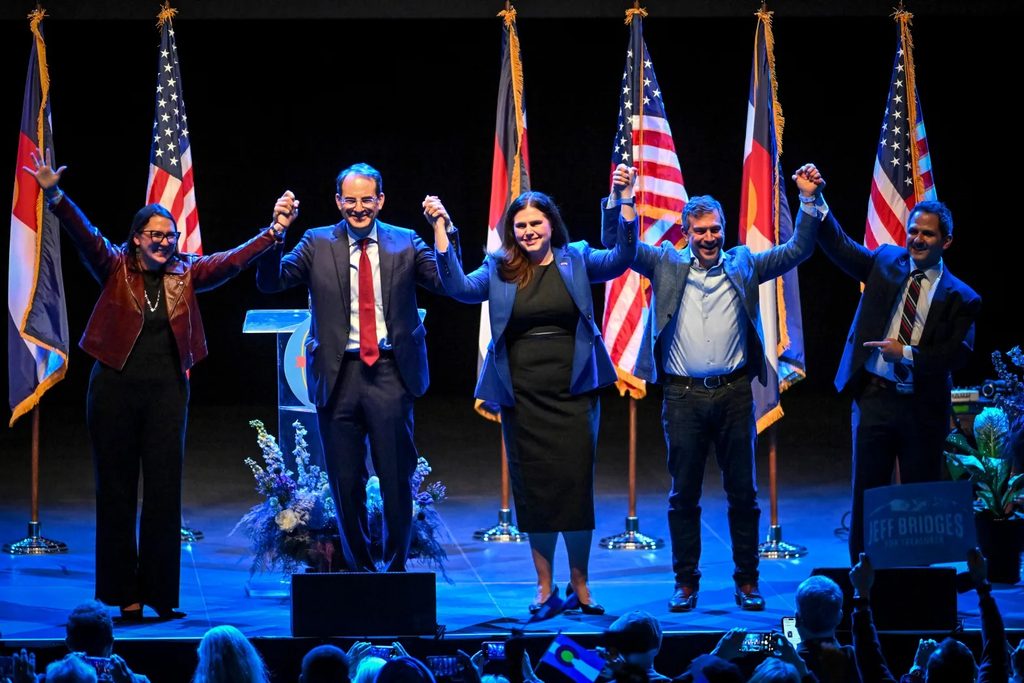
The headline results reflect a consolidation of power by state Democrats, but the underlying coalition tells the true story. High turnout across key urban centers like Denver, Boulder, and Fort Collins served as the anchor, yet the decisive shifts occurred in the suburban battlegrounds of Arapahoe, Jefferson, and Adams counties.
Historically conservative bastions, including portions of Douglas County and the broader El Paso County region surrounding Colorado Springs, showed continued, incremental shifts toward competitive neutrality. Independents—who now make up the vast plurality of registered voters in Colorado—sent a clear message: candidates offering pragmatic, governance-focused platforms outperformed those leaning heavily into national culture-war rhetoric.
In federal and state legislative contests, voters rewarded incumbents and newcomers who prioritized cost-of-living policy over hyper-partisan posturing. The suburban voter base proved particularly sensitive to the squeeze of mortgage interest rates, property tax spikes, and childcare expenditures. By rejecting candidates whose campaigns mirrored national talking points, Coloradans effectively declared that state policy must solve local problems rather than echo Washington’s gridlock.
The Ballot Initiative Verdict: Beyond the Party Line
If candidate races revealed the political brand Coloradans prefer, the state’s famously robust direct democracy measures—its citizen-led constitutional amendments and propositions—exposed the precise policy heartbeat of the populace.
Coloradans treated their ballots like surgical scalpels rather than broad axes.
Fiscal Policy and Tax Restructuring
For over thirty years, the Taxpayer’s Bill of Rights (TABOR) has been the sacred cow of Colorado fiscal policy, capping state revenue growth and mandating tax refunds unless voters explicitly approve retention. In this election, voters faced a high-stakes fiscal crossroad.
Measure proposals attempting to establish a graduated income tax structure alongside direct caps on local corporate taxation forced a public referendum on how the state should fund its surging infrastructure and public education shortfalls. The results demonstrated a carefully targeted compromise: voters consistently backed revenue retention measures tied explicitly to designated, audited outcomes—such as public school funding, workforce development, and local infrastructure—while firmly rejecting open-ended spending mandates or blanket tax hikes.
Citizens demonstrated a willingness to invest in their state, but only on the strict condition of total structural transparency and measurable accountability.
Energy, Environment, and the Water Crisis
Few issues carry as much weight in the Centennial State as the environment and natural resources. With the Colorado River basin facing perpetual stress and wildfire risks becoming a year-round reality, ballot measures touching energy policy and resource preservation were heavily scrutinized.
Voters decisively turned back conservative constitutional efforts to block local municipalities from regulating natural gas utility expansion in residential and commercial buildings. Concurrently, voters supported measures that redirect state revenue surpluses toward water conservation initiatives, forest health, and wildfire mitigation efforts.
This dual outcome underscores a stark reality: Colorado citizens overwhelmingly view climate change and water security not through an abstract political lens, but as immediate physical and economic risks that demand flexible, proactive governance.
Public Safety and Community Health
On matters of criminal justice and public health, the electorate drew sharp lines. Driven by ongoing concerns over public safety and substance abuse in metropolitan corridors, voters backed measure proposals targeting illicit drug trafficking, particularly fentanyl enforcement, while maintaining support for voter-mandated mental health and diversion programs. The result reflects a modern Western synthesis: compassion and rehabilitation for users, coupled with unyielding regulatory and law enforcement teeth for illicit distribution networks.
What It Means for Colorado’s Future
The policy trajectory mapped out by these election outcomes will echo through statehouse corridors in Denver and county commissioner offices from Grand Junction to Pueblo for years to come.
1. Accelerated Infrastructure and Transit Investments
With voter approval for targeted revenue retention, lawmakers now have a clearer mandate to address Colorado’s crumbling road networks and underfunded regional transit systems. The Front Range Passenger Rail project—an ambitious plan to connect Pueblo, Colorado Springs, Denver, and Fort Collins via rapid rail—gains significant momentum. State agencies can move forward with greater long-term fiscal predictability, shifting from emergency patching to strategic regional planning.
2. A Bold, Locally-Driven Climate Transition
By defeating statewide bans on municipal energy regulations, Colorado reaffirmed its commitment to aggressive decarbonization targets. Local city councils in places like Denver, Boulder, and Fort Collins now possess the political and legal runway to enforce building electrification standards and promote renewable energy integration. However, this local autonomy will require delicate handling by state leadership to prevent a patchwork of conflicting building codes that could further strain an already stressed construction industry.
3. A New Paradigm for Public Education Funding
The electoral mandate provides a vital lifeline to Colorado’s K-12 public schools, which have historically lagged behind national averages in per-pupil expenditures. By authorizing structural adjustments to state funding formulas, school districts across urban, suburban, and rural divides will finally begin to address severe teacher retention deficits, class size inflations, and vocational education gaps.
What It Means for Colorado’s Citizens
Behind macro policy outcomes are the everyday realities of the people who call Colorado home. The consequences of this election will directly alter the daily lives of citizens in visible, tangible ways.
- For Homeowners and Renters: The housing crisis remains Colorado’s most painful thorn. While the election didn’t magically build millions of affordable units overnight, the failure of measures restricting local housing density and the passage of infrastructure support initiatives clear legal hurdles for municipal housing development. Renters and first-time buyers can expect state and local governments to incentivize mid-density housing construction, though real-world price relief will take years to materialize.
- For Workers and Business Owners: Employers face a state regulatory environment that is increasingly committed to clean energy transitions and employee protections. However, the rejection of unchecked tax measures offers corporate entities and small business owners a degree of fiscal forecasting stability. The mandate demands that state regulators balance aggressive environmental standards with economic viability, preventing runaway operational costs for small enterprises.
- For Families and Students: Families will see the impact of this election directly in the classroom. District budgets will stabilize, allowing schools to expand early childhood education, update outdated technology, and offer competitive pay to retain quality educators. Furthermore, expanded funding for mental health access and substance abuse intervention offers communities long-overdue resources to battle public health crises.
- For Rural and Mountain Communities: Farmers, ranchers, and mountain town residents—often feeling sidelined by Front Range politics—won critical protections for water infrastructure and wildfire prevention funds. The explicit direction of funds toward watershed protection ensures that agricultural users and tourism-dependent mountain economies receive direct state backing to survive prolonged droughts and climate volatility.
The Road Ahead: The Pragmatic Blueprint
The outcome of Colorado’s midterm elections is more than a localized civic update; it is an instructive case study for a nation wrestling with intense political polarities.
Coloradans did not simply vote along predictable red or blue orthodoxy. They crafted a nuanced, technocratic blueprint: socially progressive, environmentally vigilant, fiscally cautious, and aggressively local. They demanded that their government function as an efficient service provider rather than an arena for ideological spectacle.
As the elected leaders take their seats and state agencies begin implementing the new directives, the true measure of success will lie in execution. Citizens have entrusted their government with adjusted resources and redefined legal pathways. In return, they expect results: lower costs of living, cleaner air, reliable water, safer streets, and better schools.
In the high country of Colorado, the political climate has cleared. The mandate is unambiguous, the path is marked, and the work of building the state’s future now begins in earnest.