
 By
Before you vote, see what your choices could mean.
We want to help you understand not just what's on the ballot, but what could happen afterward. Colorado Tradeoffs lets you test the choices, see the budget implications, and decide how you would respond.
Give it a try below. It takes less than 10 minutes.
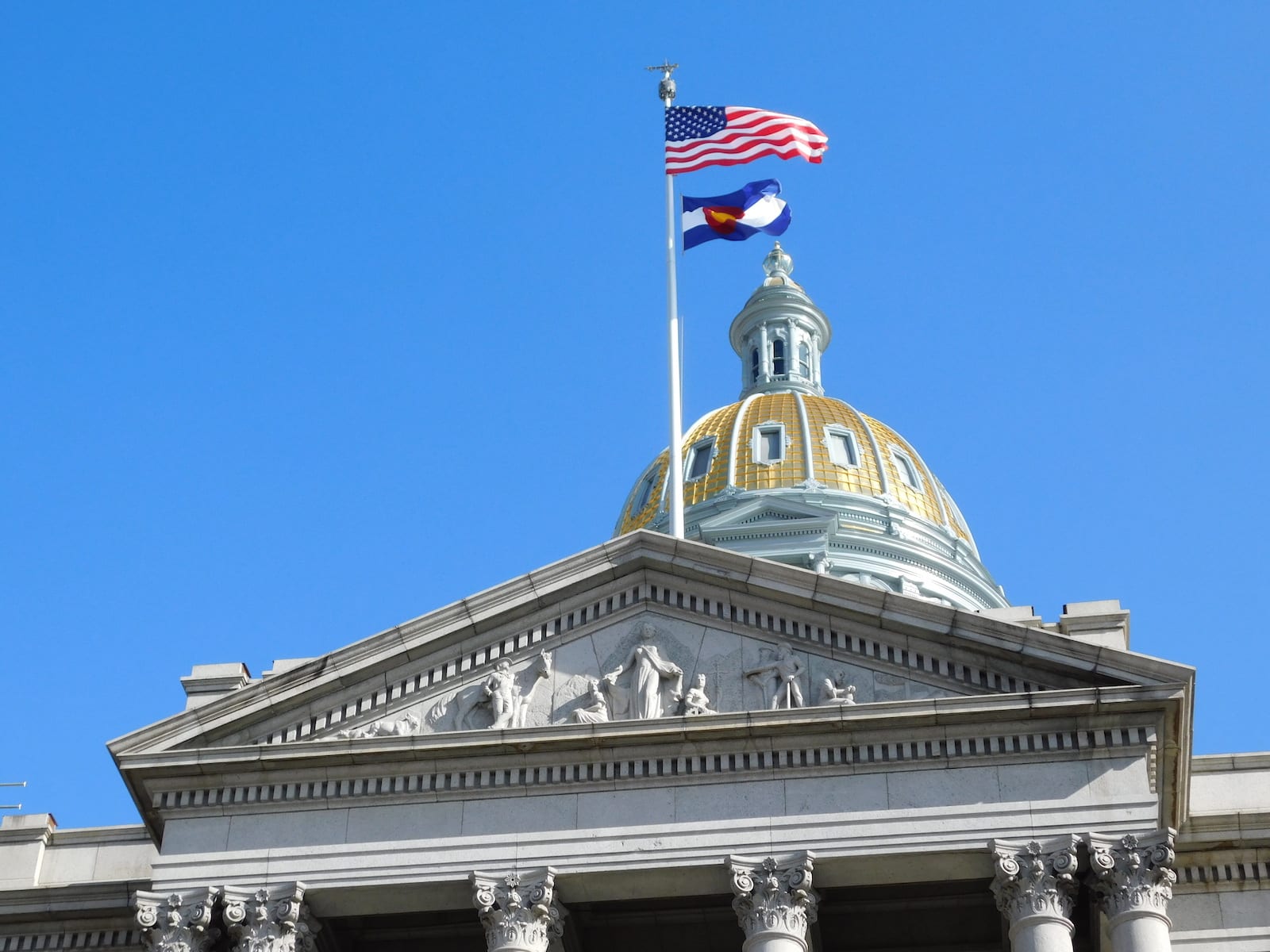
A string of federal investigations, scathing state audits, and whistleblower lawsuits has shattered Colorado’s long-standing reputation for clean, transparent governance, exposing widespread institutional failures across the executive branch. Over the past two years, officials at the highest levels of state agencies have faced mounting scrutiny for burying evidence of a decade-long forensic crime lab cover-up, overlooking tens of millions of dollars in Medicaid fraud, and presiding over billions in accounting misstatements. Together, the controversies have fueled a growing credibility crisis under the gold dome in Denver—and left incoming state leaders facing urgent demands for systemic reform.
Across state agencies, crime laboratories, and healthcare bureaucracies, a series of cascading scandals, federal investigations, and scathing state audits have exposed a culture where institutional self-preservation has repeatedly eclipsed public accountability.
From a decade-long forensic cover-up inside the Colorado Bureau of Investigation (CBI) to tens of millions of dollars in unchecked Medicaid fraud and billions in post-closing accounting failures, the executive arm of Colorado’s government is confronting an uncomfortable truth: corruption does not always arrive in a briefcase stuffed with cash. Often, it takes root in willful blindness, retaliatory silence, and a bureaucracy more invested in protecting its reputation than the people it serves.
A Crime Lab’s Decade of Silence
Nowhere is that institutional failure more visceral—or more devastating—than inside the Colorado Bureau of Investigation, a division of the executive-branch Department of Public Safety.
For nearly three decades, Yvonne “Missy” Woods was hailed as a pillar of Colorado’s forensic science community, a workhorse senior DNA analyst who routinely processed twice the caseload of her peers. In September 2026, Woods stood before a judge and was sentenced to 10 years in prison after pleading guilty to felony charges for manipulating and deleting critical DNA data across more than 1,000 criminal cases.
While Woods’ sentencing closed one chapter, a November 2026 filing by the American Civil Liberties Union (ACLU) of Colorado before the state Supreme Court laid bare a far deeper institutional rot. According to internal records and ACLU investigators, Woods did not operate in a vacuum. As early as 2014, and again in 2018, technical reviewers inside the CBI flagged data deletions in Woods’ casework and alerted their superiors.
Instead of halting her work or notifying prosecutors and defense attorneys, agency leadership buried the warnings. Woods was allowed to continue processing sexual assault kits and homicide evidence for another nine years—until an undergraduate intern stumbled upon anomalies in late 2023 that could no longer be swept under the rug. Even after opening an internal affairs probe, the CBI withheld the findings from the public for months and initially structured an external “root-cause” audit so narrowly—covering only two years and overseen by CBI executive staff—that civil rights advocates denounced it as an exercise in damage control.
“It takes a village to do a criminal case right, and it can take a village to taint a criminal case as well,” ACLU of Colorado Legal Director Tim Macdonald and senior counsel noted in pressing the state’s highest court to intervene. “And here, unfortunately, the second thing happened.”
For families of sexual assault survivors whose cases went cold because Woods falsely reported no male DNA was present, and for defendants convicted on compromised lab work, the scandal is not merely an administrative lapse. It is a profound betrayal of executive duty—one that has already cost Colorado taxpayers more than $11 million in retesting and litigation, with the final toll still climbing.
Billions in the Blind Spot
If the CBI scandal revealed how executive agencies protect insiders, recent financial audits have exposed how loosely those same agencies guard the public purse.
In its annual oversight reports released in mid-2026, the nonpartisan Colorado Office of the State Auditor (OSA) detailed a sprawling pattern of fiscal negligence across executive departments managing $56.3 billion in annual expenditures. Auditors uncovered more than $21 billion in gross financial misstatements during the state’s single audit, including $238.7 million in questionable payments and $10.6 billion in post-closing accounting adjustments at the Department of Labor and Employment alone.
At the Department of Local Affairs, officials improperly recorded $158.5 million in grant revenues. At the Department of Personnel and Administration, lease liabilities were understated by $50.4 million. Even small-scale waste pointed to a lack of basic stewardship: an August 2026 audit revealed that executive agencies had spent $173,000 over a single year paying for roughly 400 state-issued cellphones that never logged a single call, text, or byte of data.
More troubling, however, are the vulnerabilities inside Colorado’s $14.6 billion Medicaid program, overseen by the Department of Health Care Policy and Financing (HCPF). In March 2026, the U.S. House Committee on Energy and Commerce launched a formal congressional inquiry into waste, fraud, and abuse within Colorado Medicaid, noting that state spending had doubled over a decade even as enrollment grew by just 7 percent. Federal lawmakers pointed to over $25 million in fraudulent billing within the state’s non-emergency medical transportation program alone. Four months later, a separate federal Inspector General audit found that Colorado owed Washington at least $8 million—with another $45 million flagged for review—over improper payments and lax oversight in in-home disability care.
State officials have frequently blamed Colorado’s strict Taxpayer’s Bill of Rights (TABOR) for squeezing administrative budgets. Yet watchdog groups and legislative auditors point out a recurring theme: year after year, executive agencies agree to implement dozens of audit recommendations to close fraud loopholes, only to leave them unfulfilled years later.
Retaliation and the Politics of Clemency
Corruption in the executive sphere also thrives where political power intersects with institutional oversight. Throughout 2025 and 2026, Denver’s political establishment was rocked by explosive whistleblower allegations from Christopher Gregory, the former executive director of the Colorado Commission on Judicial Discipline.
In federal court filings and legislative testimony, Gregory alleged that top state officials conspired to cover up a $2.7 million judicial misconduct and hush-money scandal, and retaliated against him when he refused to stay quiet. His complaint specifically criticized Gov. Jared Polis for reappointing key commissioners implicated in the controversy despite formal warnings, raising sharp questions about how executive appointment power is wielded to insulate allies rather than empower independent watchdogs. Though a federal judge ultimately dismissed Gregory’s civil suit on procedural and immunity grounds in August 2026, the underlying documents fueled bipartisan demands at the Capitol for structural reform of how Colorado polices its own power brokers.
Meanwhile, Gov. Polis’s own final year in office drew fierce scrutiny in May 2026 when he commuted the nine-year prison sentence of former Mesa County Clerk Tina Peters, who had been convicted by a jury of orchestrating a security breach of county voting machines. The decision followed months of overt pressure and retaliatory federal funding threats from the White House. While Polis framed the commutation as a matter of sentence proportionality, fellow Democrats—including Secretary of State Jena Griswold and U.S. Sen. Michael Bennet—condemned the move as a capitulation to political coercion that undermined the rule of law and demoralized local election officials who had endured death threats to defend Colorado’s voting systems.
The Cost of Looking Away
Taken individually, each of these episodes can be explained away by political spokespeople as an isolated failure: a rogue lab technician, an outdated accounting software system, a difficult clemency calculation, or an overzealous whistleblower.
Taken together, however, they reveal an unmistakable pattern across Colorado’s executive branch. When watchdogs raise alarms—whether inside a forensic laboratory in Lakewood or an audit office across from the Capitol—the reflex of senior administrators has too often been to minimize, delay, or circle the wagons. In fiscal year 2026 alone, the state’s fraud hotline logged 162 allegations of misconduct, a steady drumbeat of rank-and-file employees trying to signal that something is broken inside their agencies.
As incoming Governor-elect Phil Weiser prepares to take the oath of office in January 2027, he inherits a state government whose credibility has been visibly bruised. Restoring public trust will require more than new cabinet appointments or fresh press releases. It will demand dismantling the culture of deference that allowed warnings to gather dust for years—proving that under Colorado’s gold dome, accountability is not merely a slogan etched on the walls, but a standard enforced on those who hold power.