

 By
Before you vote, see what your choices could mean.
We want to help you understand not just what's on the ballot, but what could happen afterward. Colorado Tradeoffs lets you test the choices, see the budget implications, and decide how you would respond.
Give it a try below. It takes less than 10 minutes.
For nearly a decade, a single afternoon at a family picnic followed Vanessa Peoples through every job interview, apartment application, and background check in her life.
In 2017, after her two-year-old child briefly wandered away at a park in Adams County, Peoples pleaded guilty to misdemeanor reckless endangerment and knowingly or recklessly committing child abuse with no injury. Though she eventually put herself through nursing school to build a better life for her family, the criminal record lingered like an invisible wall—shutting doors to housing and threatening to keep her from working in the very profession she had studied so hard to enter.
Last week, with the stroke of a pen at the Colorado State Capitol, that wall finally came down.
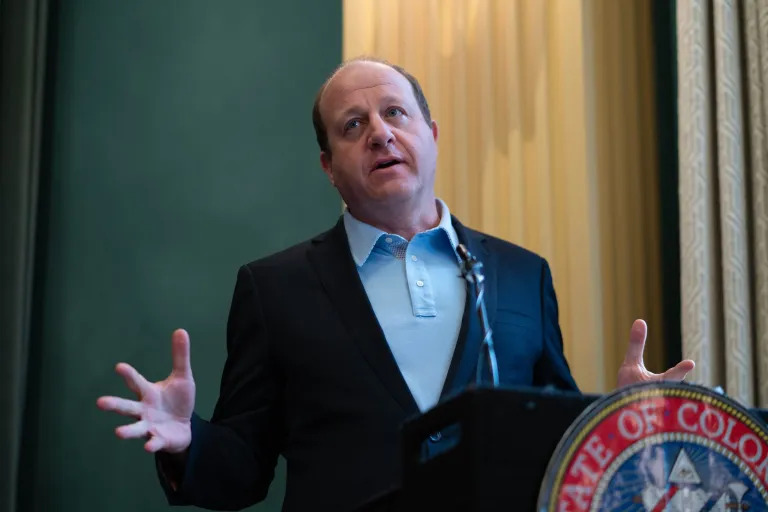
In one of the final major clemency actions of his two-term administration, Colorado Governor Jared Polis granted full and unconditional pardons to 27 individuals convicted of crimes across the state over the past five decades. The announcements, issued on November 12, 2026, span offenses reaching as far back as 1975 and offer legal redemption to dozens of Coloradans who have spent years—and in some cases, half a century—proving they are more than their worst moments.
“It allows me to be free, it allows me to get the job that I went to school for, it allows me to get housing,” Peoples told local reporters following the announcement. “It allows me to be the person I was before this even happened.”
A Sweeping Wave of Second Chances
Under the Colorado Constitution, a gubernatorial pardon does not erase the historical fact of a conviction, nor does it necessarily seal court records automatically. Instead, it serves as an official declaration of forgiveness from the state, restoring full citizenship rights—including the right to vote, serve on a jury, hold public office, and possess firearms—while lifting the heavy collateral stigma that often traps rehabilitated citizens in a permanent second-class status.
According to executive orders released by the governor’s office, more than half of the 27 pardons involved non-violent narcotics possession or property-related offenses such as theft, burglary, and criminal impersonation. Others addressed decades-old youthful indiscretions, including a 1975 conviction in El Paso County for the sale of marijuana granted to Bruce Korum—an offense that predates Colorado’s historic legalization of recreational cannabis by nearly forty years.
Alongside Peoples and Korum, the full list of pardoned individuals includes Victor Arellano, Richard Batdorf, Timothy Cordova, Luis Day, Mitchell Downing, Scott Ellison, Daniel Emmans, George Soon Fah, Matthew Focht, Craig Gipson, Phillip Hengemuhle, Ethan Hilton, Daniel Kelly, Thomas Knowles, Christina Latimore, Michael Low, Yeu Ly, DeAnna Martinez, Justin Mills, Sabrina Montoya, Joshua Moore, Walter Spangler, Veronica Stewart, Kelly Stovall, and Jordan Wood.
State officials noted that the recipients share a common trajectory: after completing their sentences, paying their debts to society, and maintaining clean records, many went on to earn college degrees, launch businesses, raise families, and volunteer in their local communities. Yet despite decades of lawful living, the digital permanence of modern background checks meant that mistakes made in the 1970s, 1980s, and 1990s continued to surface whenever they applied for a mortgage, sought professional licensing, or tried to chaperone a child’s school trip.
The Human Weight of a Criminal Record
Criminal justice advocates have long argued that the true sentence in the American legal system rarely ends when probation concludes or prison gates open. Across Colorado and the nation, tens of thousands of people live under what legal scholars call “collateral consequences”—a web of statutory and social barriers that restrict access to healthcare careers, commercial driver’s licenses, stable housing, and financial credit.
For Peoples, the journey since 2017 was defined by resilience in the face of persistent institutional rejection. Even after resolving legal disputes surrounding her arrest and using settlement funds to pay medical bills and enroll in nursing school, the misdemeanor convictions remained a red flag for hospital credentialing boards and landlords.
”My family never walked away from me,” Peoples reflected, recalling the dark stretches when the weight of the record made her consider giving up on her career ambitions. “They were always there for me. They would continue to tell me to keep pushing no matter what.”
Her letter from the governor’s office—a formal document bearing the state seal—explicitly acknowledged her rehabilitation and granted an unconditional pardon for both 2017 Adams County counts. For Peoples and the 26 others named in the executive orders, the practical impact is immediate: when an employer asks about their past, they can now present the highest executive authority in Colorado as proof of their redemption.
A Complex Clemency Legacy in Polis’s Final Months
The November pardons arrive at a pivotal moment in Colorado politics. Term-limited and preparing to leave office in January 2027—when Attorney General and Governor-elect Phil Weiser will be sworn in—Polis is working through the final stack of clemency applications submitted prior to his administration’s April 3, 2026 deadline.
Throughout his eight years in office, Polis has carved out an unconventional and at times polarizing approach to executive clemency. In 2020, he made national headlines by issuing mass pardons to 2,732 people convicted of low-level marijuana possession—the largest single-day clemency action in Colorado history—arguing that Coloradans should no longer carry criminal records for conduct that voters had made legal. Over his two terms, he has consistently framed clemency as a tool to correct outdated sentencing disparities and reward genuine personal transformation.
However, the governor’s clemency record has also drawn sharp scrutiny from both sides of the political aisle. Earlier this year, in May 2026, Polis sparked fierce debate across the state when he commuted the nine-year prison sentence of former Mesa County Clerk Tina Peters, who had been convicted on felony charges stemming from a 2021 election system security breach. At the time, Polis described the constitutional power of clemency as “a serious responsibility… not one that I take lightly,” acknowledging that it “comes with great consideration and sometimes even controversy.”
Criminal justice reform advocates, while welcoming the relief granted to everyday Coloradans, have occasionally urged the administration to apply its mercy even more broadly and consistently—noting the stark contrast between high-profile commutations and the quiet, years-long waits endured by ordinary applicants seeking forgiveness for decades-old non-violent offenses.
By comparison, Polis’s predecessor, Democratic U.S. Senator John Hickenlooper, issued 89 pardons during his two terms as governor. With less than two months remaining before the transition of power in Denver, Polis’s legal team continues to vet remaining applications received before the spring cutoff, leaving open the possibility of one final wave of pardons before he exits the Capitol.
Looking Forward
In Colorado, applying for a pardon is neither fast nor simple. Applicants must generally wait years after completing their sentences, gather extensive documentation of community service and employment, secure letters of recommendation, and undergo thorough background investigations by the Colorado Department of Corrections and the Executive Clemency Advisory Board. Prosecutors and sentencing judges are also notified and given an opportunity to weigh in before a file ever reaches the governor’s desk.
For the 27 individuals who cleared that rigorous gauntlet last week, the bureaucratic paperwork has finally given way to a deeply personal milestone.
In quiet living rooms from the Front Range to the Western Slope, 27 families spent the weekend holding formal letters from the State of Colorado—documents that cannot rewrite the past, but finally allow their futures to belong entirely to them. As Peoples prepares to step forward into her nursing career without the shadow of 2017 holding her back, her message to others still trapped behind old mistakes is simple: keep pushing, because the door does not have to stay closed forever.