
 By
Before you vote, see what your choices could mean.
We want to help you understand not just what's on the ballot, but what could happen afterward. Colorado Tradeoffs lets you test the choices, see the budget implications, and decide how you would respond.
Give it a try below. It takes less than 10 minutes.
MOSCOW — Outside the arched glass roof of the Gostiny Dvor, a brisk autumn wind sweeps across the cobblestones near Red Square. Inside, the air smells of freshly roasted Ethiopian Arabica, jet-fuel exhaustion, and high-stakes diplomacy.
It is late October 2026, and Moscow is hosting the Third Russia–Africa Summit.
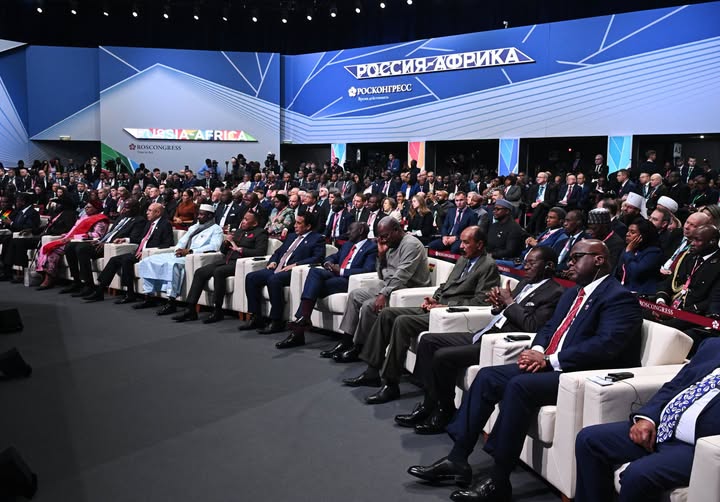
For two days—October 28 and 29—delegations from 48 African nations have packed into this historic exhibition hall. Twenty-two heads of state have walked down long red carpets, flanked by Russian honor guards. Outside, the international press corps frames the gathering as either a geopolitical masterstroke by the Kremlin or a symbolic dance of non-aligned nations navigating a fragmented global order.
But down on the concourse level, where the formal speeches give way to quiet handshakes, the conversation feels far more grounded.
Sitting on a modular leather couch near a display of modular nuclear power reactors, Amina Diallo—a 34-year-old agricultural technology entrepreneur from Dakar—adjusts her silk headscarf. She carries a tablet packed with supply-chain data, solar-pumping schematics, and fertilizer contracts.
“In Western reporting, when African leaders fly to Moscow, the narrative is always that we are pawns on a chessboard,” Diallo says, nursing a paper cup of tea. “They ask, ‘Is Africa turning away from the West?’ But if you come down here to the booths, nobody is talking about ideology. We are talking about nitrogen-based fertilizer, satellite bandwidth, grain security, and payment gateways that don’t get blocked by financial clearinghouses.”
Diallo’s perspective captures the true, unvarnished pulse of the 2026 summit. Strip away the diplomatic fanfare, and the gathering reveals two entities driven by pragmatic necessity, each seeking something the other uniquely possesses.
A Marriage of Friction and Necessity
To understand Moscow in October 2026, one must look back at how the relationship evolved.
When the inaugural Russia–Africa Summit took place in Sochi in 2019, it carried the high-energy romance of a resurrected historical bond. Moscow leaned heavily on Soviet-era nostalgia—reminding African states of the USSR’s support for anti-colonial liberation movements during the mid-20th century. By the second summit in Saint Petersburg in 2023, the tone had turned harsher, shaped by the geopolitical fractures of the conflict in Ukraine and the intense Western sanctions that followed. Russia was seeking economic lifelines and diplomatic allies; Africa was weathering global inflation, grain volatility, and rising energy costs.
By 2026, the rhetoric has matured into something cooler, harder, and far more transactional.
For Russia, Africa is not a sideshow; it is a vital pillar of its multipolar strategy. Cut off from many traditional Western commercial routes, Moscow has spent the past three years aggressively redirecting its trade, technology, and diplomatic focus toward the Global South. Africa represents 1.4 billion people, a massive voting block at the United Nations, and some of the fastest-growing consumer and infrastructure markets on earth.
For Africa, the relationship is driven by a fiercely modern doctrine of multi-alignment. Facing skyrocketing climate stresses, infrastructure gaps, and high interest rates on global debt, African governments are explicitly refusing to pick sides in global power struggles. Instead, they are shopping for solutions wherever they can find them—whether in Washington, Beijing, Brussels, New Delhi, or Moscow.
”African states today are pragmatic actors,” notes Dr. Kojo Mensah, an international relations scholar based in Accra who is attending the forum. “The era where African nations were expected to adopt the geopolitical rivalries of Europe or North America is over. If Moscow offers affordable energy, grain without prohibitive conditions, and vocational scholarships for our engineers, African leaders will sit at the table.”
Beyond Guns and Grain: The New Economic Agenda
Historically, Western commentary on Russian presence in Africa focused heavily on security assistance and raw commodities. While defense cooperation remains a factor—particularly in the Sahel region—the 2026 summit shows a deliberate shift toward a broader economic and technological footprint.
Walk through the Gostiny Dvor halls, and the exhibition booths reflect this changing dynamic:
- Energy and Atomic Power: State atomic agency Rosatom has expanded its showcase, presenting small modular reactors (SMRs) designed for off-grid mining centers and energy-starved rural provinces from North Africa to the Sub-Sahara.
- Agricultural Tech and Inputs: Amid climate-induced droughts in East and Southern Africa, Russian chemical giants are promoting long-term, fixed-rate supply agreements for nitrogen and potash fertilizers, alongside cold-storage infrastructure to preserve harvests.
- Digital Infrastructure: Russian tech firms are pitching localized data centers, cyber-security training, and digital governance software aimed at sovereign data storage.
Yet, significant operational hurdles persist.
The elephant in every seminar room is the friction of international finance. Russian financial institutions remain largely severed from global payment networks like SWIFT. Doing business requires navigating complex alternative settlement mechanisms—using national currencies, regional clearinghouses, or barter arrangements involving commodities like gold, minerals, and agricultural produce.
“The willingness to trade is high, but the plumbing is complicated,” says Samuel Ochieng, a logistics executive from Nairobi. “It’s fine to sign a memorandum of understanding for 50,000 metric tons of wheat or specialized mining machinery. But when you ask the trade finance officer how the money actually moves from a bank in Kenya to a bank in Saint Petersburg without getting frozen by intermediary banks, the conversation slows down. We are building new financial pipelines, but pipes take time to lay.”
Human Capital: The Soft Power That Sticks
If trade agreements face financial headwinds, human connections are moving at full speed.
One of the most vibrant zones of the 2026 forum isn’t the executive deal-making suites; it’s the Humanitarian and Educational Forum. Here, Russian universities and technical institutes are actively recruiting African talent.
Moscow has quietly expanded its university scholarship quotas for African students over the past several years, focusing heavily on medicine, nuclear engineering, artificial intelligence, and agronomics.
On a podium near the cultural pavilion, 22-year-old Farida Bakari from Tanzania shares her experience. She is completing her master’s degree in agricultural biotechnology at Peoples’ Friendship University of Russia (RUDN) in Moscow.
”When I told my family four years ago that I was coming to Russia to study soil chemistry, my friends thought I was crazy,” Bakari says with a laugh. “They thought it was freezing, cold, and distant. But the academic rigor in microbiology here is world-class. My research focuses on bio-fertilizers adapted to drought-prone soils. When I return to Arusha next year, I am bringing back real, usable knowledge to my community.”
This soft-power push is deliberate. Soviet-trained African professionals—doctors, engineers, diplomats, and army officers—formed the backbone of many post-independence African administrations in the 1960s and 70s. Russia is actively seeking to rebuild that generational bridge. By educating thousands of young African scientists and tech specialists today, Moscow is cultivating a network of future leaders who understand Russian language, technology, and operational culture.
The View From the Summit Floor
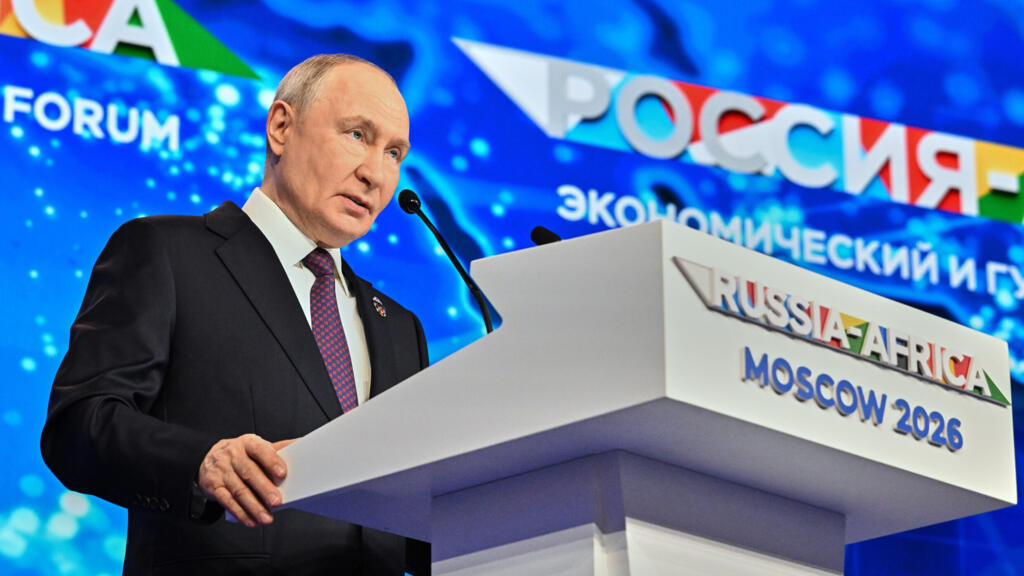
By late afternoon, as light dims outside the Gostiny Dvor, President Vladimir Putin and AU leadership co-chair the plenary session. Speeches emphasize a “joint vision for an equitable, multipolar global architecture,” highlighting shared opposition to economic unilateralism and neocolonialism.
The rhetoric plays well in many African capitals where frustration with Western trade conditions, climate finance delays, and stringent borrowing terms from international financial institutions runs high.
Yet, African delegations are far from passive listeners. Behind closed doors, African negotiators are pushing hard on key demands:
- Local Value Addition: African nations are increasingly rejecting raw material extraction arrangements. Delegations from countries rich in lithium, gold, and cobalt are demanding that Russian firms build local processing plants within Africa rather than exporting raw ores.
- Food Security Guarantees: African leaders are seeking long-term, insulated contracts for grain and fertilizer to shield their domestic markets from global market shocks.
- Institutional Reform: Both sides continue to push for expanded African representation on the UN Security Council and within global financial institutions.
A World Reordered
As the 2026 summit draws to a close, delegates file out into the crisp Moscow evening. Drivers wait in long lines along Ilinka Street to ferry ministers and business leaders back to their hotels.
The Russia–Africa relationship in 2026 is neither a panacea nor a grand ideological alliance. It is a mirror reflecting a transformed world order—a world where power is decentralized, alliances are fluid, and national self-interest drives diplomacy.
For Russia, the summit demonstrates that attempts to isolate the nation globally have hit clear geographic limits. For Africa, it represents another option in a growing toolkit of international partnerships.
Walking toward the metro station, tablet tucked securely under her arm, Amina Diallo reflects on the two days of intense negotiation.
”We didn’t come to Moscow looking for handouts or political lectures, and we didn’t come to take orders,” she says, wrapping her coat tight against the Russian cold. “We came to do business. The world is changing, and Africa is simply making sure it has a chair at every table where its future is being discussed.”