

 By
Before you vote, see what your choices could mean.
We want to help you understand not just what's on the ballot, but what could happen afterward. Colorado Tradeoffs lets you test the choices, see the budget implications, and decide how you would respond.
Give it a try below. It takes less than 10 minutes.
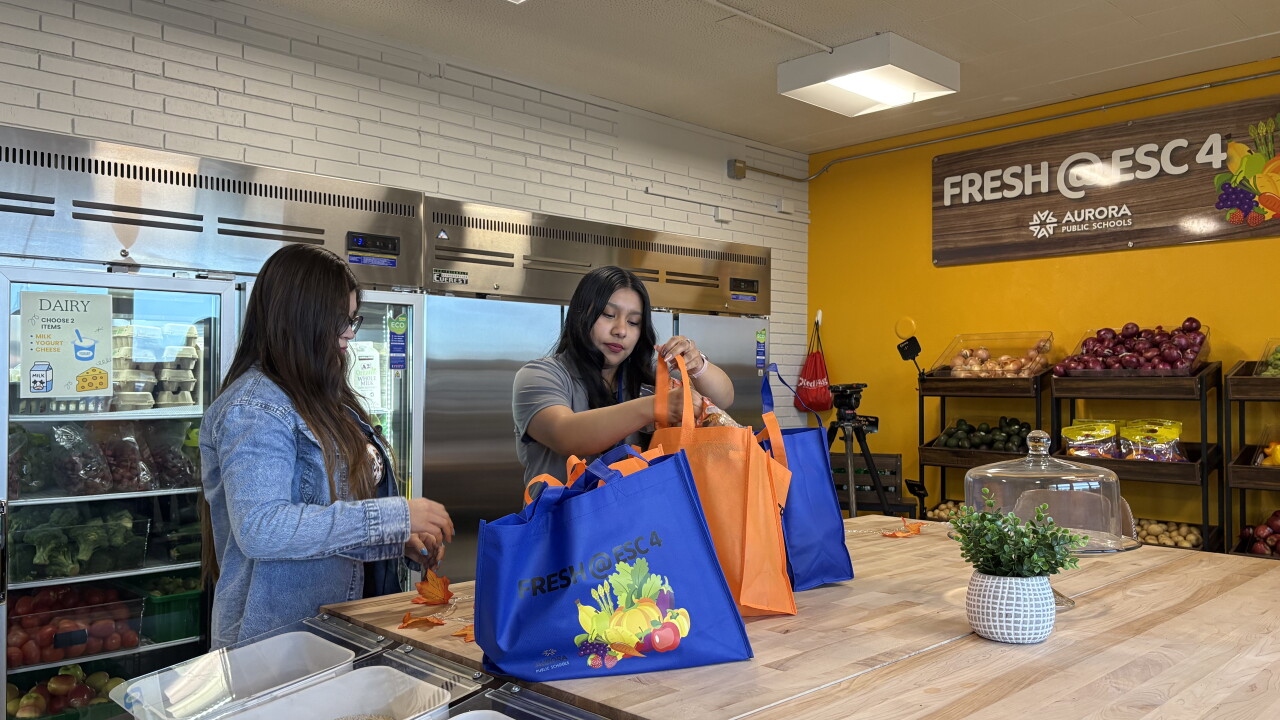
By bringing farmer’s-market-style grocery hubs directly onto school campuses, the district is easing the strain of rising food costs and turning classrooms into lifelines for local households.
Inside a brightly lit hallway at Mrachek Middle School, the familiar scent of chalk dust and floor polish gives way to something far warmer: crates of crisp carrots, bags of potatoes, fresh leafy greens, and pantry staples lined up neatly as if in a neighborhood corner market. For parents arriving after the final afternoon bell, there are no cash registers, no awkward eligibility interrogations, and no receipts waiting at the exit. There is only choice, dignity, and relief.
Over the past twelve months, that quiet transformation has unfolded week after week across Aurora Public Schools. One year after launching and expanding its dedicated free food market initiative—anchored by Family Food Centers and mobile FACE Farmers Markets—the district has now served more than 800 families, offering a vital financial buffer at a moment when stubborn grocery prices continue to strain household budgets across the Denver metro area.
For a school district serving roughly 40,000 students—roughly 70 percent of whom qualify for free or reduced-price lunch—the milestone is more than an operational success. It is proof of a philosophy that public schools cannot simply educate children in isolation from the economic realities waiting at their front doors.
When the Grocery Bill Becomes a Barrier to Learning
In households across Aurora, the math of everyday survival has grown increasingly unforgiving. Even as families juggle rent, utilities, and childcare, the weekly trip to the supermarket has become a source of quiet dread. Fresh produce, dairy, and proteins—the very foods growing children need to concentrate in class—are often the first items cut when paychecks stretch thin.
Teachers and school staff see the ripple effects long before they appear on any economic chart. A student who arrives at school distracted by hunger or anxious about whether there will be dinner at home struggles to focus on fractions, reading comprehension, or science labs.
”We know that students cannot learn if their basic needs aren’t met,” district leaders have emphasized through Aurora Public Schools’ Family Advocacy and Community Engagement (FACE) division. Rather than treating food insecurity as an outside social issue to be outsourced elsewhere, APS made a deliberate decision to bring nutritious groceries directly onto school campuses—places families already trust and visit every day.
More Than a Handout: Designing a Market With Dignity
Traditional food pantries, while essential, can sometimes feel transactional or stigmatizing. Pre-packed boxes often contain unfamiliar ingredients that go unused, and long lines in unfamiliar neighborhoods can deter working parents who are already short on time.
Aurora Public Schools set out to build something fundamentally different.
Operating through both brick-and-mortar Family Food Centers—such as the hub at Mrachek Middle School—and rotating FACE Farmers Markets hosted across nine strategic school sites, the program mirrors the experience of shopping at a real neighborhood market. Families walk through with reusable bags, selecting the specific fruits, vegetables, grains, and staples their households actually eat.
In a district where dozens of languages are spoken and families hail from every corner of the globe, cultural familiarity matters deeply. A bag of fresh produce isn’t just calories; it is the foundation for a family’s traditional stew, a familiar breakfast, or a shared Sunday dinner.
”In my culture, and in other cultures, the most important thing is sitting at the table,” said Nella Moretti, a family liaison at Mrachek Middle School and a native of Peru who has helped champion the center’s growth. “Enjoy, have a moment. We sit at the table with food to unite each other.”
Watching parents fill their bags without having to calculate every dollar at checkout has been emotional for the staff and volunteers who keep the shelves stocked. “How big is my heart right now,” Moretti reflected as the market took root, describing the quiet relief visible on parents’ faces when they realize they do not have to choose between paying an electric bill and putting fresh vegetables on the table.
A Network Built on Community Trust
Reaching more than 800 families in a single year did not happen by accident. It required rethinking how a school building functions after 3:00 p.m.
Under the district’s strategic vision of transforming schools into true community hubs, family liaisons serve as the bridge between classrooms and living rooms. Because liaisons work closely with parents throughout the academic year—helping with everything from translation services to housing referrals—they are uniquely positioned to let families know when a market is open, discreetly and without judgment.
”It’s definitely important to me to remove barriers for kids,” said a Mrachek educator involved in supporting the school’s community hub model. “I want them all to be successful in school and in life.”
Behind the scenes, the logistics of moving thousands of pounds of fresh food require tight coordination between APS Nutrition Services, community food bank partners, local growers, and dedicated school staff. Pop-up markets rotate across campuses—from Aurora Central High School and Yale Elementary to Altura, Virginia Court, Park Lane, Elkhart, Edna & John Mosley P-8, and Murphy Creek K-8—ensuring that families without reliable transportation can access fresh groceries right in their own neighborhood.
For parents working hourly shifts, the timing is intentional. Many distributions coincide with afternoon school pickup, allowing caregivers to collect their children and their week’s produce in a single stop.
The Ripple Effect at the Kitchen Table
When a family saves $50, $75, or $100 a week on groceries through the APS free food market, that money doesn’t vanish—it goes straight back into household stability. For many Aurora parents, the savings mean catching up on rent, buying winter coats as Colorado temperatures drop, covering medical co-pays, or simply breathing a little easier at the end of the month.
Just as importantly, children see their schools as places of genuine care. When a middle schooler helps carry a box of fresh apples and potatoes out of their own school building alongside a smiling family liaison, the relationship between home and school shifts from institutional to personal. Attendance improves, parent engagement deepens, and trust grows.
Across the broader district, the Family Food Centers complement an aggressive year-round push against childhood hunger—from free universal school breakfasts and lunches to Summer Big Bag Meal Kits that send students home with seven days’ worth of meals when classrooms close for break.
Looking Toward Year Two
As the program marks its one-year anniversary, organizers see the milestone of 800-plus families not as a finish line, but as a blueprint. Demand shows little sign of slowing, and staff at campuses across Aurora are already looking at how to replicate and expand the model so even more families can walk through the doors.
For the parents who rely on the market each week, however, the impact isn’t measured in annual statistics or district reports. It is measured in full refrigerators, lively dinner conversations, and children heading off to class each morning nourished, focused, and ready to learn.
In a time when the cost of everyday essentials can make families feel isolated in their struggles, Aurora Public Schools has sent a clear, unmistakable message to its community: nobody has to carry the weight alone, and there is always room at the table.