
 By
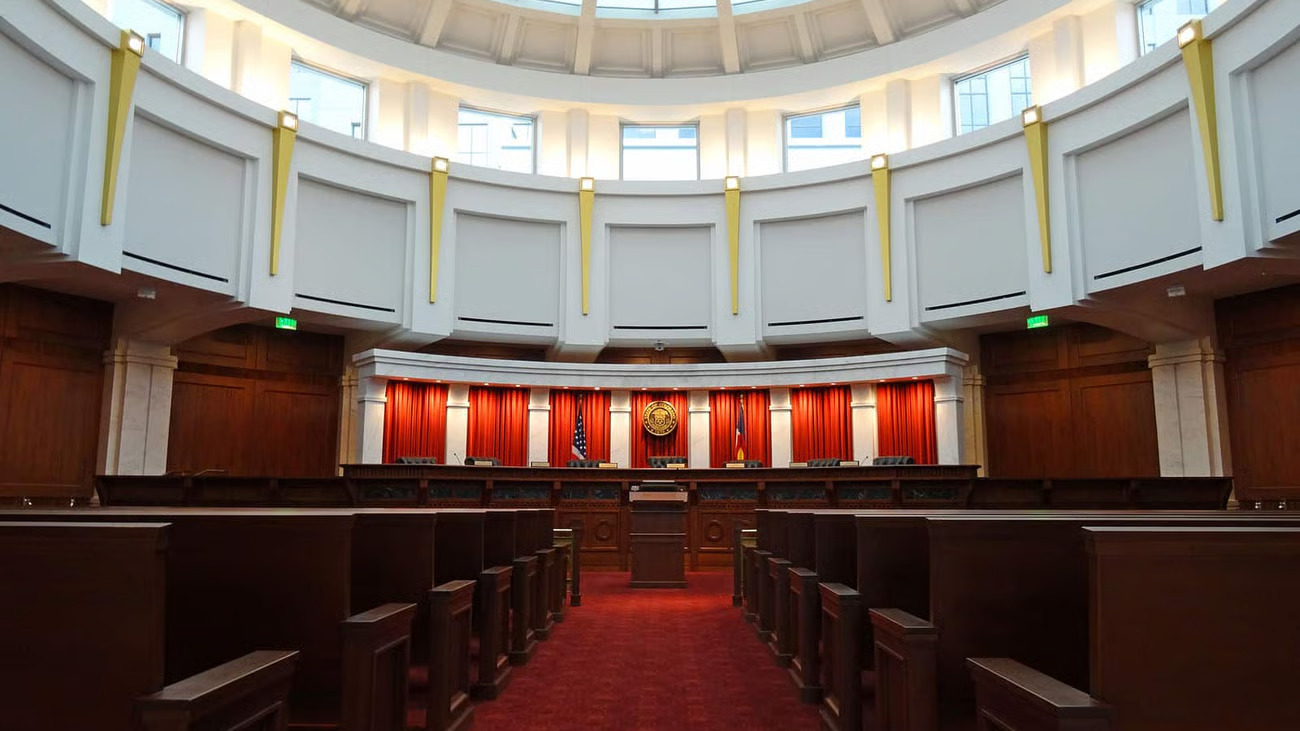
By DENVER — Beneath the golden dome of the Ralph L. Carr Colorado Judicial Center, a quiet crisis of credibility continues to ripple through the state’s court system. For years, Colorado’s judiciary operated as a model of nonpartisan stability. Today, however, a potent mix of skyrocketing misconduct complaints, lingering high-profile scandals, and bitter federal whistleblowing battles has left the state’s legal system struggling to regain the public’s trust.
The modern reckoning traces back to a scandal that rocked the state’s highest court: allegations that court administrators approved a lucrative, multi-million-dollar contract to a departing high-ranking employee to prevent a tell-all sex-discrimination lawsuit detailing years of unaddressed judicial misconduct. Though subsequent state investigations concluded the contract was not a direct quid pro quo, former Chief Justice Nathan Coats was censured for failing to disclose the arrangement.
Yet, the ghost of that deal continues to haunt the institution. Former judicial ethics chief Christopher S.P. Gregory launched a wave of aggressive whistleblower lawsuits in state and federal courts, alleging that Colorado Supreme Court justices engaged in a conspiracy to conceal evidence of wrongdoing and suppress ethics oversight. While federal judges dismissed the sweeping conspiracy claims on sovereign and qualified immunity grounds, the ongoing legal saga has kept uncomfortable questions about judicial self-policing in the public eye.
A Spike in Complaints, A Bottleneck in Discipline
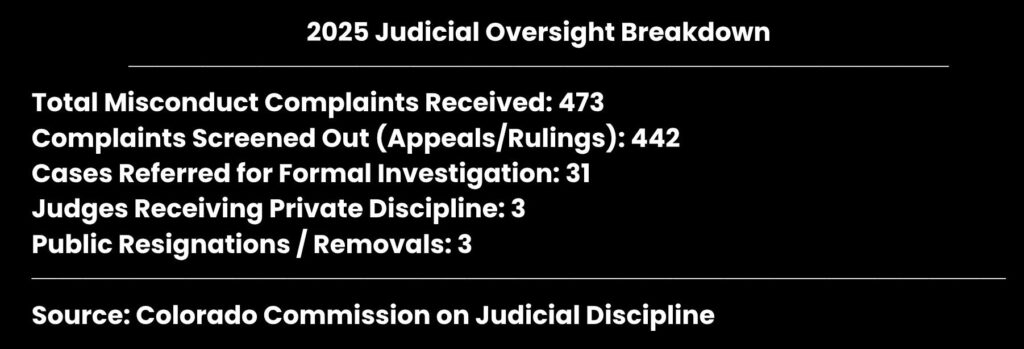
The public’s appetite for scrutiny is reflected in the raw data. According to the Colorado Commission on Judicial Discipline, misconduct complaints against state court judges surged to 473 in a single year—a nearly 29% increase and the highest level recorded in over a decade.
Ethics officials attribute the surge to improved public awareness and easier online access. But the sheer volume underscores a growing friction between everyday citizens and the bench.
The stark gap between the hundreds of grievances filed and the handful that yield discipline is a primary source of public frustration. The vast majority of complaints stem from litigants dissatisfied with a judge’s legal rulings—matters that must be handled through trial court appeals rather than ethics investigations.
However, the cases that do result in discipline reveal deeply troubling courtroom dynamics. Recent private reprimands detailed judges screaming at self-represented litigants, fabricating factual bases for rulings, and escalating conflicts from the bench. Public discipline proceedings led to multiple judge resignations, including a district court judge who failed to disclose personal relationships with criminal defendants appearing in his courtroom.
Rural Isolations vs. Urban Pressure Cookers
Behind the disciplinary statistics lies a systemic issue plaguing courts across the Centennial State: severe operational strain. Oversight officials highlight that delayed rulings and judicial burnout have become major vulnerabilities.
In urban centers like the Fourth Judicial District (El Paso and Teller counties)—which consistently generates the highest number of misconduct complaints in the state—dockets are overflowing. Trial judges face relentless caseloads with little time for administrative breathing room.
Conversely, rural judges face structural isolation. “Rural judges struggle in different ways than judges in urban jurisdictions,” noted Anne Mangiardi, Executive Director of the Judicial Discipline Commission, during legislative oversight testimony. “They tend to have different kinds of experience coming onto the bench. But more importantly, they don’t have that kind of built-in mentorship.”
Without peer support or adequate administrative backing, rural jurists frequently fall behind, leading to extreme delays in rulings that leave families, victims, and small businesses stranded in legal limbo for months—or years.
Rebuilding an Erosion of Faith
In response to legislative pressure, Colorado has taken steps toward reform. Independent oversight mechanisms have been fortified, and the disciplinary commission has operated with heightened transparency, publishing unprecedented details on private sanctions to signal that bad behavior will no longer be swept under the rug.
Still, legal experts argue that structural fixes only solve part of the problem. When a state’s top court is forced to defend its own integrity in federal filings, the ripple effect damages the perceived fairness of every municipal, county, and district court below it.
As Colorado’s judiciary moves forward, its central challenge is no longer just managing massive dockets or modernizing technology. It is convincing the public that the scales of justice apply equally to those who sit behind the bench.