


 By
By The town of Hudson, Colorado, sits on the flat, windswept eastern plains where the high-rise sprawl of the Denver metro area gives way to wide-open skies, working ranches, and farming communities. For generations, life here has moved at an unhurried, agricultural rhythm. With a population hovering around 1,600, Hudson is the kind of place where neighbors know each other by name, and big headlines usually involve weather patterns, crop yields, or local high school sports.
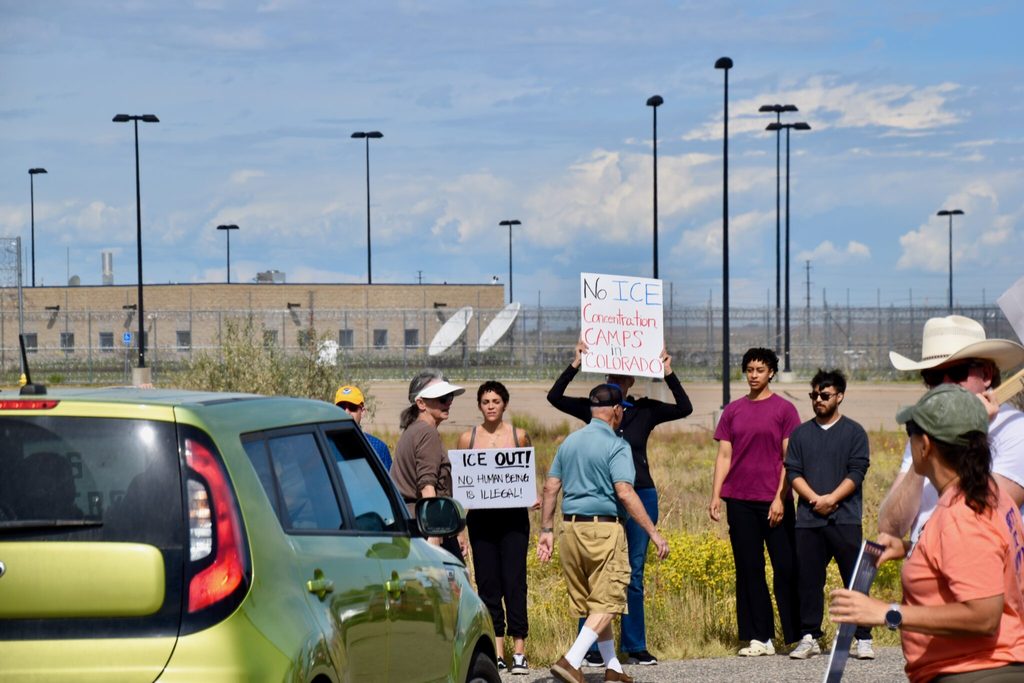
That quiet rhythm was abruptly shattered when federal plans emerged to transform a shuttered, decades-old private prison on the town’s edge into a massive, 1,200-bed Immigration and Customs Enforcement (ICE) detention facility. Owned by the private prison giant GEO Group and closed since 2013, the facility is slated for a high-speed revival.
Now, the sleepy plains of Hudson have become the epicenter of a fierce, high-stakes legal showdown. Colorado Attorney General Phil Weiser has officially filed a lawsuit against the Department of Homeland Security and ICE, launching a multi-front defense to halt the project. It is a battle that pits federal muscle against state environmental protection laws, local infrastructure limits, and a profound question of civic conscience.
The Legal Frontline: A Defiance of Common Sense and Law
When Attorney General Weiser announced the state’s lawsuit—marking a major challenge to federal immigration expansion—he did not mince words. Standing on the steps of the state’s legal defense, Weiser pointed out that the rushed effort to open the facility bypasses fundamental legal guardrails.
“This operation is proceeding, in many cases, in defiance of the rule of law, in a way that defies common sense and that lacks basic compassion and decency,” Weiser declared.
At its core, the state’s lawsuit targets the federal government’s failure to conduct rigorous environmental and community impact reviews required under federal law, such as the National Environmental Policy Act (NEPA). The state argues that DHS and ICE are sidestepping the exact kinds of preliminary studies that every standard infrastructure project must endure. The legal filing asks the court to step in with a preliminary injunction to halt all ongoing construction and renovation work at the former prison, and ultimately, to cancel the federal contract with the GEO Group altogether.
The state is not fighting this battle alone. Environmental and immigrant advocacy groups, including Green Latinos and the Colorado Immigrant Rights Coalition, have filed parallel federal lawsuits. They point to a harsh reality: transforming a mothballed facility into a massive holding center for 1,200 detainees will trigger a dramatic surge in diesel truck traffic, staff commuting, and supply chain logistics, pumping ozone-forming emissions into a region already struggling with air quality.
The Infrastructure Strain: Water, Waste, and Small-Town Realities
Beyond the soaring legal and ideological arguments, the Hudson detention center poses an immediate, gritty infrastructural crisis for the small town itself.
According to local planning and state documents, a facility of that magnitude will place an astronomical burden on Hudson’s modest municipal utilities. Town planners have privately and publicly acknowledged that bringing a dormant prison back to life with over a thousand detainees and staff will require drilling an entirely new municipal water well just to keep up with basic demands. Wastewater management systems, which have faced historical scrutiny and compliance challenges in the area, would also be pushed to their absolute limits.
For a town of 1,600 residents, absorbing a facility that effectively increases the local population base by nearly seventy-five percent—while confined behind razor wire and concrete walls—is a jarring prospect. While town municipal leaders have walked a cautious line, navigating the complex pressure of federal contractors and state oversight, local residents have found themselves caught in a political whirlwind they never asked for.
Young students and long-time ranchers alike have watched their quiet community transform overnight into a battleground for national immigration politics. For many, the concern is deeply human: how a small rural town can maintain its identity and resources when drafted into the front lines of an aggressive federal enforcement campaign.
A Broader War Over Accountability and Compassion
The lawsuit in Hudson does not exist in a vacuum. It is part of a broader, systemic clash between Colorado’s leadership and federal detention contractors. Earlier in the year, Attorney General Weiser’s office took action against the GEO Group for stonewalling state public health orders at the existing Aurora ICE processing facility. That persistent friction highlights a recurring theme in Colorado governance: a refusal to let private corrections and federal agencies operate in a regulatory blind spot.
For immigration advocates, the Hudson project represents a regression toward mass, out-of-sight detention that tears families apart and isolates vulnerable individuals far from legal aid networks, urban support systems, and community advocates. Placing 1,200 beds in a remote rural pocket makes oversight difficult, transparency scarce, and human stories easy to overlook.
Conclusion: The Horizon Over Hudson
As the case makes its way through the courts, the cranes and construction crews working behind the chain-link fences of the old Hudson prison stand as a physical manifestation of a nation divided over immigration, governance, and the bounds of federal power.
Whether the state’s legal strategy successfully blocks the facility or merely slows its momentum, the fight over Hudson has already redefined what it means to be a neighbor on the Colorado plains. It is a reminder that even the quietest corners of America cannot escape the gravity of our national debates—and that when federal ambitions outrun local laws, ordinary communities will find champions willing to draw a line in the dust.