 By
Before you vote, see what your choices could mean.
We want to help you understand not just what's on the ballot, but what could happen afterward. Colorado Tradeoffs lets you test the choices, see the budget implications, and decide how you would respond.
Give it a try below. It takes less than 10 minutes.
Walk up the front porch of any suburban home in Jefferson County this week, and the mailboxes are overflowing. Glossy flyers depict pristine pine forests threatened by historic wildfires on one card; on the next, dramatic red text warns that public schools are on the verge of financial collapse. Turn on the local evening news, and thirty-second television spots run back-to-back, each carrying an urgent appeal to save Colorado’s constitutional soul.
Yet if you flip over those mailers or pause the TV broadcasts during the fine-print disclaimers, the actual entities paying for these messages remain practically invisible.
They bear clean, focus-group-tested names: Brighter Colorado, Colorado Voter Trust Initiative, Defend Our Ballots, and The Coalition for American Prosperity and Growth. Behind these polished labels lies an unprecedented wave of “dark money”—untraceable political cash routed through 501(c)(4) nonprofits, out-of-state social welfare organizations, and shell committees designed specifically to keep voters in the dark.
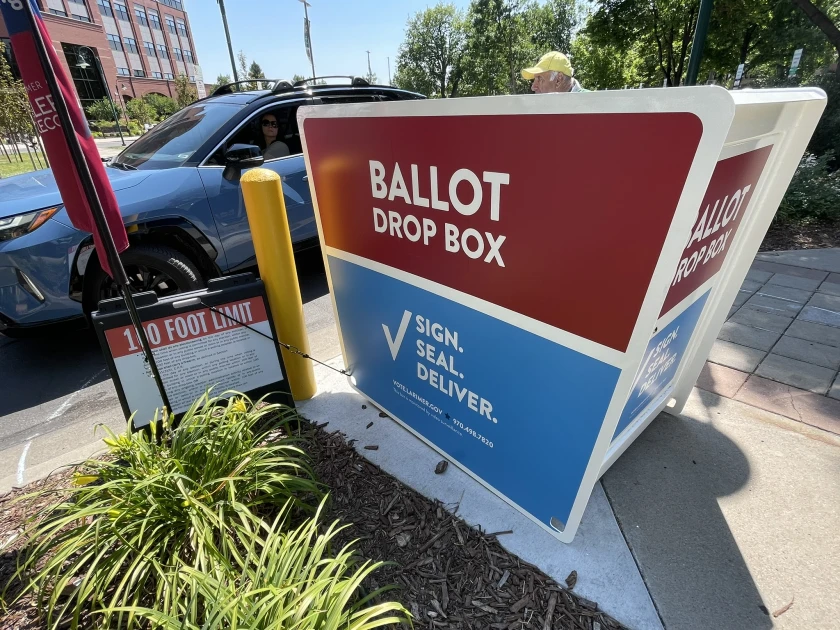
Across Colorado, spending on statewide ballot initiatives has surged past $47 million. Millions of those dollars are flowing from anonymous donors on both the conservative and progressive ends of the political spectrum. As Coloradans fill out their mail ballots on everything from tax caps and voting access to wildland fire funding, the state’s direct-democracy engine—conceived over a century ago to return power to ordinary citizens—has turned into a high-stakes arena for shadow financing.
The Anatomy of a Shadow Campaign
Under federal tax law, 501(c)(4) social welfare nonprofits are permitted to engage in political campaign activity so long as it isn’t their “primary” purpose. Crucially, unlike official candidate campaigns, these groups are not required to disclose the names of their individual financial backers.
When an issue committee registers with the Colorado Secretary of State to advocate for or against a ballot measure, it must report its donors. But when the donor listed on those public reports is simply another 501(c)(4) nonprofit—or a web of interconnected entities—the trail cold-terminates at a post office box.
Consider Amendment 84, a sweeping conservative proposal that would overhaul Colorado’s famed mail-voting system by requiring voters to provide their driver’s license number or the last four digits of their Social Security number alongside their signature.
Campaign finance records show that the primary issue committee supporting Amendment 84—the Colorado Voter Trust Initiative—has raised over $5.7 million. Every single dollar came from four entities:
American Prosperity Caucus (based in Texas): $2.4 million, The Coalition for American Prosperity and Growth (based in Colorado Springs): $2.2 million, American Jobs and Growth Fund (based in Virginia): $1.0 million and A Public Voice (based in Virginia): $1.0 million.
None of the four contributing groups maintains a public physical office, holds public events, or reveals its financial supporters. All four list their registered business locations as P.O. boxes.
“What you’re witnessing is a system engineered for plausible deniability,” says Sandra Lopez, an independent campaign finance attorney based in Denver. “When a voter sees an ad from a group calling itself ‘Coloradans for Common Sense,’ they naturally assume it’s a coalition of their neighbors. In reality, it could be three out-of-state billionaires or a single industry trade association funneling funds through a maze of corporate entities to alter our state constitution.”
The War Over Taxes and Public Education
Dark money’s reach in Colorado is far-reaching, spanning both side of the political spectrum. The most contentious—and expensive—battles are playing out over state tax revenue, public education funding, and economic policy.
At the center of this battleground are two opposing ballot initiatives:
Proposition NN: A measure referred to the ballot by lawmakers that would raise roughly $500 million annually for public K-12 education by raising Colorado’s constitutionally mandated revenue growth cap.
Amendment 87: A citizen initiative advocating for the establishment of a graduated state income tax structure.
Much of Brighter Colorado’s funding comes directly from Advance Colorado, a powerful conservative political network operating as a 501(c)(4). Under state law, Advance Colorado is not obligated to name the individuals, corporations, or foundations writing its multi-million-dollar checks. Another major contributor to the committee is Common Sense America, a dark-money nonprofit headquartered in Maryland.
On the other side of the aisle, progressive forces are utilizing similar mechanisms. While major labor unions like Colorado WINS and public education groups like the National Education Association disclose their institutional contributions, millions supporting progressive tax measures and opposing conservative initiatives flow through non-disclosing entities such as Brighter Future for Colorado and various advocacy funds.
“It’s an arms race,” says Marcus Vance, a former legislative researcher who studies political spending in the West. “If one side uses untraceable 501(c)(4) cash to flood the airwaves, the other side feels compelled to build its own dark-money apparatus just to stay competitive. The result is that the everyday voter gets caught in a crossfire of multi-million-dollar messaging campaigns where no one takes personal responsibility for the claims being made.”
The Human Cost: Confusion on the Doorstep
For voters, this flood of anonymous spending creates a disorienting, high-noise landscape where determining the truth requires deep research.
On a rainy Tuesday afternoon in Lakewood, retired schoolteacher Ellen Gallagher sat at her kitchen table surrounded by a mountain of election mailers.
”I used to feel like I understood what I was voting on,” Gallagher says, holding up two contrasting mailers about Proposition 137—a measure dealing with wildlife conservation funding and forest fuel management. “One flyer says this proposal protects our forests from catastrophic wildfires. The next flyer says it’s a backdoor corporate subsidy that actually damages local ecosystems. They both sound authoritative. But when I look at who paid for them, it’s just a list of acronyms and committee names I’ve never heard of in my life.”
Gallagher’s experience highlights a growing concern among democracy advocates: dark money doesn’t just fund political ads—it distorts public debate by disguising corporate or ideological self-interest as organic grassroots advocacy.
When a ballot initiative is sponsored or opposed by an identifiable group—like a local firefighters’ union, a neighborhood association, or a recognizable small business coalition—voters can evaluate the message based on the source’s credibility. But when the source is obscured behind layers of shell nonprofits, voters lose the ability to evaluate who stands to gain financially or politically if a measure passes.
Can Transparency Be Restored?
Colorado has made repeated attempts to shine light into its political corners. Voters previously passed transparency measures requiring clear disclaimers on TV ads and mandating that issue committees report major contributions.
However, political strategists have repeatedly adapted, exploiting federal tax law and multi-tiered corporate structures to stay ahead of state-level disclosure mandates.
Reform advocates argue that closing the dark-money loophole will require aggressive state legislation:
- “Look-Through” Disclosure Laws: Mandating that if a political committee receives funding from a nonprofit, that nonprofit must publicly trace and disclose the original source of those funds before the money can be spent on electioneering.
- Strict Penalties for Non-Disclosure: Increasing financial penalties for committees that use out-of-state shell groups to conceal donor identities.
- Enhanced Ad Disclaimers: Requiring political ads to explicitly list the top three individual human contributors behind the funding organization, rather than just the corporate entity name.
Until such reforms take hold, Colorado’s direct-democracy process remains vulnerable to shadow influence.
As Ellen Gallagher gathered her pile of election mailers to toss into the recycling bin, her frustration was evident. “Direct democracy was supposed to be about everyday citizens having a voice,” she says. “Now it feels like a high-stakes poker game where the biggest players won’t even show their faces.”