
 By
Before you vote, see what your choices could mean.
We want to help you understand not just what's on the ballot, but what could happen afterward. Colorado Tradeoffs lets you test the choices, see the budget implications, and decide how you would respond.
Give it a try below. It takes less than 10 minutes.
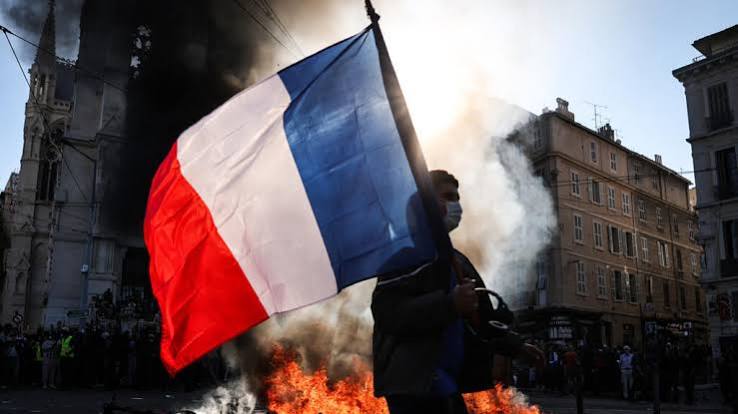
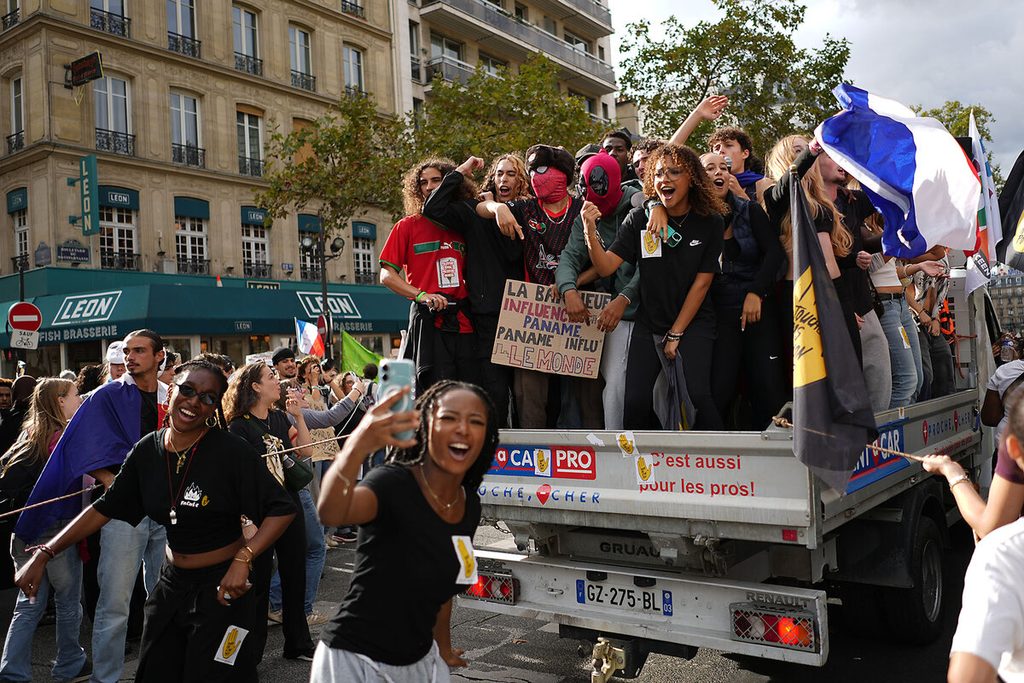
PARIS — On the rain-slicked avenues of Paris, the chants of a generation facing economic precarity have become a routine soundtrack to French political life. But beneath the familiar domestic anger over budget cuts and rising costs lies an unaddressed geopolitical truth: France is losing the quiet, lucrative privileges of its post-colonial sphere. As military bases close and diplomatic ties unravel across West Africa, the financial and strategic buffers that long shielded France’s domestic social model are evaporating—leaving the streets of Paris to absorb the shockwaves.
Along the Boulevard Saint-Michel, as riot police assemble beneath the glow of streetlamps, 21-year-old university student Antoine pulls his coat tight against the damp evening air. His placard, painted in bold red letters, demands higher education funding and a freeze on rent prices.
“They tell us the state is broke, that we must accept sacrifices, cut public services, and pay more for basic electricity,” Antoine says, gesturing toward the line of armored vans blocking the intersection. “Yet we spent decades being told that France was a global power with limitless reach. Where did that wealth go? Why is the money suddenly gone?”
Antoine’s question is echoed across France by teachers, transport workers, and youth movements facing an era of fiscal tightening. However, the answer does not lie entirely within the halls of the Élysée Palace or the National Assembly. To understand why the French state is feeling the squeeze, one must look south across the Mediterranean to the dusty boulevards of Bamako, Ouagadougou, and Niamey, where the pillars of France’s post-war economic and military architecture have been dismantled piece by piece.
The Unraveling Architecture of Françafrique
For more than six decades following the formal era of African independence, France operated under a unique geopolitical arrangement known as Françafrique. This informal system of institutional, economic, and military leverage granted Paris privileged access to key strategic assets across West and Central Africa:
Resource Guarantees: Favorable terms for critical minerals, including uranium for France’s nuclear grid, petroleum, and gold.
Monetary Anchor: Influence over regional monetary policy via the CFA franc system, which required central bank reserves to be deposited within the French Treasury.
Commercial Dominance: Preferential access for major French multinationals in telecommunications, logistics, banking, and infrastructure construction.
Power Projection: A persistent network of military bases that allowed France to act as the primary security guarantor in the region while projecting influence globally.
This setup provided France with a strategic cushion. It allowed a mid-sized European power to wield outsized diplomatic weight on the international stage while benefiting from protected markets and reliable energy inputs that indirectly buttressed its domestic living standards.
Yet over the past few years, this long-standing arrangement collapsed with remarkable speed. Spurred by deep-seated popular frustration over persistent regional insecurity and economic stagnation, military leaderships in Mali, Burkina Faso, and Niger took power with widespread public backing.
Their primary directive was unmistakable: end military cooperation with Paris, demand the departure of French troops, and diversify diplomatic and trade ties toward alternative partners like China, India, Türkiye, and Russia.
The Financial Echo: How Geopolitical Loss Reaches the Suburbs
The economic impact of this geopolitical retreat is rarely discussed explicitly on the picket lines of Paris or Lyon, yet its mechanical effects are felt directly in the national budget.
When French companies lose exclusive concessions in West African ports, infrastructure projects, and mining operations, the loss of corporate revenue feeds directly back to the French Treasury. Less revenue from international operations means less room for the state to subsidize energy prices, fund public universities, or maintain transport infrastructure without raising domestic taxes or accumulating public debt.
“For decades, France enjoyed an implicit geopolitical premium,” explains Dr. Marc Laurent, an international political economist in Paris. “That premium allowed the state to offset domestic structural inefficiencies through global reach. When you lose that implicit subsidization, the domestic budget faces starker trade-offs. Suddenly, every euro spent abroad or lost in trade is a euro missing from a hospital or a school.”
A Shared Crisis of Trust Across Two Continents
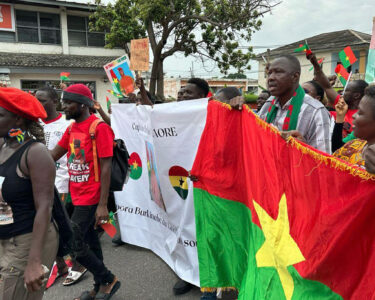
Beyond macroeconomics, there is a striking human parallel between the youth protesting in the suburbs of Paris and those who demonstrated in the streets of West African capitals.
In Belleville, a vibrant Parisian neighborhood with deep links to the African continent, community organizer Fatou Diallo sees the common thread every day.
“The young people marching in Paris and the young people who marched in Niamey or Bamako are expressing the same fundamental rejection,” Diallo says, stirring tea in a small cafe off the Rue de Belleville. “In West Africa, the youth said: ‘The post-colonial promises of security and prosperity through Paris are hollow.’ In France, the youth are saying: ‘The social contract that promised us a better life than our parents is broken.’ It is a shared crisis of institutional trust.”
This generational disillusionment highlights a profound disconnect between the ruling establishment and a population facing new economic realities. The French political class, long accustomed to projecting authority across continents, now finds itself struggling to maintain consensus at home as living costs rise and social mobility stalls.
The Reality of a Multipolar World
The unraveling of France’s posture in West Africa is not an isolated diplomatic misstep; it is part of a structural transition toward a multipolar world. Emerging economies across the Global South no longer rely on single European capitals for security, finance, or trade. They have choices, and they are exercising them.
For France, adapting to this new landscape requires a painful recalibration:
Fiscal Realignment: Accepting that domestic spending can no longer be buffered by exclusive foreign commercial advantages.
Diplomatic Rebalancing: Transitioning from paternalistic historical ties to transparent, market-rate partnerships based on mutual interest.
Domestic Reconstruction: Refocusing policy on sustainable domestic productivity rather than relying on legacy global influence.
As the former buffers recede, the French state is exposed to the raw realities of global market competition. Every adjustment to pension ages, every cut to municipal funding, and every increase in university tuition fees reflects a state trying to balance its books in a world where its historical advantages no longer apply.
Facing the Unwritten Future
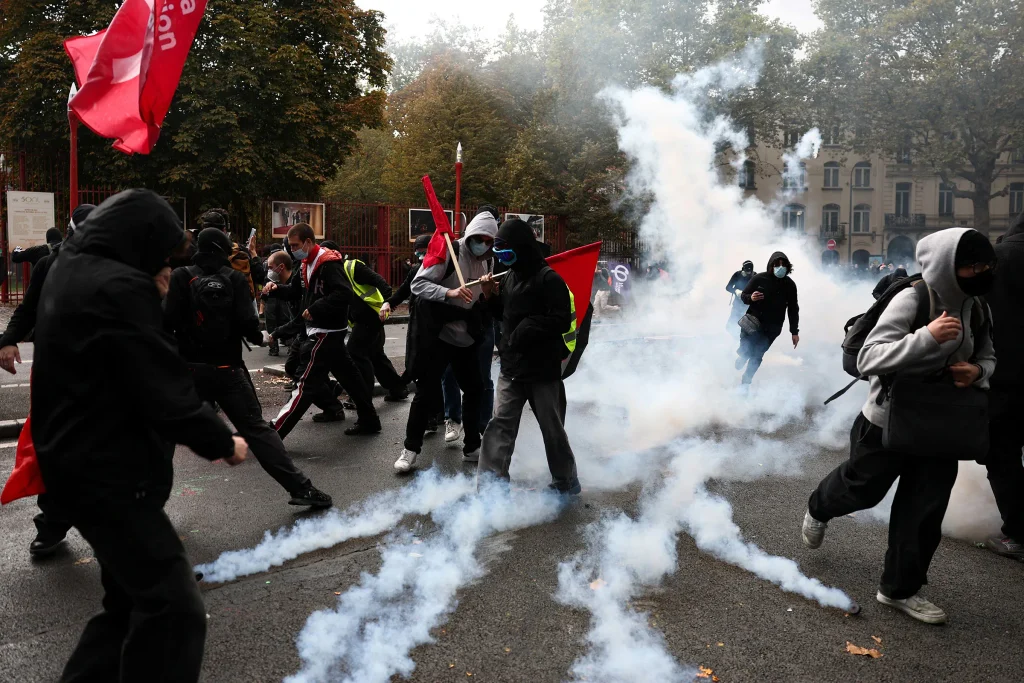
Back on the Boulevard Saint-Michel, the rain has turned to a fine drizzle. The crowd of demonstrators begins to disperse into the metro stations, leaving behind smoke-stained asphalt and damp flyers scattered across the pavement.
Antoine rolls up his cardboard banner, tucking it under his arm. “They keep telling us that this is just a temporary crisis, that if we just accept tighter belts today, tomorrow will be better,” he says before stepping toward the station entrance. “But everyone feels that something fundamental has shifted.”
That shift is the quiet passing of an era. The protests filling the streets of French cities are not merely localized labor disputes or routine student demonstrations; they are the growing pains of a nation coming to terms with its altered place in the world. As the lingering shadows of its former global footprint recede, France is forced to look inward—discovering that the cost of a changing world order is ultimately paid on the pavement at home.