

 By
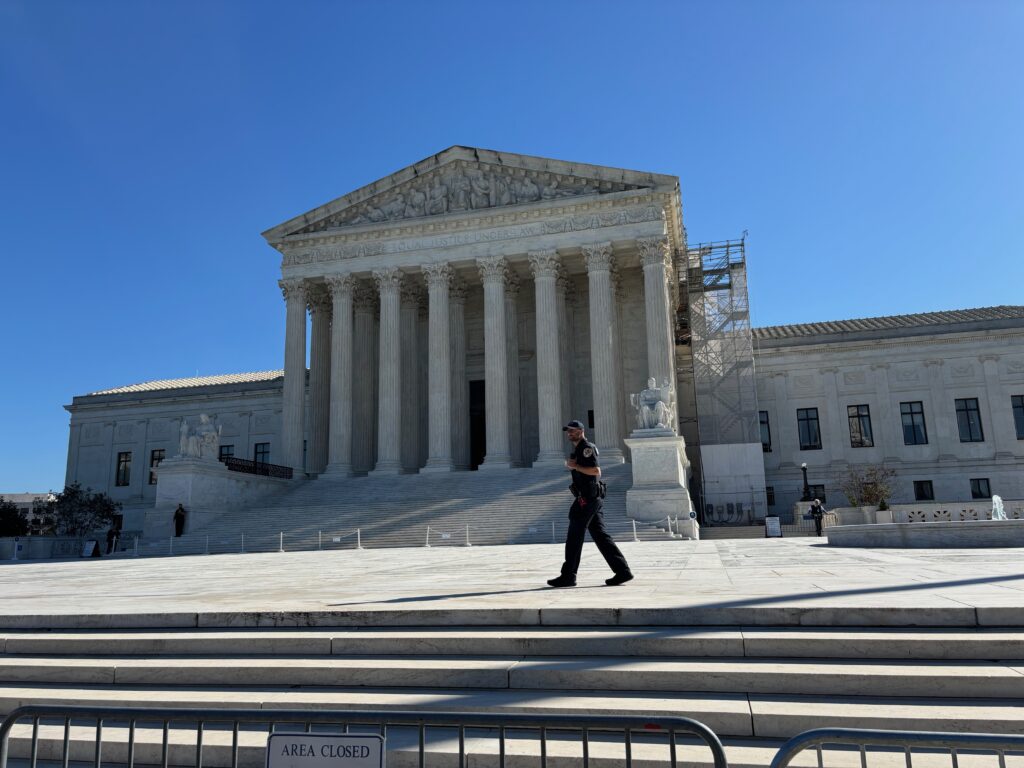
By The Supreme Court recently agreed to weigh in on the issue of whether some immigrants with criminal records can be detained indefinitely.
The court accepted a case, Genalo v. Black, from New York state involving a legal immigrant from the Dominican Republic arrested by immigration enforcement after an assault conviction and held for 21 months during deportation proceedings.
An appeals court ruling in the case found that an “unreasonably prolonged” detention requires a bond hearing in which the government must show “clear and convincing evidence” that the immigrant would be a flight risk or a danger to the community if released.
The Supreme Court also asked attorneys for arguments about whether the immigrant’s 2020 release makes the case moot.
Indefinite Immigration and Customs Enforcement detention for immigrants either with criminal convictions or a record of illegally crossing a border has become legally controversial. Some appeals courts have upheld the Trump administration detention policy, while others have declared it unconstitutional.
Individual judges have mostly ruled that non-criminals in immigration detention are entitled to a bond hearing or should be freed outright.
Courts across the country have also been grappling with ICE’s dramatic expansion of mandatory detention to people who have resided in the country for years — sometimes decades — without incident. Though this detention authority has long been applied to people apprehended crossing the border, the Trump administration has reinterpreted the law to treat immigrants detained anywhere in the country as though they had just crossed the border, subjecting them to mandatory detention.
That unprecedented policy shift has flooded the courts with emergency lawsuits by ICE detainees, leading to an overwhelming rejection by federal judges appointed by all presidents since Ronald Reagan. But a split among federal appeals courts has the issue likely destined for Supreme Court review.
Whether the justices ultimately resolve the question about prolonged detention for those with criminal records is murky. The two detainees at the heart of the case have argued that the matter is moot because one left the country in 2023 and the other has been released from detention for several years. The justices indicated they are weighing the “mootness” issue in addition to the due process question at the heart of the case.