

 By
By Calls for “courageous” leadership to prioritise innovation and social impact ahead of alliance’s 60th anniversary
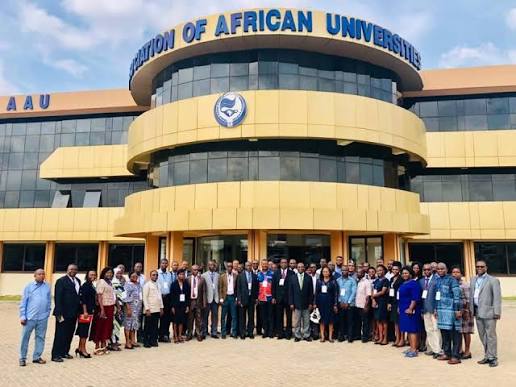
The Association of African Universities has used its 60th-anniversary celebration launch to call for a radical shift in higher education on the continent.
Speaking recently, Olusola Oyewole, the AAU’s secretary-general, argued that African institutions need to become engines of development focused on real-world impact, not just factories awarding degrees. “Curricula must change to reflect the vision that we have for the young people of the future,” he told the virtual launch.
Research policies also must change, to shift African university research “away from journal publications to innovations and even to actual industrial development”, he said. “Courageous” university leaders were needed to accomplish this.
“Africa needs its universities,” he said. “It’s time for us to be at the centre of development.”
Diamond jubilee
Oyewole’s words this week mark the beginning of preparations for the 24th Conference of Rectors, Vice-Chancellors and Presidents of African Universities, which will take place in Nairobi, Kenya, in July next year and will mark the AAU’s 60th anniversary.
The Corevip 2027 meeting will be the flagship event of the AAU’s diamond jubilee year and is expected to bring more than 1,000 university leaders and policymakers to the Kenyan capital, the launch heard.
Vincent Onywera, deputy vice-chancellor for innovation at KCA University, which will host the event, billed the conference as a “five-star, world-class conference experience” held in the heart of Nairobi’s “Silicon Savannah”.
Sustainable funding
AAU representatives and partners said the anniversary year and the Nairobi meeting would be used to push for new funding and programmes, and to press for a different role for universities in African development.
With sustainable financing one of five central pillars on the agenda, John Gyapong, the head of the African Research Universities Alliance, called for the meeting to address the elephant in the room: governments’ low investment in research.
He said African governments had committed to spend at least 1 per cent of GDP on R&D, but that nearly all were “way, way behind” that goal.
Gyapong urged rectors and vice‑chancellors to use the run‑up to Corevip 2027 to “galvanise our governments to provide the necessary resources to support our research in our universities”.
“I believe that with the collective effort of all our universities, this could be achieved,” he said.