

 By
By In the high-altitude training hubs of Iten and Eldoret, where world records are forged in red clay dust, the news broke like a thunderclap.
For the first time in the history of international track and field, the World Athletics Championships will land on African soil. During its 242nd Council Meeting in Budapest, World Athletics awarded Nairobi the hosting rights for the 2029 global showcase, leaving legacy sporting capitals like London and Rome empty-handed in their wake.
World Athletics President Sebastian Coe framed the decision as a moral and emotional imperative, noting that a sport so heavily reliant on African talent could no longer relegate the continent to a distant pipeline. But as celebration swept through the nation’s distance-running elite, a harsh spotlight turned toward the underlying realities facing the host country.
Behind the triumphs of Faith Kipyegon and Eliud Kipchoge lies a complex web of economic vulnerability, infrastructural strain, and institutional scrutiny. The 2029 Games stand at the precise intersection of national pride and systemic risk—a historic homecoming that could either solidify Kenya’s status as a global sports titan or expose its fragile administrative foundations.

The Promise: Pride, Legacy, and Economic Fuel
For Kenya, hosting the 2029 Championships represents far more than nine days of stadium drama; it is a long-overdue institutional validation. Historically second only to the United States on the all-time World Championships medal table, the country has spent decades winning titles abroad while lacking the modern venues required to stage top-tier international events.
Key Advantages for the Host Nation
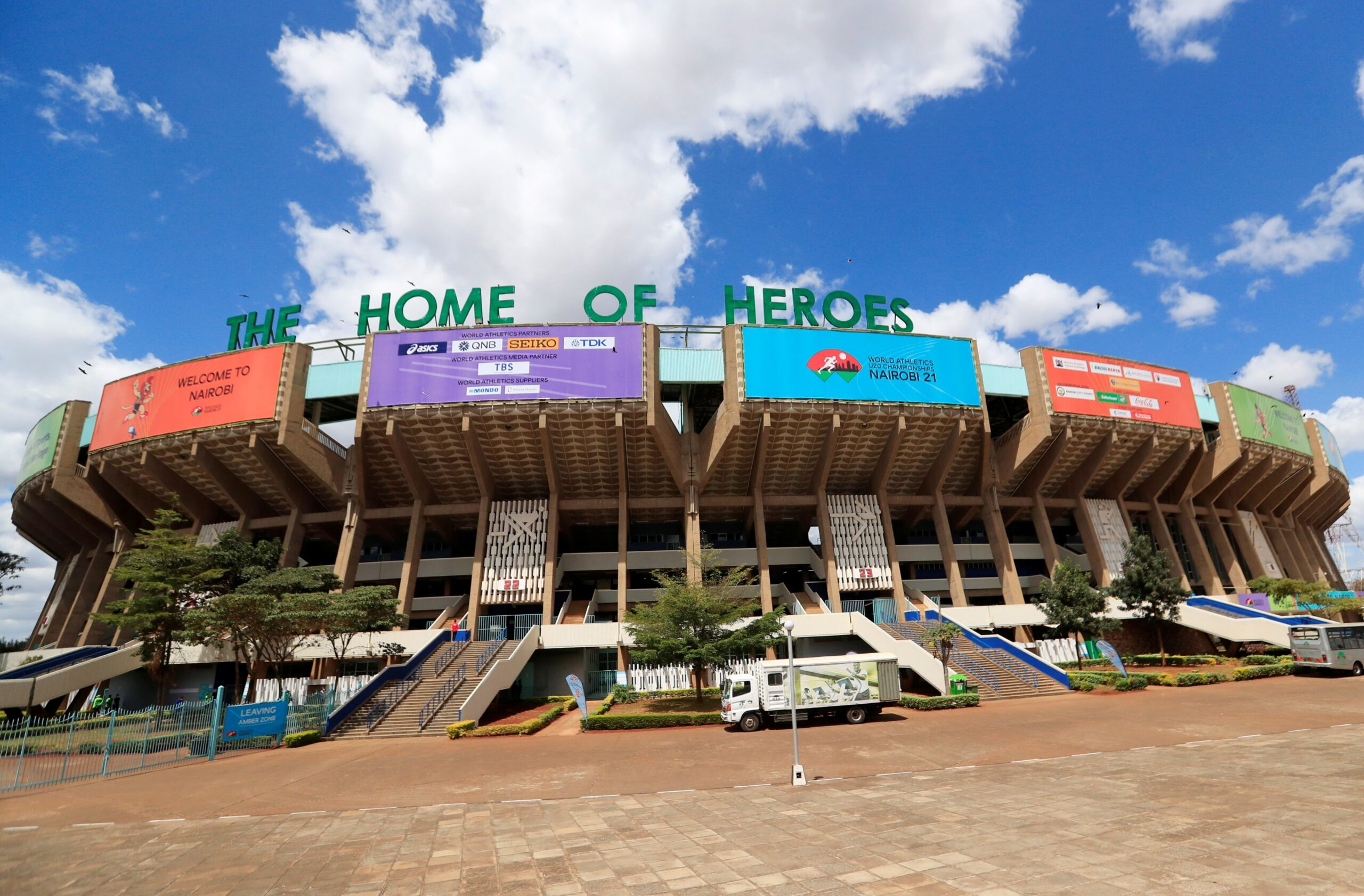
Leveraged Infrastructure: The bid builds directly on capital upgrades underway for the 2027 Africa Cup of Nations (AFCON). Renovations at the 60,000-capacity Kasarani Stadium—including modernized track surfaces, upgraded broadcast booths, and enhanced hospitality suites—drastically reduce the need for purpose-built white elephant projects.
Home-Track High Altitude: Staging track events at Nairobi’s 1,795-meter (5,889-foot) elevation gives distance runners from the Rift Valley a distinct physiological advantage, while offering sprint disciplines a high-altitude speed boost.
Economic Injections: Tourism, hospitality, and transport sectors expect a multi-million-dollar surge as tens of thousands of international visitors, broadcast crews, and athletic federations converge on the capital.
Proved Hosting Pipeline: Having successfully staged the 2017 World U18 Championships and the 2021 World U20 Championships, Nairobi demonstrated operational readiness under international broadcasting and security standards.
“It was important that the World Athletics Championships should come to Africa when we had the right host, the right bid, and the right circumstances,” Coe emphasized during the announcement. “Nairobi has demonstrated emphatically that this is their moment.”
The Perils: Debt, Doping, and Structural Pressure
While the geopolitical victory is clear, the administrative and financial hazards are equally acute. Critics inside and outside the country argue that committing hundreds of millions of public funds to a massive global spectacle is a high-stakes gamble for an economy battling inflation, public debt, and pressing social services needs.
The Integrity Elephant in the Room
Perhaps the most sensitive shadow over the 2029 Games is the ongoing battle against doping. Over the past decade, dozens of high-profile Kenyan distance runners have faced suspensions by the AIU. Bringing the premier event in world athletics to Nairobi places the country’s testing protocols and sporting integrity under an unprecedented global microscope.
Critics point out that any major anti-doping failure involving a local star on home soil would convert a celebration of national pride into an international public relations crisis.
The Road Ahead
As Beijing prepares to host the 2027 edition and Munich looks toward 2031, Nairobi finds itself with a three-year runway to prove that an African nation can deliver a world-class mega-event.
The decision by World Athletics signals a fundamental shift in the global sports economy—moving away from traditional European and American hosting hubs toward emerging markets rich in talent and passionate fanbases. For Kenya, the challenge is no longer winning the right to run the race; it is ensuring that when the gun sounds in September 2029, the country is ready to finish it.