
 By
Before you vote, see what your choices could mean.
We want to help you understand not just what's on the ballot, but what could happen afterward. Colorado Tradeoffs lets you test the choices, see the budget implications, and decide how you would respond.
Give it a try below. It takes less than 10 minutes.
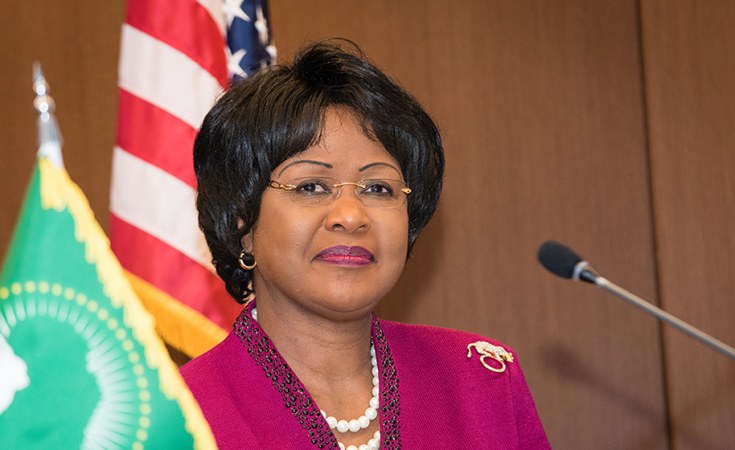
In a quiet, reflective moment during a recent address in Ghana, former African Union Ambassador to the United States Dr. Arikana Chihombori-Quao posed a simple yet devastating question to a room of scholars, policymakers, and civic leaders.
“Why, decades after the flags of independence were raised across our continent, are African children still studying from the very textbooks written by our colonizers?”
The query was not merely an academic critique; it was an indictment of an educational architecture that continues to shape millions of young minds across Africa and its diaspora.
For Dr. Chihombori-Quao, a physician, diplomat, and outspoken advocate for Pan-African unity, the battle for Africa’s economic and political sovereignty cannot be won in parliamentary chambers or trade summits alone. It must first be waged—and won—inside the schoolhouse.
The Ghost in the Blackboard
Across much of Sub-Saharan Africa, school syllabi remain deeply tethered to Western frameworks. In history classes, European explorers are frequently framed as “discoverers” of lakes, rivers, and mountain ranges that indigenous communities had navigated for millennia. In literature, science, and philosophy, foundational African innovations—from early mathematics along the Nile to sophisticated metallurgical traditions in West Africa—are routinely omitted or reduced to mere footnotes.
In her address, Dr. Chihombori-Quao underscored the psychological tax of this historical amnesia.
When children spend their formative years learning that knowledge, governance, and civilization flow exclusively from the Global North, it subtly instills an internalized sense of inferiority.
“The most dangerous force facing Africa today,” Dr. Chihombori-Quao
observed, “is not foreign armies or external trade imbalance. It is the mentally colonized African whose intellect was shaped to doubt their own heritage.”
Dismantling the 1884 Framework
To understand why educational reform remains so stubborn, Dr. Chihombori-Quao pointed back to the 1884–1885 Berlin Conference, where European powers carved the African continent into arbitrary territorial zones.
While physical occupation largely ended in the mid-20th century, the institutional, administrative, and educational frameworks designed during that era were largely inherited intact by post-colonial governments.
This legacy has produced a paradox: Africa possesses a vibrant, exceptionally young population, yet its primary and secondary education systems often train youth to participate in foreign economies rather than solve internal development challenges.
A Blueprint for Curriculum Liberation
Dr. Chihombori-Quao’s call to action goes beyond critique. She urges African ministries of education, academic publishers, and diaspora intellectuals to embark on a systematic overhaul of educational materials.
| Priority Area | Current Colonial Legacy | Proposed Decolonized Approach |
| History & Heritage | Eurocentric narratives of “discovery” and civilizing missions. | Centering pre-colonial African statecraft, trade networks, and anti-colonial resistance. |
| Science & Tech | Attribution of technical innovation almost exclusively to Western figures. | Documenting indigenous metallurgy, agrarian science, and medical traditions alongside modern STEM. |
| Language & Literature | Primacy of colonial languages as the sole markers of intellect. | Elevation of indigenous African languages alongside international media of instruction. |
| Economics & Policy | Extraction-focused development models inherited from colonial regimes. | Intra-African trade dynamics, resource sovereignty, and Pan-African industrialization. |
Reclaiming the Narrative: The Human Imperative
For educators across Ghana and the broader continent, Dr. Chihombori-Quao’s message resonates deeply. Re-imagining the classroom is not an attempt to erase global history or isolate African youth from global discourse. Rather, it is about giving them a firm anchor in their own reality.
When African students open a textbook, they should see their ancestors not merely as victims of history, but as active builders, thinkers, and innovators who helped shape human civilization.
As Dr. Chihombori-Quao concluded in her address, reclaiming Africa’s story is the final frontier of true independence. Until the lesson plans reflect the true depth of African intelligence and history, the work of liberation remains unfinished.