

 By
By Before you vote, see what your choices could mean.
We want to help you understand not just what's on the ballot, but what could happen afterward. Colorado Tradeoffs lets you test the choices, see the budget implications, and decide how you would respond.
Give it a try below. It takes less than 10 minutes.
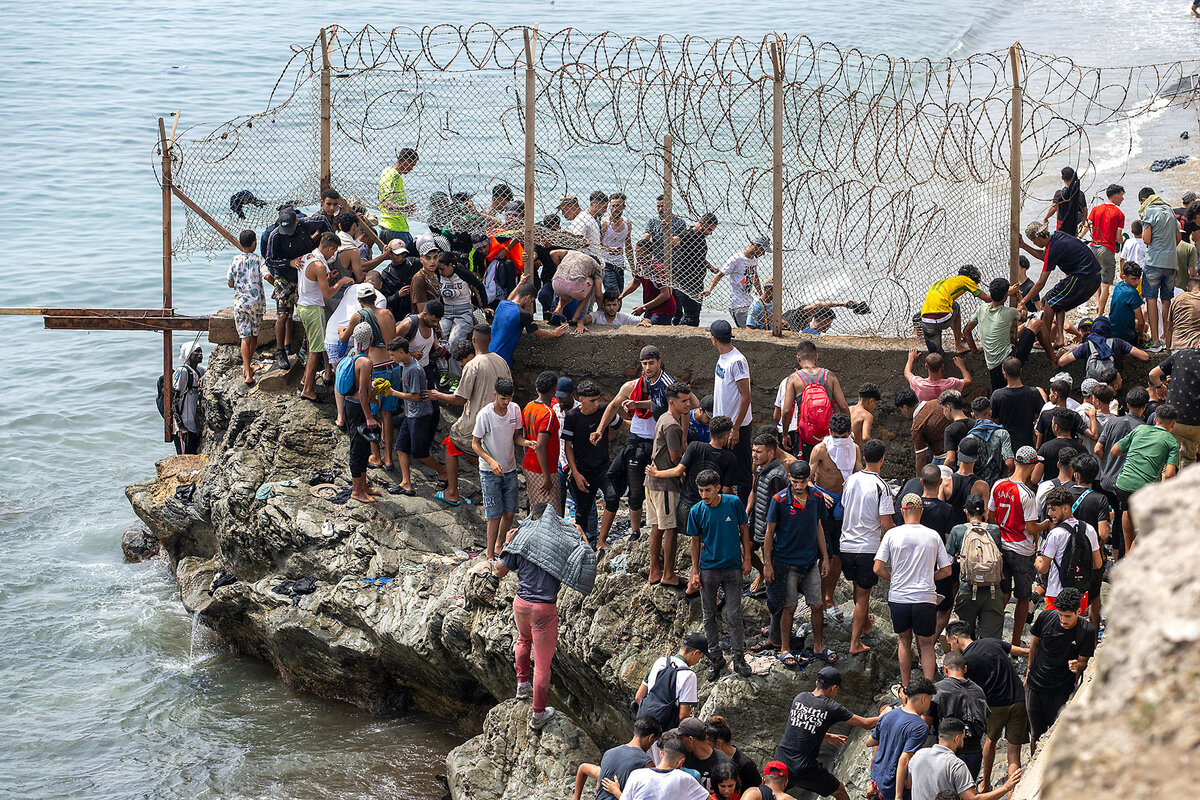
At the end of July 2026, the quiet, rocky Mediterranean enclave of Ceuta became the epicenter of the most extraordinary border event in modern European history. In a dizzying 48-hour span, an estimated 72,000 migrants—a number nearly matching the total resident population of the Spanish autonomous territory—crossed into the enclave by land and sea.
While military deployments, rapid repatriations, and joint Spanish-Moroccan patrols restored physical control within days, the reverberations of the Ceuta surge mark a permanent rupture in the dynamics of African migration and European border security. What took place along the beaches of Tarajal was not merely another seasonal uptick in irregular crossings; it was the birth of a decentralized, technology-driven doctrine that will define human mobility for the next decade.
THE ANATOMY OF A FLOOD
The sheer velocity of the breach caught international intelligence agencies completely off guard. Tens of thousands flooded the Tarajal and Benzú breakwaters. Many swam for miles around sea fences, while others clambered over reinforced perimeter walls or simply pushed through border posts in overwhelming numbers. Tragically, the chaotic influx resulted in over 100 confirmed deaths, primarily from drowning and stampedes in the rough coastal waters.
Investigators and geopolitical analysts point to a volatile cocktail of three distinct factors that converged to fuel the crisis which are algorithmic misinformation, border enforcement lapses and socioeconomic desperation.
Smuggling networks and viral social media campaigns on platforms like Instagram and Telegram exploited an early-July ruling by the Spanish Supreme Court. The court ruled that immediate returns without due process applied strictly to physical land barriers, not to those arriving by sea. Online posts falsely declared that Ceuta’s coastal waters were effectively open, promising guaranteed legal processing upon landing. Questions persist regarding a sudden, temporary drawdown of Moroccan border surveillance in the days preceding the surge, echoing similar diplomatic friction points seen during the 2021 crisis.
A prolonged cost-of-living crisis across North and Sub-Saharan Africa—compounded by conflict in the Sahel and economic stagnation—created a vast pool of young people ready to move at a moment’s notice.
WHAT CEUTA MEANS FOR FUTURE AFRICAN MIGRANTS
The short-lived breach has triggered an immediate, structural shift across the continent. For millions of aspiring migrants, Ceuta was not just an anomaly; it was a blueprint for the future.
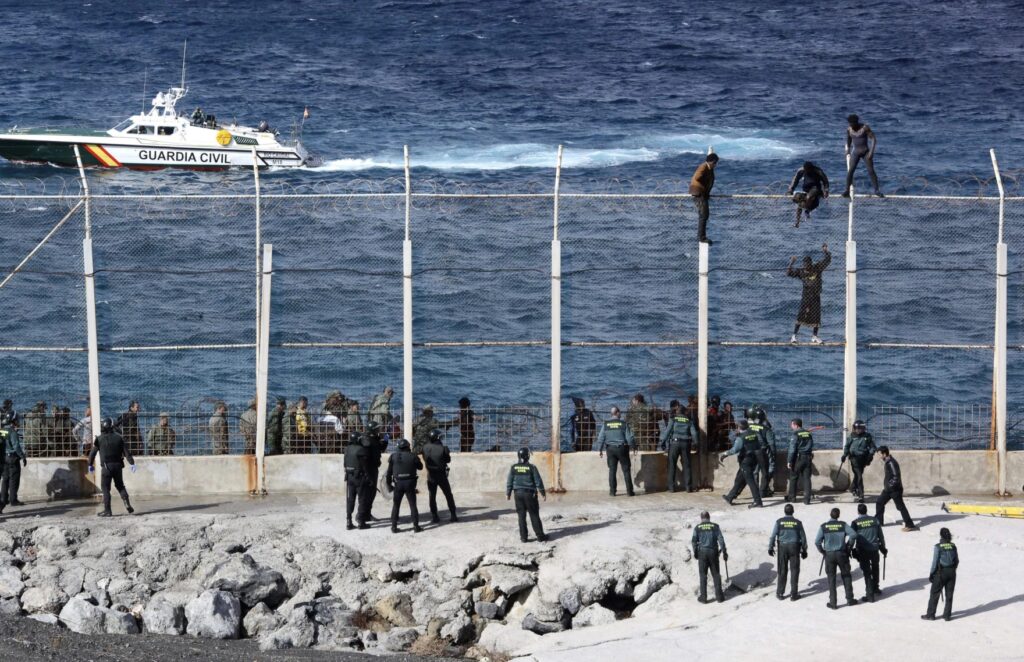
The traditional migration model—paying thousands of dollars to organized smuggling cartels for passage on covert vessels—has been permanently supplemented by decentralized “flash crowds” organized via encrypted messaging platforms. Migrants now leverage sheer numbers to overwhelm static border infrastructure, realizing that no physical wall or garrison can handle tens of thousands of simultaneous arrivals.
The European Union’s reaction has been swift, uncompromising, and unprecedented. In an extraordinary display of intra-European anxiety, Italy temporarily suspended its Schengen open-border arrangements with Spain to prevent potential northbound movement, while France drastically tightened border checks.
A coalition of 22 EU member states, led by Italy and Denmark, addressed an emergency letter to top European leadership demanding absolute border containment. Brussels is rapidly moving from managing asylum claims to total deterrence.
Future African migrants face automated, AI-driven surveillance arrays deployed along maritime boundaries, the widespread suspension of standard asylum processing during mass-entry scenarios under newly invoked EU emergency provisions and accelerated militarized return procedures that bypass lengthy appeals.
To prevent migrants from ever reaching European soil, the EU is dramatically expanding financial and military backing to transit nations like Morocco, Tunisia, and Libya. For migrants originating from West Africa and the Sahel, this means the primary danger is no longer the Mediterranean Sea, but the increasingly militarized transit corridors within Northern Africa itself, where regional security forces are under intense European pressure to intercept movement far from the coast.
A HARBINGER OF THE NEXT DECADE
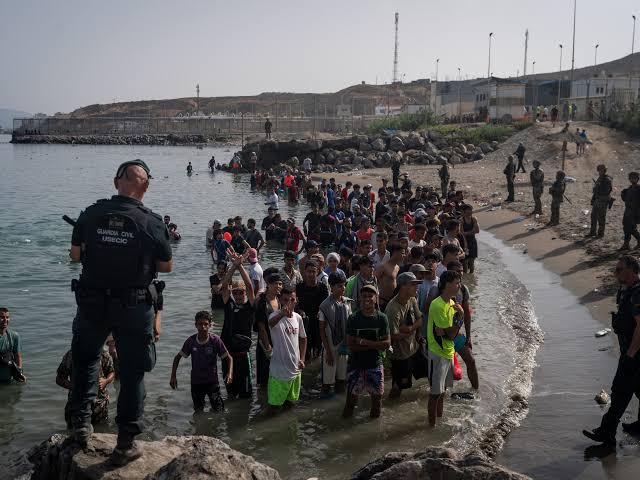
The Ceuta crisis demonstrates that as demographic growth, political instability, and climate disruptions intensify across the African continent, traditional border walls are reaching their operational limits. Over 90% of those who crossed into Ceuta were repatriated within days through cooperative Spanish-Moroccan operations, proving that Western nations can regain physical control.
Yet, the fundamental drivers remain completely unaddressed. The Ceuta siege signaled the start of a tense new era: migration will no longer be characterized solely by quiet, hidden journeys, but by high-stakes, technology-driven confrontations at the very edges of continents.