

 By
By According to Human Rights Watch (HRW), at least 10 Ethiopians have already been executed in Saudi Arabia this year.
Fifty-eight other prisoners, most of whom have been convicted on drug trafficking charges, are being held in the Khamis Mushait detention facility, near the Yemeni border, and face the death penalty.
Several detainees told HRW they had been recruited by people smugglers to carry packages into Saudi Arabia, unaware of their contents.
Most of them wake up each day not knowing if it will be their last. A rap at the cell door could mean their time is up; no farewell call, no last meal. Executions in Saudi Arabia often arrive without warning.
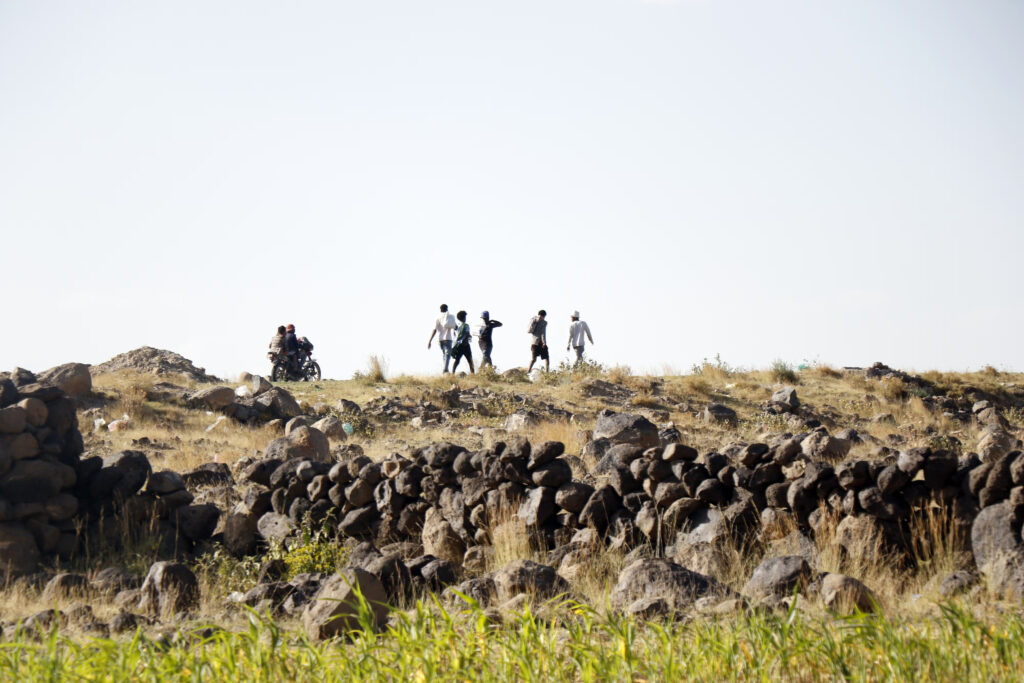
Every year, more than 100,000 migrants travel from Ethiopia, including its war-torn Tigray region, to Saudi Arabia in search of work. They typically travel by boat from Djibouti or Somalia before making a treacherous journey across Yemen. Activists and family members say many are coerced into carrying drugs across the border and arrested as soon as they reach Saudi Arabia.
There seems to be a clear pattern of Saudi authorities targeting vulnerable migrants. Often, their true ‘crime’ appears to have been crossing the border, in search of a better life.”
A total of 356 people were executed in Saudi Arabia last year, the highest number in recent history, according to Saudi records compiled by NGOs. Of those, 240 had been convicted of drug offences, most of them foreigners. Two years before that, in 2023, the same monitors recorded two such executions in the entire year. The number executed for non-lethal drug crimes this year has reached 71, with Ethiopians representing the biggest number of foreign nationals.
Taha al-Hajji, a Saudi lawyer living overseas who’s the legal director of the European Saudi Organisation for Human Rights, outlined serious concerns about due process in the kingdom.
“Capital trials in Saudi Arabia routinely fail to meet even minimum guarantees of fairness,” he said. “Defendants are denied legal representation and adequate interpretation, leading to migrants being convicted and sentenced to death without understanding the process – often on the basis of torture ‘confessions’.
“This is not justice: it is state violence, inflicted on defenceless people.”
According to Human Rights Watch, Saudi security authorities arrested the three Ethiopians between 2023 and 2024, accused them of drug-related offences, and moved them between various detention centres until they ended up in Khamis Mushait.
On 23 June, five more Ethiopian nationals were executed, among many foreigners accused of non-violent drug crimes by Saudi authorities. Multiple sources said the prisoners admitted to the crimes, fearing that if they did not, they would simply be executed without legal assistance.
Hailay Berhane, a migrant from the Gulomahda district of northern Ethiopia’s Tigray region, is being held in Khamis Mushait. According to him, the migrants were forced to sign documents in Arabic without understanding their content and, in some cases, were beaten by security forces.
“They handed me 41kg of drugs and forced me to believe it was mine and made me sign documents that I don’t even understand what they were saying in Arabic,” he told an advocacy group that visited him in prison, recalling the moment he was caught by Saudi security men three years ago.
He was in the deadly border region between Yemen and Saudi Arabia known as Rago. It’s a place that has become known for the brutal apprehension of migrants, with human rights organisations highlighting accusations that Saudi border guards have fired indiscriminately on them.
“In the past three years, I appeared in court three times for a very short period, all without an interpreter,” Berhane said, describing how difficult it was to present his case and prove his innocence.
“Foreign nationals who are on death row in Saudi Arabia are, most of the time, subjected to grossly unfair trials,” said Yared Hailemariam, an Ethiopian human rights advocate.
Almost 100 executions in Saudi Arabia this year
Saudi authorities have executed almost 100 people so far this year, including at least 61 for drug-related offences, according to another report from Amnesty International.
“Foreign nationals have borne the brunt of Saudi Arabia’s ruthless use of the death penalty for drug-related offences, frequently after grossly unfair trials,” the report said.
Amnesty said that it was “profoundly alarming” that at least 63 Ethiopian nationals are being held in a single ward of Khamis Mushait, and that they were at “imminent risk of execution solely for drug-related offences”.
According to local officials, local civil society organisations and human rights defenders, as many as 200 Ethiopian citizens are currently on death row awaiting execution in Saudi Arabia. Many prisoners say the figures could be higher.
“There are many migrants in all six prison blocks here in Saudi Arabia,” Berhane said. “In the Khamis Mushait detention facility there are 58 Ethiopian migrants, and most are from Tigray, uprooted by constant conflict and crises, and dwindling humanitarian support.”
Speaking on a phone smuggled into the detention centre, with security cameras following his every move, the Ethiopian prisoner said he wonders how long he has left to live.
War and economic crisis in Tigray
Since the Tigray war officially ended in 2022, the region has been a little more stable, though the humanitarian situation remains dire. Hundreds of thousands of people died in the war, which also displaced millions.
Many young people continue to flee the region as fear of yet another conflict – this time a proxy war involving Eritrea – remains.
High unemployment rates, a collapsed wartime economy and recurring conflict lead them to take the dangerous journey to Saudi Arabia or Europe.
“Political instability, armed conflict and economic crisis are the major factors affecting the life of Ethiopian youths,” said Hailemariam, the Ethiopian human rights expert. “They are also forcefully recruited for military training and deployed as soldiers for both internal conflicts and cross-border war.”
Christian bishops from the Catholic and Orthodox churches in Tigray have appealed to Saudi Arabia to show clemency for the 200 prisoners in the kingdom. The president of the Tigray region has done the same.
“Saudi Arabia’s willingness to execute foreign migrants for non-violent offences following trials that denied them basic due process reflects a profound disregard for their rights and lives,” said Nadia Hardman, senior refugee and migrant rights researcher at Human Rights Watch. “Saudi Arabia’s partners should urgently intervene before it is too late.”