

 By
By 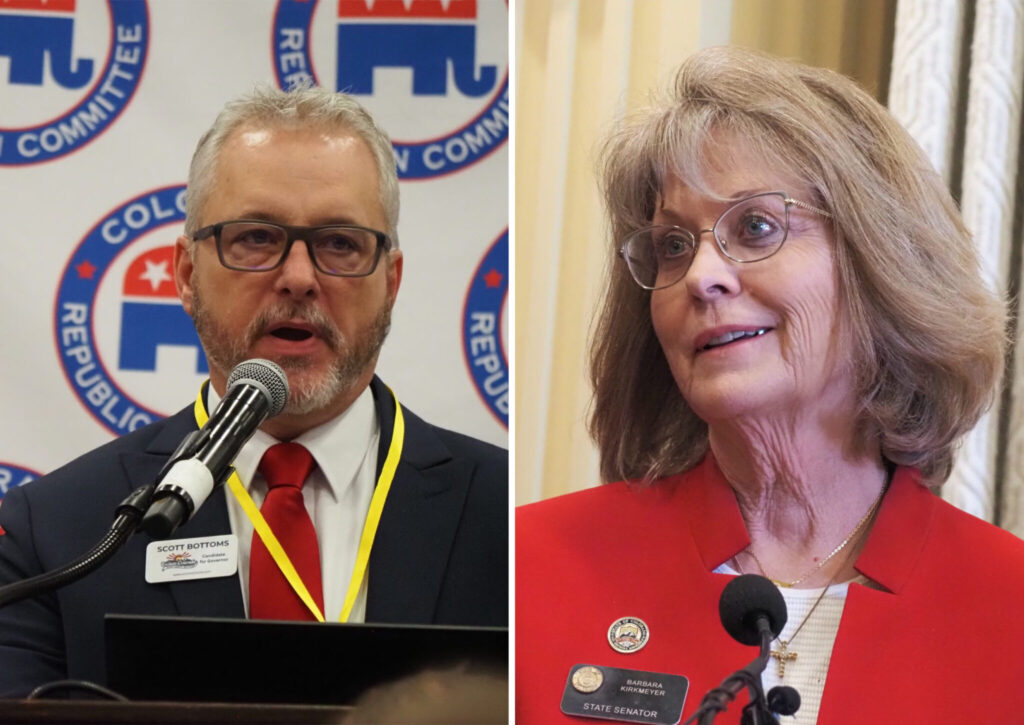
In a charged and often combative debate hosted by Denver7 on May 14, 2026, Republican gubernatorial candidates State Rep. Scott Bottoms and State Sen. Barbara Kirkmeyer presented sharply contrasting approaches to leadership, governance, and the future of Colorado. The debate featured pointed exchanges, policy disagreements, and questions from Colorado residents that pushed both candidates to clarify their priorities.
The evening revealed two distinct Republican paths: Bottoms’ insurgent, confrontational style centered on corruption allegations and cultural issues, and Kirkmeyer’s technocratic, budget-focused approach grounded in her long tenure in county and state government.
A Party Seeking Direction: “Enough’s Enough” vs. “Strong Leadership”
The debate opened with a question about why Colorado voters, who have not elected a Republican governor in over two decades, might do so now.
Scott Bottoms argued that Coloradans are “tired” of the state’s direction and want a leader unafraid to confront “scary issues,” including gender‑related policies, child trafficking, and what he described as moral decline. He framed leadership as the willingness to take uncompromising stances on social issues and repeatedly emphasized his record of sponsoring bills on parental consent, grooming, and trafficking.
Barbara Kirkmeyer, by contrast, framed the moment as a referendum on affordability and public safety. She argued that “one‑party control” has made Colorado “unaffordable” and “unsafe,” and pointed to her record as Weld County Commissioner and state senator—lowering property taxes, cutting regulations, and eliminating county debt—as evidence that she can restore fiscal discipline and stability.
Working With Democrats: Pragmatism vs. Confrontation
When asked how they would govern with a legislature likely to remain under Democratic control, the candidates diverged sharply. Kirkmeyer highlighted her bipartisan work on the Joint Budget Committee, including passing what she described as the largest property‑tax relief package in state history. She emphasized that effective governance requires negotiation, compromise, and a willingness to “work across the aisle to get anything done.”
Bottoms, however, argued that the state’s biggest problems stem from corruption, not policy disagreements. He claimed that Colorado is “the sixth most regulated state” and that crime, drug trafficking, and “illegal immigrant crime” are the true crises. He insisted that he is the only candidate willing to confront these issues directly.
A Debate Flashpoint: Bottoms’ Allegations of Judicial Corruption
One of the most contentious moments came when Bottoms alleged widespread corruption within Colorado’s judicial system, including the state Supreme Court and Attorney General Phil Weiser. He referenced a resolution he introduced calling for an external special auditor and cited a whistleblower, though he did not provide documentation during the debate.
Moderator Colette Boudelon clarified that Denver7 had not seen the evidence and would be interested in reviewing it if made available. Kirkmeyer attempted to respond but was prevented by debate rules, which only allow rebuttals when a candidate is directly mentioned.
Budget Priorities: Structure vs. Crisis
On the state budget, the candidates again offered contrasting philosophies. Kirkmeyer emphasized constitutional obligations to fund K–12 education, Medicaid, and child welfare, noting that Colorado faces a structural deficit rather than a literal shortfall. She defended difficult decisions made on the Joint Budget Committee and stressed the need to protect maternal health care and caregiver support.
Bottoms argued that the budget is “not truly balanced,” despite constitutional requirements, and claimed that funds are being misused or diverted illegally. He reiterated his focus on rooting out corruption within agencies such as CDOT and the education administration.
Public Safety and Surveillance: Guardrails vs. Government Overreach
On Flock cameras and license‑plate readers, both candidates acknowledged the need for limits. Kirkmeyer supported law enforcement access but insisted on strict prohibitions against commercialization of data and clear controls on who can access it.
Bottoms warned against “Big Brother” overreach, citing cases where individuals were wrongly flagged by automated systems. He emphasized the need to protect civil liberties even while supporting law enforcement.
Youth, Social Media, and AI: A Rare Moment of Agreement
A question from 13‑year‑old resident caller Weston Hancock prompted a thoughtful exchange on youth mental health, social media, and phone use in schools. Both candidates supported restricting or banning phones in classrooms.
Bottoms highlighted the dangers of AI‑generated explicit images targeting minors and referenced a bill he introduced to strengthen personal data protections.
Kirkmeyer noted that Colorado already requires school districts to adopt cell‑phone policies and expressed support for stricter limits, citing distraction and mental‑health concerns.
Economic Vision: Deregulation vs. Experience
On job creation, Kirkmeyer emphasized her experience managing large budgets and regulating major industries such as oil and gas. She argued that Colorado must “open for business” by rolling back regulations and protecting water rights and agriculture. Bottoms focused on rooting out corruption as the first step toward affordability, arguing that “private interests” and regulatory burdens are distorting the housing market and driving up costs.
A Party at a Crossroads
The debate revealed a Republican primary defined by two competing visions:
Kirkmeyer represents the traditional, governance‑focused wing of the party—experienced, policy‑oriented, and emphasizing fiscal management and public safety. Bottoms embodies a populist, insurgent approach—centered on cultural issues, distrust of institutions, and sweeping allegations of corruption. Both candidates tapped into voter frustration over affordability, crime, and distrust in government, but their solutions—and their governing styles—could not be more different.
Final Takeaway
Denver7’s May 14 debate offered voters a clear contrast in temperament, priorities, and governing philosophy. Whether discussing taxes, public safety, Medicaid, or the role of technology in schools, the candidates revealed a Republican Party wrestling with its identity and its path forward in a state that has shifted leftward over the past decade.