


 By
By – Inside the Escalating Trade War Fracturing North America’s Economic Engine
The world’s longest undefended border has transformed into the western hemisphere’s most volatile economic battleground.
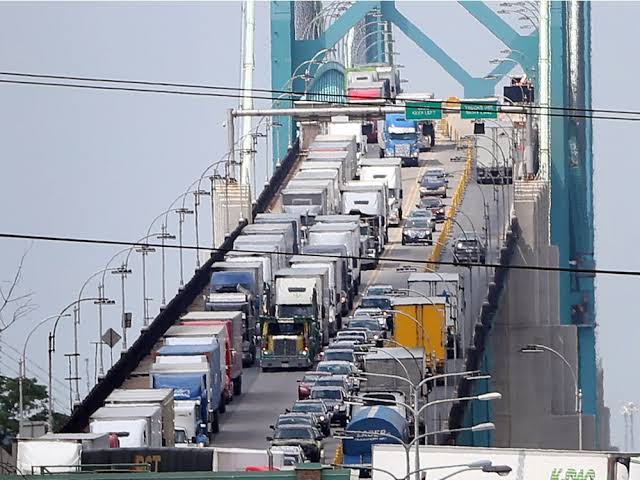
For generations, the 5,525-mile boundary between the United States and Canada operated less like a barrier and more like a fluid assembly line. Parts crossed the border up to six times before a finished automobile rolled off a line in Windsor or Detroit; Canadian crude flowed south to power Midwest refineries; and American dairy swept north to stock Canadian grocery shelves.
Today, that integration is fraying at the seams.
Following months of escalating posturing, border disputes, and systemic breakdown in bilateral negotiations, the United States and Canada are locked in a tit-for-tat trade war of historic proportions. As Washington ramps up aggressive cross-sector tariffs aimed at restructuring north-south supply chains, Ottawa has shed its traditional quiet-diplomacy playbook. In its place is a sharp, politically targeted retaliatory strategy designed to inflict maximum economic pain on key American industrial and agricultural sectors.
What began as strategic friction over steel, aluminum, and border security narratives has escalated into a structural economic schism—one that threatens to permanently reshape North American commerce.
Anatomy of an Escalation
To understand how two of the world’s closest allies reached this impasse, one must trace the rapid deterioration of the Canada-United States-Mexico Agreement (CUSMA) framework.
The opening salvo was delivered early when the White House—citing national security exceptions under Section 232 alongside border protection mandates—unveiled broad, blanket tariffs targeting critical Canadian exports. While energy exports initially received narrower carve-outs due to Midwest refining dependencies, heavy industrial commodities were hit head-on. Universal duties on Canadian steel and aluminum quickly expanded into punitive levies on automotive components, lumber, and aerospace technologies.
Rather than forcing concessions, the policy triggered a fierce nationalistic response across the Canadian political landscape. In Ottawa, federal leadership moved swiftly to enact a dollar-for-dollar counter-tariff framework. Grounded in precision economic targeting, Canada’s retaliation hit high-value consumer goods, processed foods, specialized machinery, and American dairy exports.
When bilateral talks disintegrated over demands surrounding digital services taxes, supply-management agricultural protections, and automotive domestic content rules, the dispute turned nuclear. Washington upped the ante, pushing duties on specific industrial lines as high as 50%. Canada matched the measure immediately, enacting 15% to 50% surtaxes on nearly C$28 billion worth of American imports.
The gloves, as cross-border trade negotiators privately concede, are entirely off.
Ground Zero: The Fractured Border Economies
The shockwaves of this trade confrontation are hitting real communities with brutal velocity, exposing how deeply interdependent the two economies have become.
The Great Lakes Auto Corridor
In the manufacturing heartlands of Southern Ontario, Michigan, and Ohio, the automotive sector is facing its worst structural crisis since 2008. Because vehicle production relies on just-in-time delivery across the border, paying 25% to 50% tariffs on un-assembled components at every crossing makes domestic vehicle production unsustainably expensive. Plants on both sides of the Detroit River have scaled back shifts, citing ballooning supply costs and parts bottlenecks.

The Forestry and Metals Standoff
In British Columbia, Quebec, and Hamilton, Ontario, lumber mills and steel foundries are recalibrating operations. Canadian metal producers—traditionally the primary suppliers for U.S. defense, infrastructure, and construction projects—are watching their primary export market erect artificial walls. While American builders complain of skyrocketing lumber and structural steel prices, Canadian mill workers are facing rolling layoffs.
Agriculture and Consumer retaliatory Zones
The fallout has hit state agriculture across the U.S. Midwest and Sunbelt. Canadian counter-tariffs were meticulously crafted to hit agricultural processing operations in politically sensitive congressional districts. From Wisconsin dairy to Iowa pork and Georgia poultry, American producers are watching lucrative northern market shares vanish overnight as Canadian grocers pivot to domestic or European alternatives.
Economic Realities: Comparing the Opposing Forces
The asymmetry of the two economies forms the core of this conflict. While the U.S. economy dwarfs Canada’s in absolute scale, Canada’s strategic role as a primary supplier of energy, critical minerals, and industrial inputs gives Ottawa surprising leverage.
Consumer Resistance and the Cultural Shift
Beyond the spreadsheet calculations of trade economists, a deeper, psychological shift is occurring along the border. In Canadian cities from Vancouver to Halifax, a strong grassroots consumer movement has emerged. An informal “Buy Canadian” ethos—reminiscent of historic trade spats—has taken firm root. Canadian consumers are actively scanning product barcodes in grocery aisles to avoid American-made goods, while several provincial liquor boards have removed U.S. spirits and wines from store shelves.
Cross-border tourism has plummeted. U.S. border towns in New York, Vermont, and Washington state—long reliant on weekend Canadian shoppers—report sharp drops in foot traffic and retail revenue. Major American travel destinations are recording noticeable declines in Canadian visitors.
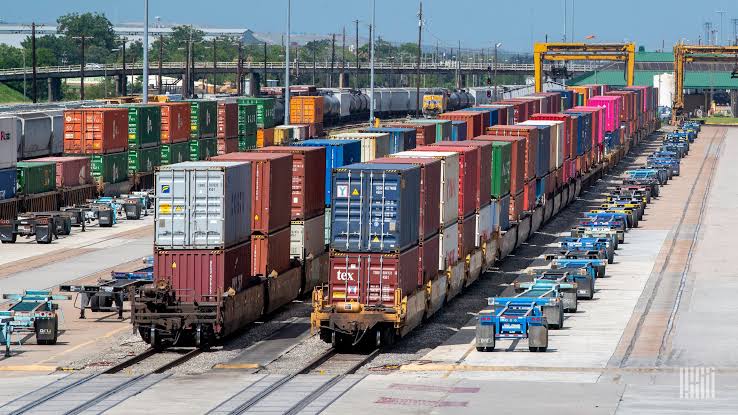
The CUSMA Review Horizon: A Systemic Crisis
The timing of this trade war could not be more perilous for the long-term stability of the continent. The compulsory Joint Review of the Canada-United States-Mexico Agreement (CUSMA) looms, and the current political crosswinds threaten to dismantle the accord entirely.
Washington’s strategic goal appears to be a total renegotiation of regional commerce terms—demanding harsher domestic content requirements, the removal of Canadian supply management systems for poultry and dairy, and broader access for U.S. financial institutions.
Ottawa, however, is standing its ground. Reinforced by a political consensus across partisan lines, Canadian negotiators are refusing to bargain under the duress of unilateral tariffs. The Canadian government has accelerated emergency diversification programs, allocating billions in liquidity support for affected domestic businesses while seeking expanded trade channels across Asia, Europe, and Latin America.
Long-Term Fallout: The End of North American Seamlessness?
As both nations dig in for a protracted struggle, multinational corporations are coming to a stark realization: the era of frictionless North American trade may be drawing to a close.
Corporate executives are no longer treating these tariffs as temporary political theatre. Supply chain directors are actively “de-risking” their cross-border exposures. Japanese and European manufacturers with operations in North America—such as major automakers and beverage conglomerates—have begun shifting production footprints, moving operations out of Canadian plants to U.S.-based facilities solely to bypass the tariff wall.
This capital realignment risks permanently hollowing out key segments of Canada’s industrial manufacturing base while raising structural production costs for American consumers.
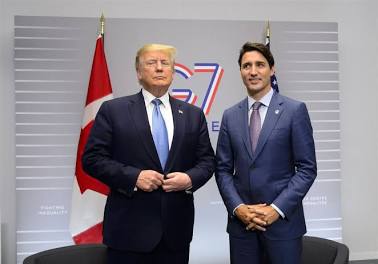
A Crossroads for the Continent
The U.S.-Canada trade war represents far more than a technical dispute over tariff classifications and trade imbalances. It is a fundamental disruption of one of the world’s most successful economic partnerships.
For the United States, weaponizing market access against its northern neighbor may deliver short-term tactical leverage, but it risks fracturing the strategic stability of its closest economic and defense perimeter. For Canada, the crisis serves as a painful wake-up call regarding the risks of single-market dependency, forcing a long-overdue restructuring of its global trade posture.
As truck queues linger at border checkpoints and factory floors adapt to a higher-cost reality, one truth is becoming clear: even if a compromise is brokered in the halls of Washington and Ottawa, the border between the U.S. and Canada will never look quite the same again.