

 By
Before you vote, see what your choices could mean.
We want to help you understand not just what's on the ballot, but what could happen afterward. Colorado Tradeoffs lets you test the choices, see the budget implications, and decide how you would respond.
Give it a try below. It takes less than 10 minutes.
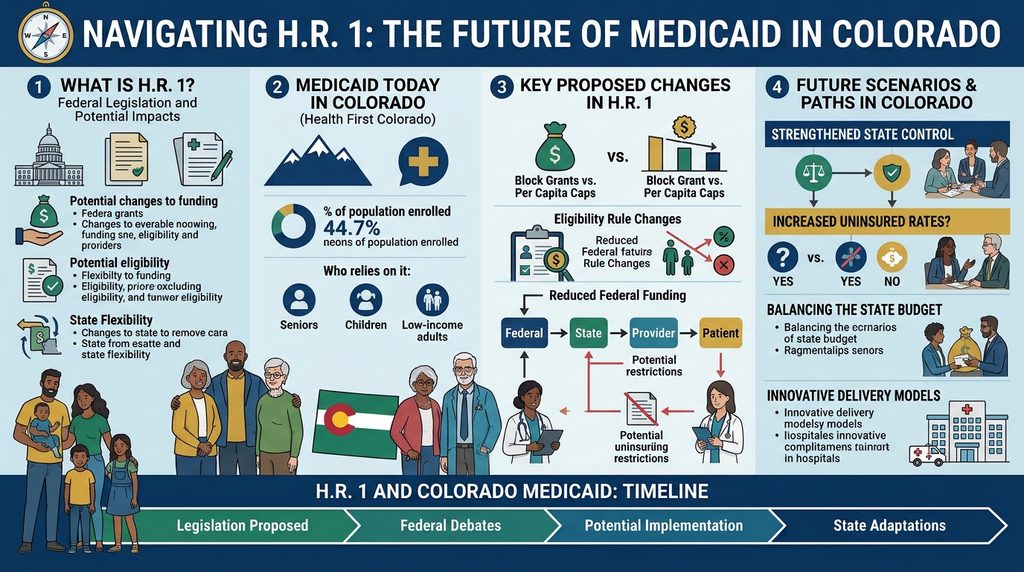
As federal healthcare policy shifts across the nation, thousands of Coloradans are preparing for significant updates to Health First Colorado, the state’s Medicaid program. On October 27, 2026, the Colorado Department of Health Care Policy & Financing hosted a virtual Media Roundtable detailing the implementation timeline and state strategy surrounding federal law H.R. 1.
Passed in 2025, H.R. 1 introduces sweeping changes to Medicaid eligibility, coverage rules, and financing structures. State officials anticipate that these policy shifts will present notable challenges, including potential coverage loss, heightened administrative burdens, and increased uncompensated care costs across healthcare facilities serving Denver’s diverse populations and families statewide.
Work Requirements- A New Layer of Complexity
Colorado’s Medicaid program currently serves approximately 1.2 million residents, including 377,000 adults enrolled under Affordable Care Act expansion. Under the new guidelines outlined by Medicaid Director Adela Flores-Brennan and Eligibility Division Director Marivel Kleukman, an estimated 175,000 adults will soon be required to demonstrate exclusion, exception, or active compliance with new work and community engagement mandates. Phased implementation for immigrant eligibility changes began with member notices sent in mid-2026, leading into official coverage adjustments in October 2026. The broader rollouts, including mandatory work requirements, shorter individualized renewal windows, and reduced retroactive coverage, are set to take effect on January 1, 2027.
What Counts as Work?
Starting January 1, 2027, non-exempt adults aged 19 to 64 must satisfy specific community engagement guidelines each month to maintain their health coverage. Members can comply by earning at least $580 in a qualifying month, completing at least 80 hours per month of paid work, participating in approved work programs, volunteering, or enrolling in education more than half-time. A combination of work, education, volunteering, or job search activities can also fulfill the 80-hour monthly threshold, with structured job searches accounting for up to 39 hours. Special circumstances such as seasonal employment, gig economy roles, self-employment, internships, and caregiving may also qualify. To verify compliance, the department will first attempt automated income verification through existing state systems; if that is unsuccessful, members can self-attest using the Work Requirements Self-Reporting Form or Worksheet J.
Work requirements will not apply to everyone, as many members will qualify for specified exclusions based on family circumstances or medical conditions. Specifically, individuals meeting any of six Medical Frailty categories will be excluded if their condition significantly impairs their ability to meet engagement mandates. These categories encompass individuals living with or in recovery from a drug or alcohol use disorder (for five years or less), those with physical, intellectual, developmental, or disabling mental health disorders, people with serious health conditions requiring regular medical treatment, and individuals who are blind. To assist residents in understanding their status, an online Work Requirements Screener Tool has been launched on the state’s partner site.
Six‑Month Renewals- A New Administrative Reality
Alongside engagement rules, members will navigate shorter renewal schedules and reduced retroactive coverage windows beginning in January 2027. Adults subject to work requirements will shift from annual renewals to 6-month cycles conducted on an individual basis rather than by household, meaning family members may receive separate paper packets with different renewal dates that must each be completed to avoid coverage disruption. Additionally, retroactive Medicaid coverage for most adults aged 19 to 64 will decrease from three months down to one month prior to application. For vulnerable populations, including pregnant and postpartum members, children 18 and under, individuals receiving home and community-based services, buy-in program participants, and those qualifying via disability, retroactive coverage will be capped at two months.
To prevent unintended loss of coverage, state officials and community advocates emphasize that members should take proactive steps today. Residents are urged to update their contact details in the PEAK Member Portal at CO.gov/PEAK, check their individual renewal timelines through the portal or their assigned Regional Accountable Entity, promptly open and respond to all official mail, and subscribe to state H.R. 1 newsletter updates.
Closing Reflection
Work requirements, shortened renewals, and reduced retroactive coverage will introduce new barriers for people juggling multiple jobs, caregiving responsibilities, language access challenges, or unstable housing. The roundtable made one thing clear: staying connected is essential. Members must keep contact information updated, watch for renewal notices, use PEAK and RAE resources, sign up for HCPF’s H.R. 1 newsletter, and use the screener tool to understand requirements.
As Colorado enters this new era of Medicaid, the stakes are high. H.R. 1 is reshaping the safety net for hundreds of thousands of people, and the communities we serve will feel the impact first. My job, and Afrik Digest’s mission, is to keep you informed, connected, and empowered as these changes unfold. The system is shifting, but our commitment to the community remains steady.