
 By
Before you vote, see what your choices could mean.
We want to help you understand not just what's on the ballot, but what could happen afterward. Colorado Tradeoffs lets you test the choices, see the budget implications, and decide how you would respond.
Give it a try below. It takes less than 10 minutes.
Every election season in Colorado feels like a communal drumbeat: steady, insistent, and impossible to ignore. As ballots begin to land in mailboxes across Aurora and beyond, I’m reminded that voting here is less a chore and more a shared ritual. It’s the moment we all step into the same democratic stream, each of us adding our voice to the current. And in 2026, that current is powerful. We’re facing a high‑stakes gubernatorial contest, congressional races that could shift national dynamics, and fourteen statewide initiatives that will shape Colorado’s future for years to come.
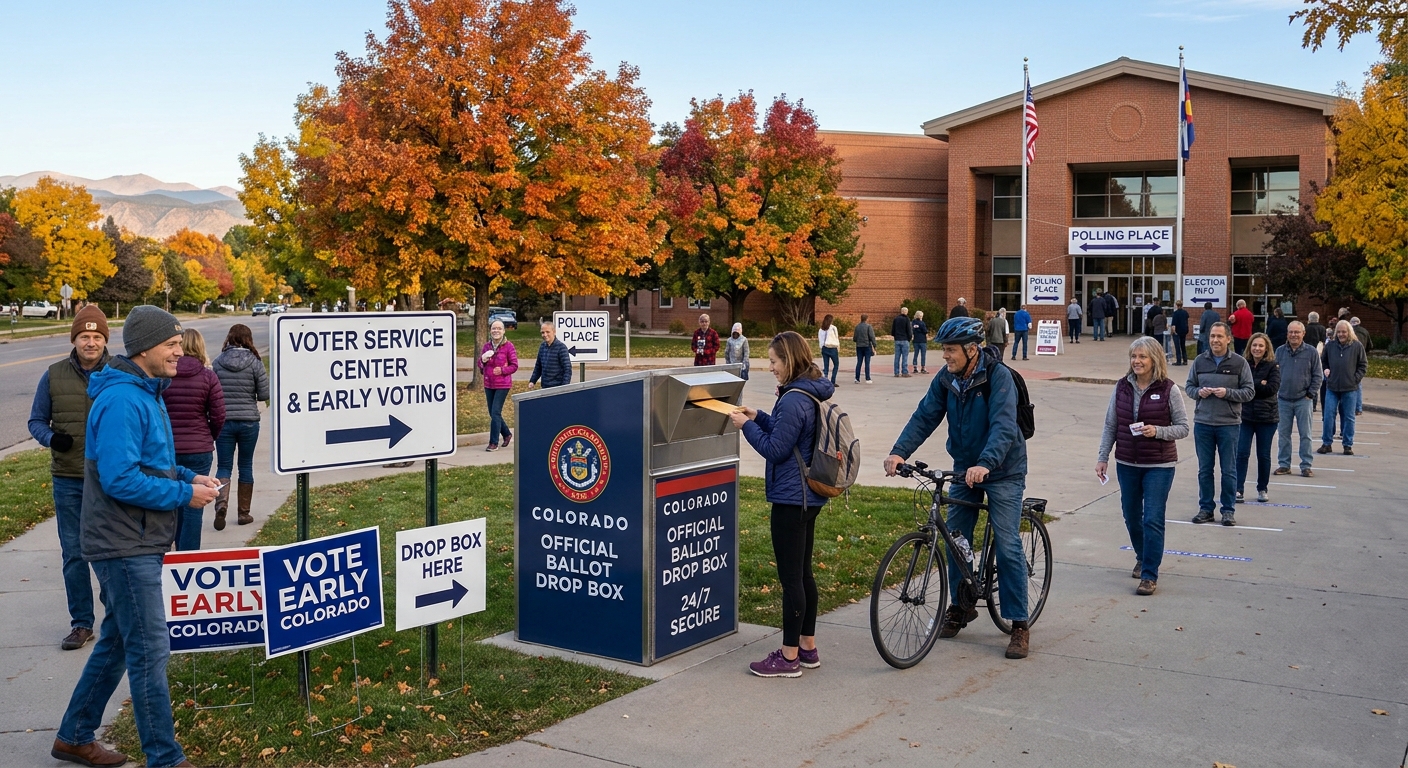
This year’s ballots began their journey to voters on October 2. When mine arrived, I felt that familiar mix of responsibility and anticipation, and this year’s ballot is packed. Drop boxes across the state opened on October 12, giving us the first chance to return our ballots securely. And by October 19, Voter Service & Polling Centers opened their doors, ready for anyone who preferred to vote in person, register, or simply wanted the reassurance of handing their ballot directly to an election worker.
Colorado’s registration timeline is one of the most voter‑friendly in the country. If you want your ballot mailed to you, you must register or update your information by October 26. After that date, you can still register, right up to Election Day, November 3, but you’ll need to vote in person at a Voter Service & Polling Center. Same‑day registration is available until 7 p.m. on Election Day, a grace that has saved more than one procrastinating Coloradan.
Returning your ballot is straightforward, but the deadline is strict: it must be received, not postmarked, by 7 p.m. on November 3. Every year, I remind readers that mailing a ballot after October 26 is risky; after that date, in‑person delivery is the safest option. Colorado’s drop boxes are plentiful, 452 statewide this year, and they’re open until the very last minute of Election Day. To tell you the truth, that’s exactly how I vote: I do all my circling at home, sign the ballot envelope, drive up to the center, slip my ballot into the slot, and then almost moon‑walk back to my vehicle, feeling entirely too accomplished for someone who just dropped off an envelope.
This year’s ballot is one of the most consequential in recent memory. At the top is the gubernatorial race, drawing statewide attention and national interest. Several U.S. House seats are competitive, with analysts watching Colorado closely as part of the broader fight for congressional control. State legislative races fill out the partisan landscape, while judicial retention questions appear on every ballot. And then there are the initiatives- 14 statewide measures addressing constitutional amendments, statutory changes, and policy proposals that touch everything from taxation to governance. As a reporter, I’ve spent weeks reading through them, and I can tell you: these measures are not background noise. They are the architecture of Colorado’s next decade.
Local contests add another layer of significance. Depending on where you live, you may see school board races, municipal measures, county‑level funding questions, or city council contests. These are the elections that shape our neighborhoods, our children’s classrooms, and our daily lives. I’ve covered enough community meetings to know that local decisions often matter more than the headline‑grabbing statewide ones.
For Colorado’s African diaspora, this election is another opportunity to assert our presence. Voting is how we safeguard our communities’ interests, support leaders who understand our stories, and ensure that policies reflect the diversity of Colorado’s cultural landscape. I always want us to remember that every ballot cast is a declaration: We are here, and we are shaping this state alongside everyone else.
As Election Day approaches, I encourage you to make your plan. Whether you vote by mail, drop your ballot off early, or walk into a polling center on November 3, your participation strengthens the democratic fabric we all rely on. And as always, verify any details with GoVoteColorado.gov, your county clerk, or other official sources—rules can shift, and trusted information is essential.
___________________
Breakdown of All 14 Statewide Ballot Measures
When you open your 2026 Colorado ballot, you’ll see fourteen statewide questions: seven constitutional amendments and seven propositions. Amendments change the state constitution and generally require 55% approval, while propositions change state law and pass with a simple majority. That distinction matters, because constitutional changes are harder to undo later. As I read through each measure this fall, I kept reminding myself: these are not abstract policy debates. They are decisions that will shape how Colorado governs, spends, protects, and plans for years to come.
Amendment 81 asks whether Colorado should require police to notify federal immigration authorities when someone charged with a violent crime or anyone with a prior felony who is charged with any new crime, cannot have their immigration status confirmed. Supporters argue it improves public safety by creating consistent statewide rules. Opponents warn it mandates reporting before trial, raising concerns about due process and misidentification.
Amendment 82 proposes adding a constitutional right to buy and sell natural gas. Supporters say this gives us more access to gas heating and cooking, especially in cold‑weather communities. Critics argue that locking natural gas into the constitution could limit future climate‑related regulations or local energy decisions.
Amendment 83 would make hunting and fishing a constitutional right and the “preferred” method of wildlife management. Supporters frame it as safeguarding a Colorado tradition. Opponents worry the wording is vague enough to invite lawsuits or complicate wildlife policy.
Amendment 84 adds a new step to mail‑ballot verification: voters would write the last four digits of their Social Security number or driver’s license/state ID on the ballot envelope. Proponents say this is more objective than signature matching. Opponents say small mistakes could cause valid ballots to be rejected.
Amendment 85 requires ballot questions to be written at an eighth‑grade reading level. Supporters say this makes ballots clearer and more accessible. Critics argue plain‑language rules already exist, and oversimplifying could remove important details like fiscal impacts.
Amendment 86 changes how Colorado handles mid‑decade congressional redistricting. Any redraw would require approval from both the independent redistricting commission and the Colorado Supreme Court. Supporters say this keeps partisan politics out. Opponents argue it could limit Colorado’s flexibility if other states redraw their maps.
Amendment 87 replaces Colorado’s flat 4.4% income tax with graduated brackets. Most taxpayers would pay slightly less, while higher earners would pay more. The measure is projected to raise about $2 billion annually for schools, health care, and child care. Supporters say it modernizes Colorado’s tax system and funds strained services. Opponents call it a major tax hike that could drive high earners away.
After the amendments come the propositions, which change state law rather than the constitution.
Proposition NN allows the state to keep and spend revenue above the TABOR cap, directing the money toward education and other public services. Supporters say schools need stable funding. Opponents argue it slightly reduces taxpayer refunds.
Proposition 132 increases penalties for fentanyl‑related felonies, requires treatment for certain drug offenses, and limits sentencing exceptions in cases involving fentanyl‑related deaths. Supporters say it responds to a deadly crisis. Opponents argue harsher penalties alone won’t solve addiction.
Proposition 133 requires life in prison for human trafficking of a minor. Supporters say it strengthens protections for children. Opponents raise concerns about mandatory sentencing removing judicial discretion.
Proposition 134 requires school and collegiate sports teams to be designated male or female based on sex assigned at birth. Supporters say it protects fairness in competition. Opponents argue it discriminates against transgender athletes.
Proposition 135 prohibits certain surgeries for minors when performed in response to gender identity or perception of sex. Supporters say it protects children from irreversible procedures. Opponents say it interferes with medical care and parental rights.
Proposition 136 caps Colorado’s income tax rate, preventing future increases above the current level without voter approval. Supporters say it protects taxpayers. Opponents argue it limits the state’s ability to respond to future needs.
Proposition 137 directs sales‑tax revenue from sporting goods toward conservation efforts. Supporters say it strengthens funding for outdoor stewardship. Opponents raise concerns about earmarking revenue that could otherwise support general services.
Together, these fourteen measures form a sweeping set of decisions about public safety, taxation, energy, wildlife, education, and civil rights. As I read through them, I kept thinking about how each one touches daily life in ways big and small- from how we heat our homes to how our children’s schools are funded. Understanding these measures is essential. Our votes shape the policies that shape our communities.