
 By
By At JR’s Southpork Ranch on the Iowa State Fairgrounds, the air usually smells of fried sugar, hickory smoke, and cheap diesel. But by mid-September, as corn pickers idled across the Hawkeye State waiting for fuel they could no longer afford, the dominant scent was desperation.
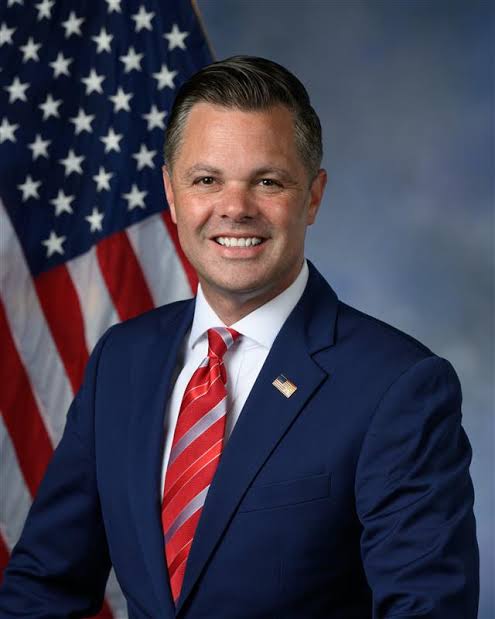
Representative Zach Nunn, an Air Force veteran and targeted House Republican running for his political life in Iowa’s 3rd Congressional District, stood beneath fluorescent lights alongside Defense Secretary Pete Hegseth. Outside, diesel had breached an unprecedented $6.31 a gallon. Inside, the rhetoric about project strength and decisive military force, once the reliable lifeblood of base rallies, fell flat against a far more brutal arithmetic: the cost of harvesting a field was swallowing the profit of the crop.
Thirty-six hours after that fundraiser, Nunn did something that would have been political suicide six months ago. He walked onto the floor of the House of Representatives and voted to cut off the President’s war.
He was not alone. In a tight 220–204 vote on a War Powers Resolution authored by Massachusetts Democrat Seth Moulton, Nunn was joined by fellow vulnerable Iowa Republican Marianette Miller-Meeks and South Carolina’s Nancy Mace. They merged with a stubborn coalition of libertarian-leaning iconoclasts—Kentucky’s Thomas Massie, Ohio’s Warren Davidson, Pennsylvania’s Brian Fitzpatrick, and Michigan’s Tom Barrett—to hand President Donald Trump a stinging, bipartisan rebuke over his six-month-old war with Iran.
While national headlines framed the vote as a dramatic ideological rift, the reality unfolding across the country is far simpler, far colder, and measured in gallons per mile. The traditional split between hawkish interventionists and isolationist populists has been obliterated by the raw economic pain flowing directly from the Persian Gulf to the American Heartland.

The Geography of Shock
For half a year, the conflict with Tehran has felt to official Washington like an exchange of press releases, satellite strikes, and naval maneuvers. But in the global energy market, it operates like a tourniquet.
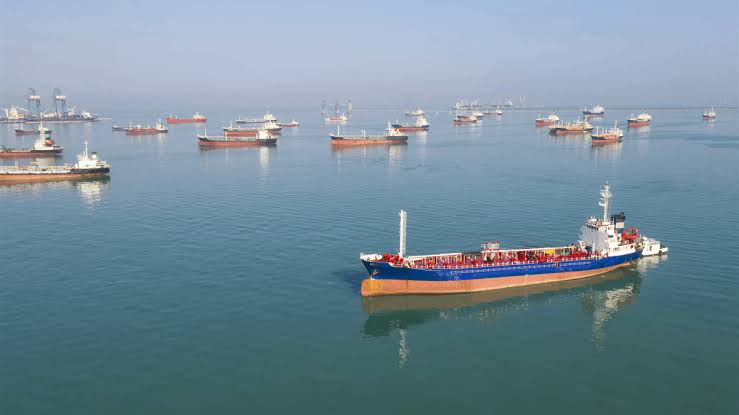
When Iranian forces effectively closed the Strait of Hormuz, stopping nearly a fifth of the world’s petroleum traffic, the shockwaves were immediate. They escalated when Houthi rebels in the Bab-al Mandab Strait choked secondary trade arteries, trapping commercial tankers in a hostile gridlock.
In Washington, oil is a geopolitical lever. In rural America, oil is a literal prerequisite for daily existence.
Across Midwestern farm belts, diesel isn’t an option—it is the lifeblood of transport trucks, combine harvesters, and irrigation pumps. When the price of diesel broke historical records, surpassing even the brutal spikes triggered by the 2022 invasion of Ukraine, it transformed the foreign policy debate into a domestic crisis. Average retail gasoline crossed $4.37 a gallon, but the real damage was hidden in the supply chain, where doubled freight costs quietly inflated the price of groceries, fertilizer, and consumer goods.
The economic damage reached a tipping point just as the midterms entered their final sprint.
“How This Ends”
“The mission had to stay focused and limited, because Americans do not want another forever war,” Miller-Meeks wrote shortly after her vote, breaking explicit protocol with the White House. “I will not vote to keep our soldiers in an open-ended war, with Iowans paying too much at the pump… The President needs to present a plan to Congress and the American people for how this ends.”
The shift in language among congressional Republicans is telling. Where party leaders once spoke of total victory and regime degradation, frontline members are now talking like accountants evaluating a failing asset.
At rallies in North Carolina and Texas, Trump has attempted to frame the economic hit as a noble sacrifice. “It’s a very inexpensive price to pay for what we’ve done,” Trump told a crowd in Charlotte, arguing that preventing a nuclear Iran was worth higher prices at the pump.
But inside swing-district campaign offices, internal polling tells a far grim story. Navigator Research data reveals that three-in-four Americans now disapprove of the administration’s handling of gas prices, with over 50% of independent voters viewing the military campaign in the Middle East as fundamentally “not worth the cost.” More critically for the GOP base, nearly a quarter of voters who backed Trump in 2024 report feeling voters’ remorse, directly citing fuel prices and unfulfilled economic promises.
In Washington, Thomas Massie went even further, introducing articles of impeachment against Defense Secretary Hegseth over the administration’s execution of the war. While Massie’s maneuver has little chance of clearing the House, it signaled an undeniable reality: the White House no longer controls the narrative within its own party on national security.
The Executive Shield
The White House has brushed off the congressional votes as symbolic grandstanding. Administration lawyers maintain, as they have through thirteen separate Senate roll calls and three House votes since June, that War Powers Resolutions are unconstitutional encroachments on executive authority.
To the West Wing, the War Powers Act is an academic concern. The President retains authority as Commander-in-Chief to direct military engagements, and without a veto-proof two-thirds majority in both chambers—a threshold nowhere in sight—the administration can legally ignore Capitol Hill’s resolutions.
Yet, the political calculus is far more complex than legal doctrine. Every time a Republican in a “Toss-Up” district like Iowa’s 3rd votes against the White House, it strips away another layer of political cover. It exposes a stark truth: while the President can bypass Congress to fly strike missions, he cannot bypass the market to set the price of gas.
The Autumn Wall
As Congress prepares to clear out for the fall campaign recess, the rift shows no sign of mending.
For months, party strategists hoped that military escorts in the Gulf and de-mining efforts in petroleum corridors would stabilize energy markets before harvest season. But the relief has not arrived fast enough. Heating oil demand will soon stack on top of diesel consumption as autumn turns cold across the North, threatening yet another leg up in consumer costs.
In the districts that will decide control of the House, national security has ceased to be an abstract debate about foreign adversaries. It has become a calculation made every Tuesday morning at the gas pump.
For lawmakers like Zach Nunn and Marianette Miller-Meeks, breaking with President Donald Trump wasn’t an act of grand ideological defiance. It was a move for political survival—a signal to voters back home that when forced to choose between the foreign policy of the White House and the price of a tank of gas, they will choose the tank of gas every time.