

 By
By Before you vote, see what your choices could mean.
We want to help you understand not just what's on the ballot, but what could happen afterward. Colorado Tradeoffs lets you test the choices, see the budget implications, and decide how you would respond.
Give it a try below. It takes less than 10 minutes.
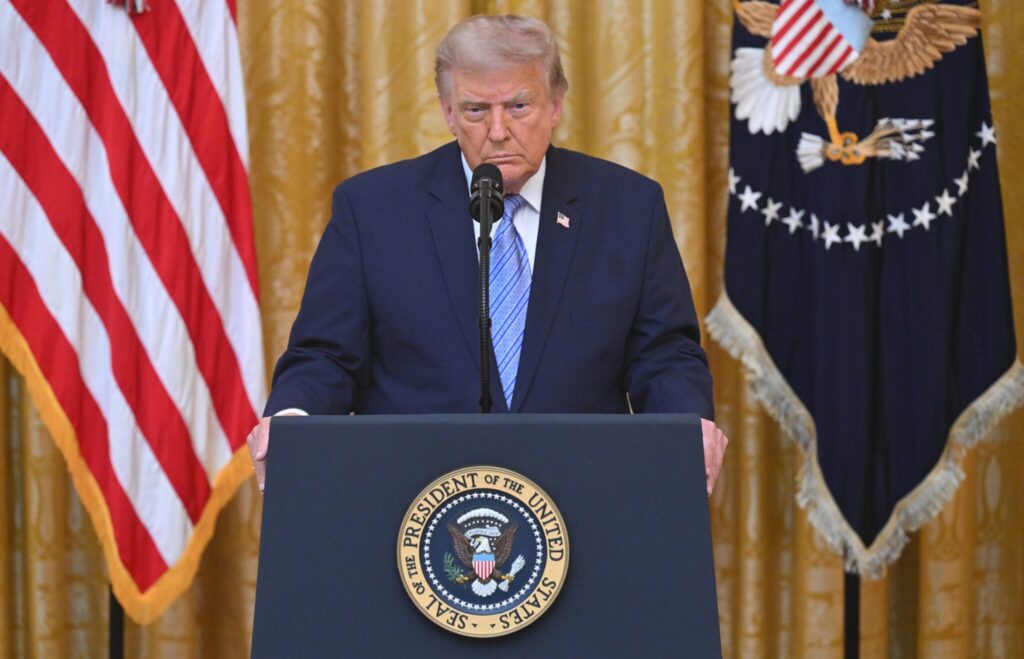
Following a major Supreme Court defeat earlier this summer, President Donald Trump has initiated a second attempt to curtail birthright citizenship. Recently, the president signed two new executive orders designed to limit the automatic granting of U.S. citizenship to babies born on American soil to noncitizens.
Describing the Supreme Court’s recent rejection of his prior immigration policies as “an unfortunate decision,” Trump framed the new orders as necessary “adjustments.” However, legal experts anticipate these measures will face immediate and fierce legal challenges, setting the stage for another high-stakes constitutional showdown at the Supreme Court.
The Constitutional Hurdle and the Previous Defeat
At the heart of this legal battle is the 14th Amendment of the U.S. Constitution, which established a longstanding core principle of American law: virtually any child born on U.S. soil is automatically an American citizen, regardless of their parents’ immigration status. The Citizenship Clause explicitly states: “All persons born or naturalized in the United States, and subject to the jurisdiction thereof, are citizens of the United States and of the State wherein they reside.”
During the first day of his second term, Trump signed a sweeping executive order attempting to deny citizenship to children born to undocumented immigrants or parents holding temporary legal visas. In June, the Supreme Court struck down that order, ruling definitively that it violated the 14th Amendment.
In response to that defeat, the White House has pivoted to a more targeted strategy. Rather than a blanket denial of citizenship to undocumented immigrants, the administration is now attempting to exploit the constitutional phrase “subject to the jurisdiction thereof” by expanding the narrow list of exemptions.
Order One: Expanding Jurisdictional Exemptions
The first of Thursday’s executive orders aims to deny birthright citizenship to three specific categories of children born on U.S. soil:
- Children of Designated Terrorists: Babies born to parents who are members of groups officially designated as terrorist organizations.
- Children of Diplomatic Staff: While the children of accredited foreign diplomats are already exempt from birthright citizenship (as they are subject to the jurisdiction of their home countries), this order attempts to expand that exemption to include the children of all noncitizen diplomatic staff.
- Children Born in Unincorporated Territories: Babies born in U.S. territories where Congress has not passed a specific statute granting citizenship. Currently, this applies exclusively to American Samoa.
Historically, interpretations of the 14th Amendment’s exemptions have been incredibly narrow. Beyond foreign diplomats, the only other major historical exemption applied to Indigenous peoples living in sovereign Native nations. This changed when Congress passed the Indian Citizenship Act of 1924, which explicitly granted birthright citizenship to all Indigenous people.
The administration has directed all executive departments and agencies to issue public guidance on implementing these new exemptions within 30 days.
Order Two: Cracking Down on ‘Birth Tourism’
The second executive order shifts focus from constitutional reinterpretation to visa enforcement, specifically targeting the practice of “birth tourism.” This refers to foreign nationals who travel to the United States on tourist visas with the sole intention of giving birth on American soil, thereby securing U.S. citizenship for their child.
The directive requires the secretaries of State and Homeland Security to draft strict rules and guidelines to identify and deny visas to foreign nationals suspected of traveling to the U.S. primarily to give birth.
White House deputy chief of staff Stephen Miller, widely recognized as the chief architect of the administration’s immigration agenda, outlined the administration’s hardline stance on the issue from the Oval Office. “If you’re telling a consular officer you’re here as a tourist, but your true purpose and intent is to go to a baby mill and give birth and try to mint an American citizen while you’re here, then you’re committing fraud against the American government,” Miller stated.
Despite the administration’s intense focus on the issue, statistical data suggests birth tourism makes up a fraction of total U.S. births. According to the Migration Policy Institute, utilizing the most expansive estimates from U.S. Census Bureau data, roughly 26,000 babies are born annually as a result of birth tourism. This represents less than 1 percent of the more than 3.5 million total births in the United States each year.
‘It’s the Same Constitution’
The tension between modern global mobility and established constitutional law was heavily debated during oral arguments for the administration’s previous Supreme Court case.
Solicitor General D. John Sauer argued that the traditional interpretation of birthright citizenship creates a massive incentive for pregnant women worldwide to travel to the U.S. Stressing the realities of modern travel, Sauer argued, “We’re in a new world now… where 8 billion people are one plane ride away from having a child who’s a U.S. citizen.”
The justices, however, were largely unconvinced by this pragmatic argument. They pressed Sauer on the actual frequency of birth tourism, calling the issue “marginal.” Chief Justice John Roberts offered a sharp rebuke to the argument that modern globalization necessitates a reinterpretation of constitutional text.
“Well, it’s a new world,” Roberts noted. “It’s the same Constitution.”