
 By
By The Africa Forward summit comes amid France’s fading ties with its former African colonies, as Kenya seeks greater trade.
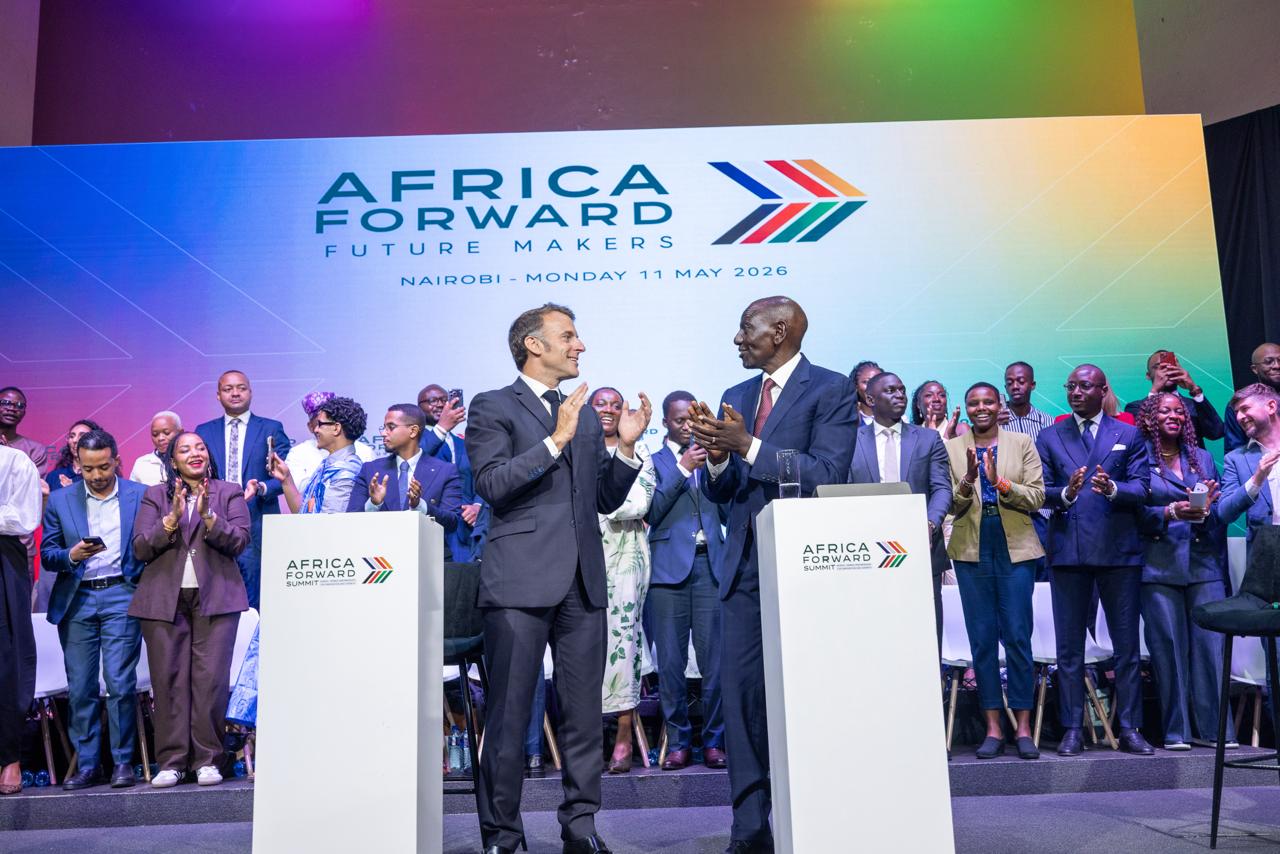
The just-concluded African Forward Summit 2026 in Nairobi, Kenya, has opened vistas of opportunity for the French government in Africa and also prospects for more support for African-led innovations and businesses.
In the course of the meeting, France and Kenya signed agreements worth €170 million and concluded with the Nairobi Declaration which targets shifting Africa-France relations from aid to co-investment and calls for reformation of the global financial architecture to support African economic sovereignty and sustainable development.
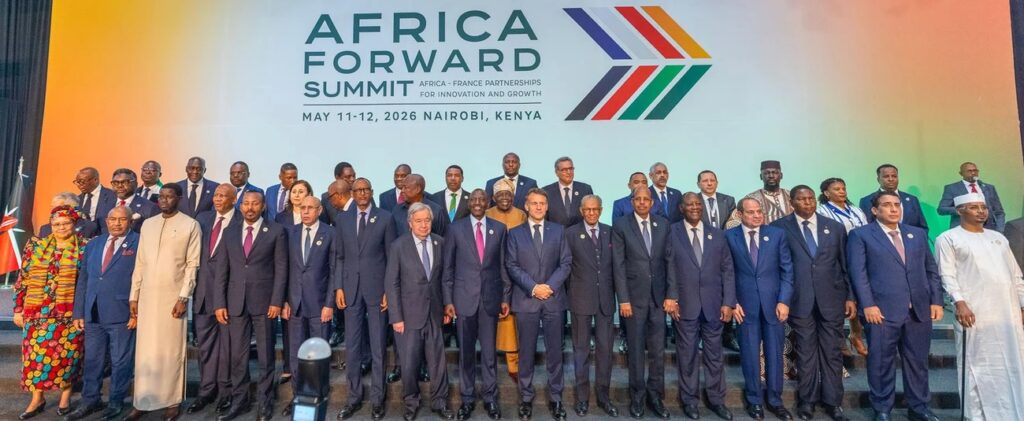
More than 30 heads of state and government descended on Kenya’s capital, Nairobi, for this year’s iteration of the summit. Named Africa Forward, it was being seen by analysts as an attempt by France to court new allies.
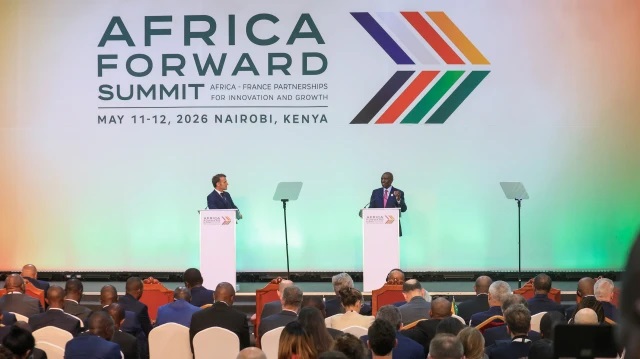
Speaking at the summit, the French president announced new investments and said sovereignty would be key in the new partnership that France is hoping to build with Africa.
Macron said Paris would be respectful of each African country’s independence, adding that “sovereignty and autonomy is shared, and your success is our success”. France’s new strategy, according to Macron, would be based on a shared agenda and that the “days of offering assistance are behind us”. “I’d like to focus on co-investment,” he said.
The leaders joined representatives of the African Union, financial institutions and the development sector to discuss themes including energy transition, peace and security and reform of the international financial architecture.
The summit was preceded by networking, matchmaking and workshop events on youth, creative and cultural industries and sport. Organisers say the event represents “a paradigm shift” in the relationship between Africa and France.
The Kenyan president, William Ruto, referred to sovereignty eight times in his speech. He reiterated that the days of European dependency were over for Africa in favour of mutual respect between cooperating nations. New partnerships between the African nations and France “must not be built on dependency but on sovereign equality, not on aid or charity but on mutually beneficial investment, and not on extraction or exploitation but on win-win engagements,” he said.
France had for decades used a policy called Françafrique in its former colonies to maintain political, economic and military influence. But it has faced repeated setbacks in francophone countries in west and central Africa, where its relations with its former colonies have deteriorated.
Coups in the region have been underpinned by anti-France sentiment, with Paris being accused of neocolonialism and of trying to influence military and other affairs.
Since 2022, France has been forced to withdraw its troops from countries including Mali, Niger and Chad. Some terminated their defence agreements with Paris and others requested a military withdrawal.
Analysts say holding the summit in a non-francophone country signalled that France was trying to move “beyond its old francophone comfort zone after losing ground in its traditional sphere of influence”.
France it seems is trying hard to repackage its Africa policy through an anglophone diplomatic hub, and to present the relationship as broader, more economic, and less tied to its colonial past.
The summit also fits in with Ruto’s ambition to position Kenya as a reliable international partner and a convening hub. During Ruto’s term, Kenya has led a security mission in Haiti and hosted the inaugural Africa Climate Summit.
France and Kenya entered a defence agreement last year that opposition and civil society groups in the east African country have criticised, saying it compromised sovereignty and gave French soldiers legal immunity. In March, 800 French military personnel arrived in Kenya for training and security exercises.
At a joint press briefing with Ruto in Nairobi shortly after the summit ended, Macron remarked on the changing dynamics for his country in west Africa, downplaying the absence from the event of leaders from Mali, Burkina Faso and Niger and highlighting the number of academics, artists and entrepreneurs in attendance from those countries.
Africa’s richest man, Nigerian industrialist Aliko Dangote, was in attendance, as were executives from leading French firms TotalEnergies and Orange.
Speaking at the summit, Macron also said the process of returning African artworks looted during the colonial era had become “unstoppable”. The French parliament last week passed a law paving the way for the government to return looted African cultural artefacts.
At a time when many African nations, particularly in the Sahel region, are reducing or expelling foreign military forces, Kenya is hosting a growing international military presence. A month before the summit, about 800 French soldiers arrived in Kenya on a navy ship.
Kenyan President William Ruto praised his relationship with France, saying, “We should no longer think in terms of aid and loans, but rather in terms of investment and what Africa has to offer.”
One of the areas of proposed collaboration between France and Kenya, and by extension, other African countries is in the area of Artificial Intelligence.
The perception of most of the participants in the tech space is that AI would transform Africa and drive economic growth. It is expected to improve service delivery, public services, healthcare, information and the challenges in the agriculture sector. The intervention would be in determining agricultural yields, improving diagnostics in the healthcare sector, among others, which would cumulatively boost Africa’s GDP.
Sophia Aiida, International Host and Founder, Sheek Network who spoke at the Summit said that the focus of the Franco-African discussions on the need for interventions in the AI space is a right step in the right direction.
Sophia anchored her position on the argument that in an Africa where AI becomes a veritable tool for development, with a laptop even in a very remote community, a young African can create indigenous solutions.
She pointed out that Africa is projected to host the largest working-age population in the world in the coming decades hence AI opens a pathway for them not in terms of consuming the technology, but in creating and owning them.
She also opined that the future of Africa is already taking root as it is now a known fact that one in every four persons will be African by the year 2050.
Kate Kallot, founder of Amini and a returnee from the United States said young builders are coming back to the continent because they want to bring about change and see vast opportunities in the African continent for that. She explained that young talented builders of African origins are stuck in the lower rung of the AI ecosystem in the United States because they are used to create systems that are not built for them.
Kallot said that her decision to relocate home to Kenya was influenced by her vision of change and the need to close the sovereignty compute gap. Her intervention is focused in the Global south.
She is optimistic that France and Africa have something that they can build together in a France-Africa relationship.
Aisha Toure, CEO, Orange Sierra Leone who moderated Africa’s Voice on the Global Stage at the summit emphasized that the summit would pave the way for more opportunities for young people in Africa.
She pointed out that Africa’s influence will not only be defined by its economic or political weight, but also by its ability to shape its own stories, brands, industries and cultural power.
“Africa’s influence will not only be defined by its economic or political weight, but also by its ability to shape its own stories, brands, industries and cultural power”.
She announced that the company will start the construction of a $6m orange village in the Felei Tech City in Sierra Leone as part of investments in digital infrastructure, taking advantage of the youth demographic on the continent.
One of the most discussed opportunities at the Summit is the Creative arts and sports sector in Africa which sector players believe will provide significant economic growth, entertainment, empowerment of youths, employment, and cultural preservation.
At the Business Forum which was held at the University of Nairobi, Clare Akamanzi, CEO of NBA Africa explained that beyond entertainment, sports have the potential of generating income for ordinary Africans through job creation and the service sector that benefits when tournaments and other activities are held periodically.
Clare, who has over 15 years’ experience in economic development; private sector growth, business environment reforms and FDI promotion, recommended an infusion of funds into this sector to stimulate employment and other opportunities.
She revealed that basketball, long assumed to be a western only sport, has been promoted by her organisation and has been embraced across the continent and there was a possibility of chain benefits.
Olivier Ginon, President of GL Events also echoed Clare’s position. He said that sports has now been recalibrated in Africa to create long-lasting impact in communities such as jobs, social intervention and ultimately, legacies created.
In his assessment of the summit, Aigboje Aig‑Imoukhuede, Chairman of the France-Nigeria Business Council (FNBC), said that President Macron has been very resilient in engaging African nations and felt other EU countries should also emulate the step.
Aig‑Imoukhuede pointed out that beyond signing of agreements, the gathering reinforces the fact that France is now more interested in cooperation rather than dominance, hence the need for structural reform in Africa in the area of collaboration.
He recommended that dialogue among African governments should center on unity with no distinction and that business relationships among African entrepreneurs should be complementary instead of fragmentation so that the global community sees the market, not as Nigerian or Ghanian, but as an African market.