
 By
Before you vote, see what your choices could mean.
We want to help you understand not just what's on the ballot, but what could happen afterward. Colorado Tradeoffs lets you test the choices, see the budget implications, and decide how you would respond.
Give it a try below. It takes less than 10 minutes.
Bacon beat out state Rep. Andrew Boesenecker, D-Fort Collins, for the job and replaces outgoing House Speaker Julie McCluskie, D-Dillon, who is term-limited and leaves office early next year.
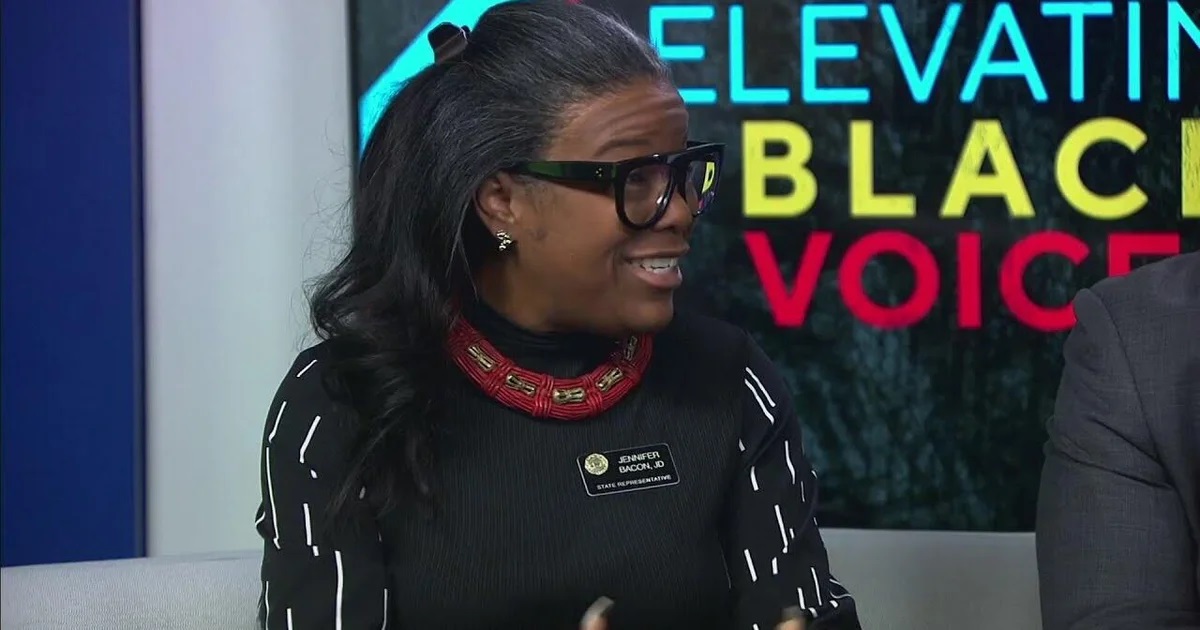
In the wood-paneled chambers of the Colorado State Capitol, history often arrives with the decisive thud of a wooden mallet. But when House Democrats gathered in Denver to choose their leader for the 76th General Assembly, the echo was distinctly resonant. In a high-stakes internal vote, House Democrats elected Representative Jennifer Bacon as the next Speaker of the Colorado House of Representatives.
Bacon’s victory is a landmark in every dimension. She becomes the first Black woman in Colorado history to wield the House speaker’s gavel—a watershed moment for a state whose political landscape has evolved rapidly over the past decade. Prevailing over Representative Andrew Boesenecker of Fort Collins in a closed-door ballot, Bacon steps into the role previously held by term-limited Speaker Julie McCluskie.
Her ascension marks more than a personal or symbolic milestone; it signals an ideological and generational pivot for Colorado’s legislative majority. As Democrats enter the upcoming session holding their largest House majority in nearly a century, Bacon inherits a caucus rich in raw voting power yet fraught with subtle internal fault lines.
A Policy Background Forged in Classrooms and Courts
Jennifer Bacon does not fit the template of a career institutionalist. Her journey to the rostrum of the State House was forged at the intersection of education, law, and grassroots activism.
A former teacher, school administrator, and civil rights attorney, Bacon’s foundational work focused on public school equity. She earned degrees from Tulane University, Florida International University, and William & Mary Law School before serving as managing director of Teach For America in Denver and later being elected to the Denver Public Schools Board of Education in 2017.
First elected to represent House District 7 in Northeast Denver in 2020, Bacon swiftly climbed the leadership ladder within the statehouse. She previously served as Chair of the Black Democratic Legislative Caucus of Colorado and stepped up as Assistant Majority Leader for the chamber. Throughout her tenure, her legislative portfolio has centered heavily on gun violence prevention, criminal justice reform, educator diversity, and economic justice for historically underserved communities.
Colleagues often describe her approach as an intentional blend of academic rigor and street-level empathy. Nominating her on the caucus floor, Representative Michael Carter captured the mood of her supporters by framing her election not merely as a promotion, but as an embrace of transformative perspective: “Our caucus is blue. This House is blue. My speaker is going to be Black.”
Strategic Strengths: Coalition Building and Moral Clarity
As Speaker-designate Bacon prepares to assume leadership when the legislature convenes in January, several key strengths define her position:
The Power of Uncompromising Moral Clarity
Bacon has built a reputation for standing firmly on progressive principles without coming across as dogmatic. In her post-election address to fellow lawmakers, she emphasized that voters are demanding bold action over cautious incrementalism: “You want leaders who stand for what’s right and who won’t waver,” Bacon declared. This clarity resonates strongly with the expanding progressive wing of her party, giving her legislative agenda significant momentum out of the gate.
Deep Roots in Education and Policy Detail
Having spent years navigating complex school district budgets and state statutes, Bacon possesses an intricate understanding of how policy impacts daily lives. Her background as a lawyer and educator equips her with the analytical muscle necessary to dismantle bureaucratically complex bills—whether in public school finance, housing policy, or health care access—and rebuild them into workable statutes.
Mastery of Coalition Dynamics
Having served as Assistant Majority Leader, Bacon understands the mechanics of counting votes and holding a caucus together. Her career as a community organizer makes her adept at bringing outside stakeholders—labor unions, education advocates, racial justice organizations, and municipal leaders—into the legislative process early, establishing buy-in long before bills reach the chamber floor.
Potential Hurdles: Navigating Supermajorities and Ideological Rift
Yet, leading a record-setting Democratic majority in a state as economically and geographically diverse as Colorado carries inherent challenges. Bacon’s tenure will be tested by several formidable hurdles:
Managing an Ideological Left-Center Shift
The transition from outgoing Speaker Julie McCluskie—a moderate Democrat representing a rural resort district—to Speaker-designate Bacon and Majority Leader-designate Javier Mabrey marks a distinct leftward shift in House leadership. While progressive members welcome this evolution, moderate Democrats from suburban or swing districts face different political realities. Keeping urban progressives and suburban pragmatists aligned on contentious issues like housing density, tax reform, and environmental regulation will demand constant diplomacy.
The Weight of Bipartisan Protocol vs. Supermajority Power
With Democrats securing supermajorities in both the House and Senate, the temptation to use overwhelming numbers to bypass minority Republicans will be high. However, steamrolling opposition carries risks, including bitter floor battles, procedural stalls, and voter backlash in statewide elections. Bacon must balance executing an ambitious Democratic agenda while maintaining institutional decorum and keeping lines of communication open with rural Republican members.
Fiscal Realities and TABOR Constraints
Despite significant political power, Colorado state budget writers remain bound by strict revenue limits under the Taxpayer’s Bill of Rights (TABOR). High inflation, shifting property tax valuations, and competing budget demands—such as K-12 funding, transportation infrastructure, and healthcare—will constrain what the legislature can spend. Translating progressive policy goals into statutory reality within tight fiscal boundaries will require excruciating prioritization.
The Landscape Ahead
| Leadership Dimension | Focus Area | Strategic Reality |
|---|---|---|
| Caucus Alignment | Supermajority Management | Bridging gaps between urban progressives and suburban moderates. |
| Policy Focus | Education, Housing, & Civil Rights | Directing focus toward systemic equity and human capital investments. |
| Executive Relations | Coordination with the Governor’s Office | Balancing legislative ambitions with executive branch budget boundaries. |
When the General Assembly convenes under the gold dome in January, all eyes will be on the speaker’s podium. Jennifer Bacon’s election represents a defining moment in Colorado politics—an alignment of historic representation and progressive legislative capability.
How effectively she marshals her supermajority to address Colorado’s most pressing challenges—from housing affordability and public school funding to environmental sustainability—will determine not only the legacy of her speakership, but the direction of the state for years to come.