
 By
Before you vote, see what your choices could mean.
We want to help you understand not just what's on the ballot, but what could happen afterward. Colorado Tradeoffs lets you test the choices, see the budget implications, and decide how you would respond.
Give it a try below. It takes less than 10 minutes.
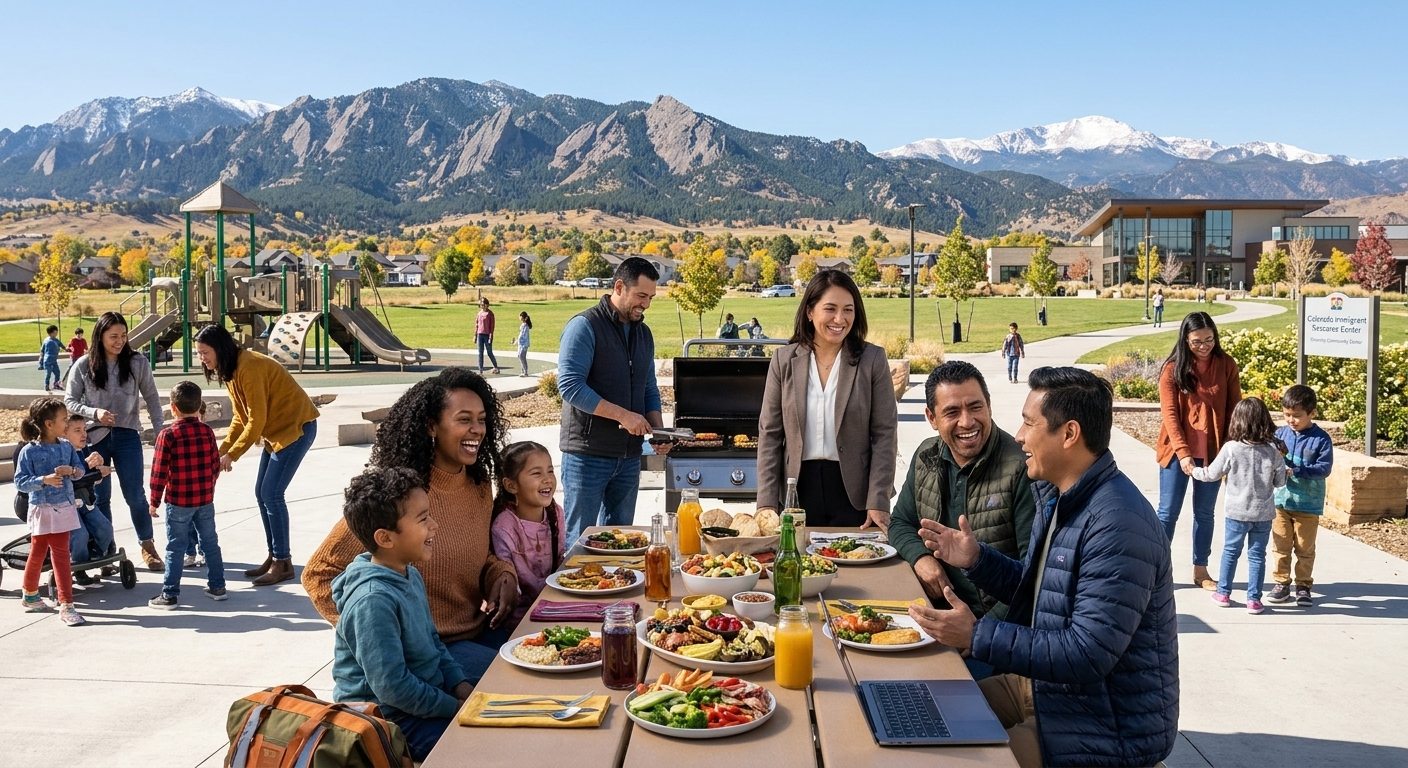
On a razor-cold morning in northern Denver, before the sun clears the jagged teeth of the Front Range, the smell of roasted poblano peppers and fresh arepas begins to cut through the mountain air. Inside a buzzing commercial kitchen off East Colfax Avenue, Elena Ramírez is bark-ordering instructions to her kitchen prep staff in a fluid blend of Spanish and English.
Three years ago, Elena was an accountant in Valencia, Venezuela. Today, she is the founder of a catering collective that employs sixteen people, feeds tech workers in downtown Denver, and caters events from Boulder to Colorado Springs.
“When we left, we carried everything we owned in two backpacks,” Elena says, smoothing down her apron as a pan sizzles nearby. “People back home think of Colorado as snow and mountains. But for us, Colorado was a blank canvas. We didn’t come here just to find shelter. We came to build something.”
Elena is part of a quiet, transformative movement reshaping the Centennial State. While national headlines often frame migration through the narrow lens of political friction and overburdened urban resources, a fundamentally different reality is playing out across Colorado’s valleys, plains, and high-altitude towns. From the bustling corridors of Metro Denver to the agricultural heartlands of the San Luis Valley and the resort communities of the Yampa Valley, migrants are proving to be the state’s most vital economic catalysts and cultural dynamic force.
They are not merely surviving in Colorado—they are lifting it up.
The Economic Engine in the Rockies
To understand the scale of this impact, one must look past the partisan rhetoric and examine the economic machinery running beneath Colorado’s surface. According to research from the American Immigration Council and Colorado Fiscal Institute, immigrants represent over 11% of the state’s population but make up nearly 15% of its entrepreneurs and over 12% of its total workforce. Collectively, they contribute more than $50 billion annually to the state’s economic output and generate over $6 billion in federal, state, and local taxes.
In resort towns like Steamboat Springs, Vail, and Aspen, the labor shortage was once a crisis that threatened to shutter local businesses. Today, migrant workers form the backbone of the hospitality, construction, and early childhood care sectors that keep these world-famous economies humming.
“Without our immigrant workforce, this valley simply stops,” says Kim Martin, an early childhood education director in the Yampa Valley. “They aren’t just filling vacancies; they are bringing energy, dedication, and an unmatched work ethic. They allow working parents in our community to go to work every day.”
Further south, in the agricultural towns of Pueblo and Grand Junction, migrant laborers are adapting age-old farming practices to combat mountain-west drought conditions, keeping Colorado-grown produce on grocery shelves across the nation. Meanwhile, in urban hubs like Aurora—often cited nationally as a model for municipal integration—immigrant-owned small businesses have transformed commercial strips once plagued by vacancies into thriving, multi-ethnic business corridors.
Reclaiming the Civic Fabric
Beyond dollars and labor stats, the human story is anchored in civic renewal. In Aurora, the city’s “Natural Helpers” program pairs established residents with newly arrived migrants to navigate everything from school enrollments to commercial licensing.
Take Mateo Silva, a 34-year-old former civil engineer from Colombia who arrived in Denver in early 2023. Denied an immediate path to engineering re-certification due to licensing hurdles, Mateo didn’t wait around. He volunteered with local neighborhood associations to organize community cleanups and construct community garden beds in low-income food deserts.
“When you arrive in a new country, the hardest part isn’t the cold or the language—it’s feeling useless,” Mateo reflects, standing near a community garden plot he helped build in Denver’s Globeville neighborhood. “Creating something with your hands for the city that welcomed you gives you back your dignity.”
Mateo eventually launched a sustainable landscaping cooperative that specializes in xeriscaping—replacing water-intensive lawns with native, drought-tolerant Colorado plants. His business now contracts with both residential homeowners and city park initiatives, tackling one of Colorado’s most pressing environmental challenges: water conservation.
Cultivating a Culture of Belonging
Culture in Colorado has long been defined by its frontier roots, but today it is being enriched by a vibrant tapestry of international traditions.
In Denver’s Westwood neighborhood, the streets pulse with life during community art walks, where Venezuelan murals blend seamlessly with traditional Chicano public art. Local youth centers now offer music programs that mix West African drumming, Andean pan flutes, and traditional Western bluegrass—creating a sound distinct to the modern Rocky Mountains.
At the public policy level, Colorado’s proactive approach to integration is paying dividends. Economists at Colorado State University note that soft-landing programs—such as targeted workforce training and expedited work-permit support—yield long-term net positives for municipal budgets.
“Every dollar invested in helping a migrant family stabilize returns over a dollar back in local tax revenue within a few short years,” notes Dr. Anita Alves Pena, an economics professor at CSU. “It isn’t charity; it’s a high-return investment in our state’s economic future.”
The Road Ahead
Challenges remain. Federal immigration gridlock continues to leave thousands in legal limbo, waiting months or years for work authorizations despite acute labor shortages across the state. Housing affordability, which impacts all Coloradans, falls especially hard on newly arrived families trying to establish roots.
Yet, walk into any neighborhood bakery in East Denver, any construction site along I-25, or any school classroom in Glenwood Springs, and the prevailing spirit is not one of hardship—it is one of stubborn, relentless optimism.
Back in her Colfax kitchen, Elena Ramírez packs up her latest order of arepas bound for a tech conference downtown. She pauses to look out the window at the distant, snow-capped peaks of the Continental Divide.
“These mountains are tough to cross, but once you’re here, they shield you,” she says with a quiet smile. “Colorado gave us a second chance. Now, every single day, we give Colorado our best.”