 By
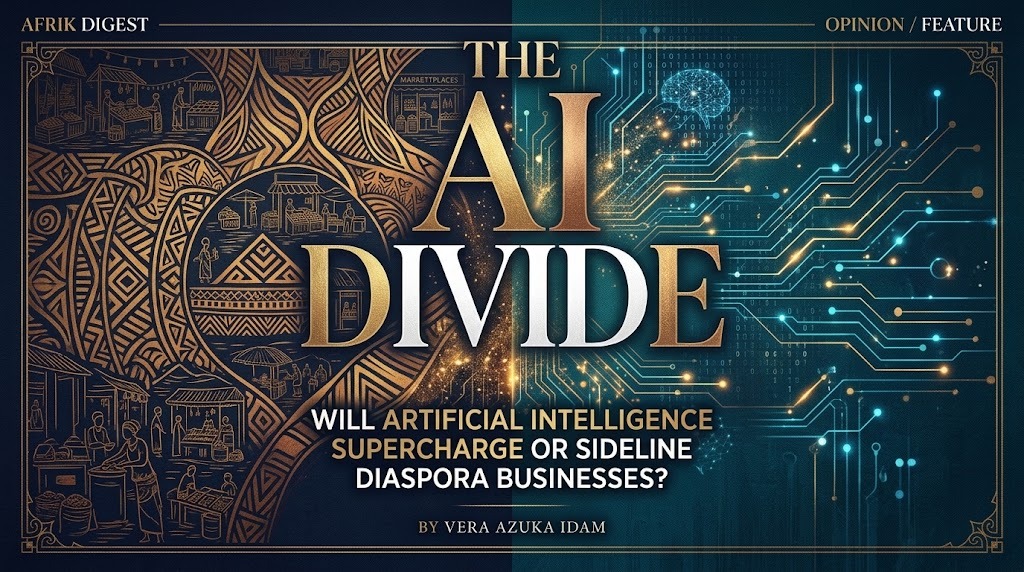
By I’ve been thinking a lot lately about the way Artificial Intelligence is sweeping through every corner of the economy, from marketing to logistics to customer service, and how strangely quiet the conversation feels in the spaces where our diaspora businesses live and hustle. While Silicon Valley debates the ethics of machine learning and Fortune 500 companies race to automate entire departments, the African‑owned hair shops, trucking companies, daycare centers, restaurants, tax offices, boutiques, and home‑care agencies that anchor our communities are standing at a crossroads. The question is no longer whether AI will reshape business. It’s whether we, the diaspora, will shape AI, or be sidelined by it.
Let me be blunt: AI is the biggest productivity equalizer we’ve seen since the smartphone. A single‑person business can now produce marketing content that looks like it came from a full creative agency. A home‑care agency can automate scheduling, invoicing, and client follow‑ups. A trucking entrepreneur can optimize routes, fuel usage, and maintenance logs with tools that used to be reserved for national carriers.
I’ve watched diaspora business owners spend hours designing flyers, writing emails, or trying to keep up with bookkeeping. These are tasks AI can now handle in minutes. And when you’re running a micro‑business, minutes matter. They can be the difference between burnout and growth. But here’s the catch: you only benefit if you adopt the tools. And adoption requires intention, training, and a willingness to experiment.
There’s another side to this story. The uncomfortable one. Many diaspora workers and entrepreneurs operate in sectors most vulnerable to automation: administrative services, logistics, retail, customer support, transportation, and even some areas of healthcare. AI isn’t just a shiny new tool; it’s a force reshaping work. If we don’t reskill, we risk watching entire job categories shrink.
I’ve spoken with warehouse workers worried about automated inventory systems, office assistants watching AI scheduling tools replace tasks they used to manage, and small retailers noticing that customers increasingly prefer automated checkouts and AI‑powered customer service. The danger isn’t AI itself. The danger is being unprepared for what AI replaces- and what it creates.
Representation Matters
Let’s talk about something that hits close to home: cultural bias. Most AI systems were trained on datasets that include very little African language, dialect, imagery, or cultural nuance. Ask an AI to generate Igbo textile, Yoruba architecture, or Lingala cuisine, and you’ll often get distorted or inaccurate results. Ask it to translate certain African proverbs or idioms, and you’ll get gibberish. This isn’t just an aesthetic problem; it’s an economic one. If AI can’t “see” us accurately, it can’t serve our markets accurately.
Diaspora creators, developers, and entrepreneurs need to be part of the teams building and training these models. We need to contribute datasets, correct cultural inaccuracies, and push for representation that reflects our communities. Otherwise, we risk becoming invisible in the digital economy that’s supposed to be global.
Here’s the truth: AI is literacy, and literacy requires teaching. Our business networks, cultural associations, and community hubs must stop treating technology as an afterthought. We need AI learning spaces where entrepreneurs can practice using tools without fear or embarrassment.
We’ve always been resourceful. We’ve always built businesses from scratch, stretched every dollar, and found ways to thrive in systems not designed for us. AI is simply the next frontier; one that can supercharge our enterprises or quietly leave them behind. The diaspora has always innovated; now we must innovate digitally. The divide isn’t between tech giants and small businesses. It’s between those who adopt AI intentionally and those who don’t.
My hope… and my challenge is that our diaspora chooses to shape this revolution, not chase it. That we become creators, not just consumers. That we build tools that reflect our languages, our markets, our stories, and our ambitions, because the future of business is already here. The question is whether we’re ready to claim our place in it.