
 By
By Before you vote, see what your choices could mean.
We want to help you understand not just what's on the ballot, but what could happen afterward. Colorado Tradeoffs lets you test the choices, see the budget implications, and decide how you would respond.
Give it a try below. It takes less than 10 minutes.
DENVER — Mention Colorado to most people, and their minds default to a predictable canvas: snow-capped peaks, alpine ski resorts, microbreweries, and a demographic landscape that tilts overwhelmingly white. The mythology of the American West has long been airbrushed, its stories told through the lens of rugged homesteaders and rugged cowboys who all seemed to share the same complexion.
Yet, step onto the corner of 26th Street and Welton in Denver’s historic Five Points neighborhood, and you will hear a different frequency altogether. It is a frequency built on jazz riffs, the sizzle of southern cooking, the quiet resilience of high-plains homesteaders, and the complex, ongoing struggle of a community negotiating its place in the modern West.
African American culture in Colorado is not a footnote to the state’s history; it is a foundational pillar, built at high altitude, forged in segregation, and constantly forced to reinvent itself. To understand it is to challenge everything you thought you knew about the American frontier.
The Ghost of the “Harlem of the West”
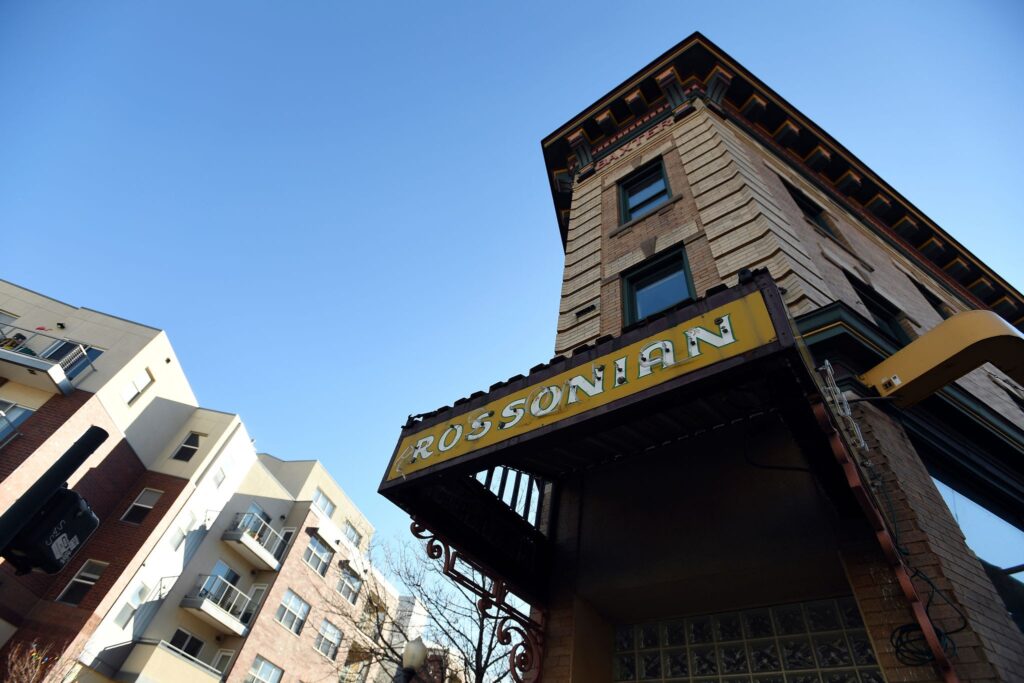
To find the beating heart of Black Colorado, you have to start at Five Points. In the early to mid-20th century, redlining and racial covenants forced Denver’s African American population into this dense, four-square-mile district northeast of downtown. Confined by systemic racism, the community did what Black communities across America have always done: they turned spatial isolation into cultural lightning.
Five Points earned the moniker “The Harlem of the West.” At the center of it all stood the Rossonian Hotel. Built in 1912, the Rossonian was a luxury establishment where Black performers could actually stay. Major downtown hotels welcomed figures like Duke Ellington, Billie Holiday, Louis Armstrong, and Miles Davis to perform for white audiences, but barred them from sleeping in their rooms.
So, after their downtown sets finished, the legends migrated to Welton Street.
They’d play downtown for the money, but they’d come to Five Points for the soul,” says a local historian, leaning against a brick wall near the now-quiet Rossonian. The late-night jam sessions in the Rossonian’s lounge lasted until sunrise. Five Points boasted over 50 bars and clubs. It was a thriving ecosystem of Black-owned banks, pharmacies, law offices, and barbershops.
Today, Five Points is changing—rapidly. The light rail cuts down Welton Street, flanked by sleek, newly constructed glass apartment complexes. Condos replace historic brick homes, and the neighborhood’s Black population has plummeted due to gentrification over the past two decades. The Rossonian stands closed, its future long stalled in development limbo.
Yet, the ghost of that era refuses to be evicted. On hot June afternoons, the street erupts for the annual Five Points Jazz Festival and the Juneteenth Music Festival—one of the largest in the nation—drawing tens of thousands of people to dance where the Duke once walked.
Beyond the City: The Frontier Pioneers
The story of Black Colorado does not begin or end in Denver’s urban grid. Long before Five Points swung to the sound of bebop, Black men and women were shaping the wild, untamed topography of the Rocky Mountains.
Consider “Aunt” Clara Brown, born into slavery in Virginia. After securing her freedom, she worked her way to Colorado as a cook on a wagon train during the 1859 Gold Rush. Settling in Central City, she opened a laundry business, invested in real estate and mining claims, and amassed a fortune. But her real legacy was human: she used her wealth to bring dozens of formerly enslaved relatives and community members out of the South and into the West, funding schools and churches across the territory.
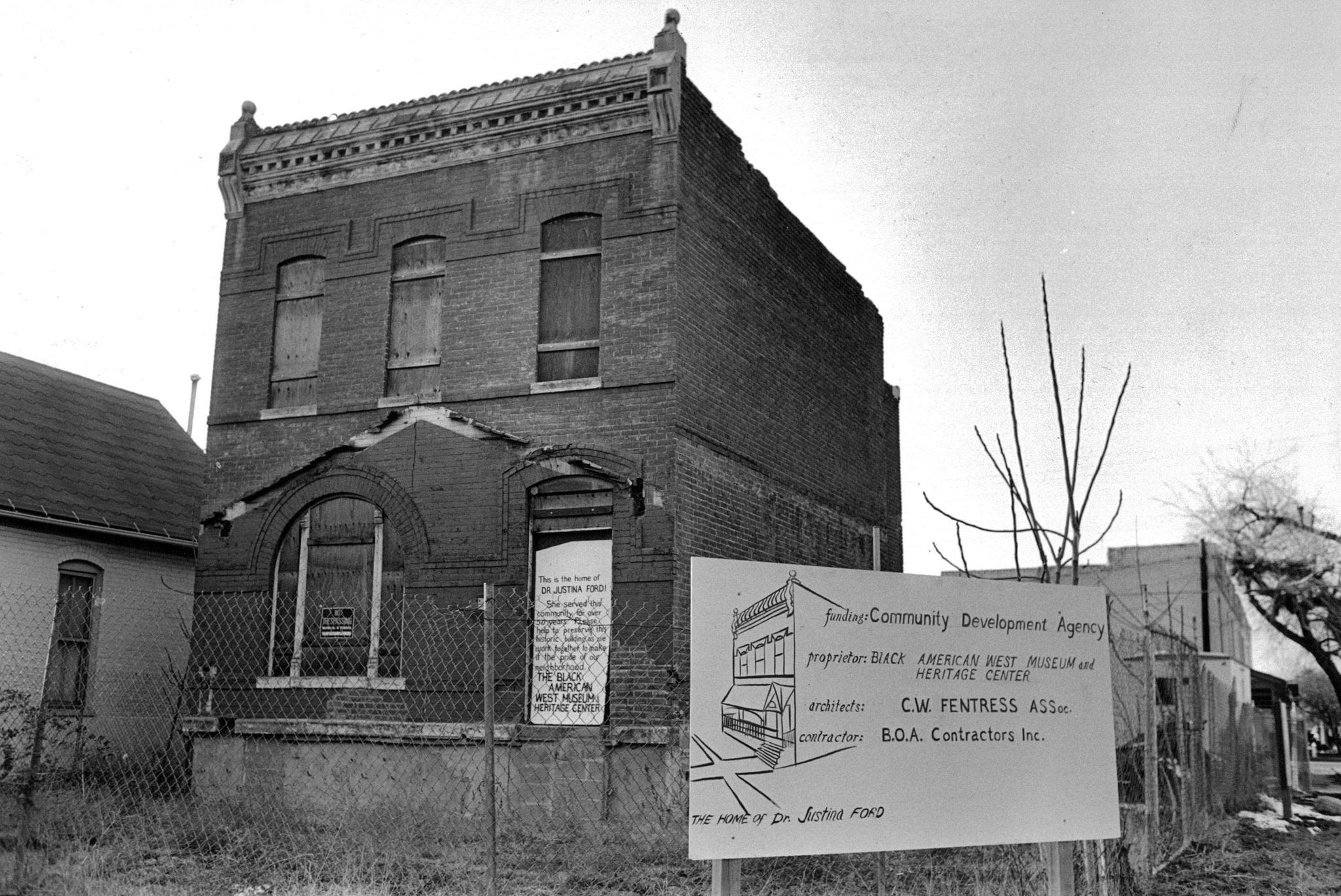
Then there was Barney Ford, an escaped slave who became one of Colorado’s wealthiest entrepreneurs, opening luxury hotels and restaurants in Breckenridge and Denver, while relentlessly lobbying for Black voting rights before Colorado achieved statehood in 1876. There was Dr. Justina Ford, who arrived in 1902 as the state’s first Black female physician. Denied hospital privileges because of her race and gender, she treated patients out of her Five Points home—delivering over 7,000 babies of all races, speaking multiple languages to serve immigrants, and riding a horse and buggy across snowdrift-covered streets late at night.
Further north, on the windswept plains near Greeley, lies Dearfield. Founded in 1910 by Oliver Toussaint Jackson, Dearfield was an all-Black agricultural colony built on the dream of self-reliance. At its peak, hundreds of Black homesteaders farmed thousands of acres. Though the Dust Bowl eventually turned Dearfield into a ghost town, the crumbling wooden structures that remain stand as silent monuments to an audacious dream of Black sovereignty on the high plains.
“When people think of Black history, they think of the Deep South or Northern industrial cities,” says a curator at the Black American West Museum, located in Dr. Justina Ford’s preserved home. “They don’t picture Black cowboys, Black miners, or Black homesteaders. But we weren’t just here—we built this place.”
The High-Altitude Present: Identity in the Modern West
If the past was defined by pioneering survival and urban sanctuaries, the present Black culture in Colorado is defined by a dynamic, dispersed reinvention.
Unlike Atlanta, Chicago, or Washington D.C., Colorado has never had a massive Black majority. Today, Black residents make up roughly 4% to 5% of the state’s total population, concentrated mostly in Metro Denver, Aurora, and Colorado Springs. That relative scarcity creates a unique socio-cultural dynamic.
For young Black Coloradans, culture is lived out at the intersection of traditional heritage and the outdoor-centric Rocky Mountain lifestyle. You see it in groups like Vibe Tribe Adventures and Black-led hiking and skiing collectives that actively break down the historical barriers keeping people of color out of outdoor recreation. It is an assertion that the mountains belong to everyone.
You see it in Aurora, Denver’s sprawling eastern neighbor, which has become one of the most racially diverse cities in the region. Here, the traditional African American narrative weaves together with recent waves of Ethiopian, Eritrean, and Somali immigrants, creating a rich diaspora where soul food spots sit adjacent to injera bakeries and coffee ceremony shops.
You see it in the art scene. From hip-hop artists and spoken-word poets referencing the elevation and the isolation, to visual artists muraling the walls of RiNo (River North) and Five Points, there is a distinct West Coast-meets-Midwest-meets-High Plains identity. It is an identity that feels spacious, independent, and resilient.
The Unfinished Canvas
To walk through Colorado as a Black American is to feel both an immense sense of history and a quiet solitude. It is a place where you can stand on a street corner that once echoed with the trumpet of Miles Davis, look west, and see the same jagged, snow-capped peaks that Clara Brown looked upon as she carved out a life of freedom.
The challenge facing Black culture in Colorado today is preservation in the face of hyper-growth. As historic neighborhoods gentrify and living costs soar, the threat of cultural erasure is real.
Yet, culture is not merely bricks and mortar; it is memory, momentum, and community. Black Coloradans have survived the Dust Bowl, redlining, mountain winters, and systemic disenfranchisement. In the thin air of the Mile High State, their story continues to breathe—deeply, boldly, and unmistakably alive.