
 By
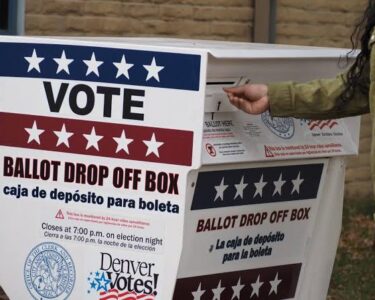
By Before you vote, see what your choices could mean.
We want to help you understand not just what's on the ballot, but what could happen afterward. Colorado Tradeoffs lets you test the choices, see the budget implications, and decide how you would respond.
Give it a try below. It takes less than 10 minutes.
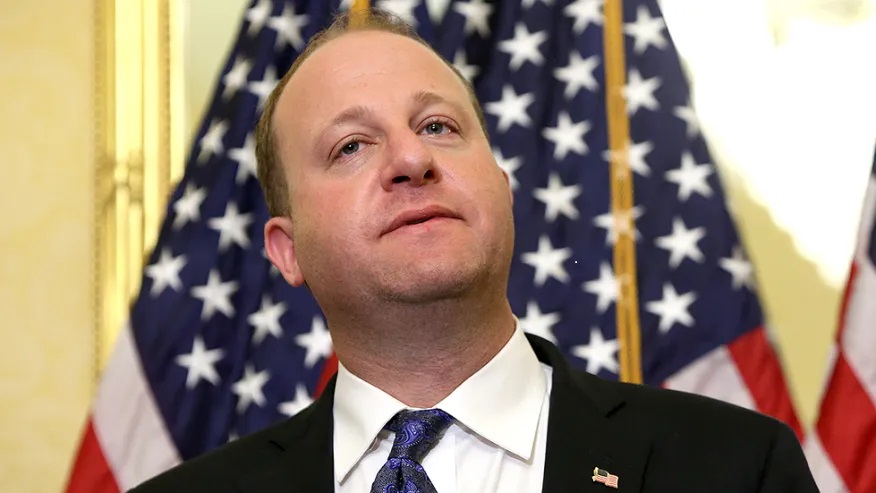
As Governor Jared Polis prepares to vacate the Executive Mansion on East 8th Avenue, he leaves behind a state fundamentally altered—not merely by the passage of time, but by an idiosyncratic brand of politics that defied the predictable battle lines of American public life. First elected in 2018 as the nation’s first openly gay governor, Polis’s tenure was initially expected to represent a progressive left-turn for a once-purple state. Instead, the multi-millionaire tech entrepreneur governed like a pragmatist obsessed with structural disruption, building a legacy defined by economic libertarianism, sweeping educational expansions, and an unyielding trust in market mechanisms.
Polis’s time in office offers a case study in ideological disruption. To standard partisans, his record reads like a series of contradictions. Yet to those who tracked his decade in Congress and his background in online enterprise, his approach was remarkably consistent: treat state government like a high-growth startup, eliminate friction, scale social goods, and let individual choices drive the outcome.
The Pragmatic Architect: Universal Care and Education
If Polis’s governorship has a centerpiece, it is early childhood education. Long before he entered the Capitol, Polis had poured personal resources and legislative focus into K-12 schooling. As governor, he achieved what predecessors viewed as political non-starters: securing state-funded, universal full-day kindergarten, followed closely by universal preschool.
By eliminating the financial drag of early care on young families, Polis executed an economic policy disguised as an educational intervention. He consistently framed universal preschool not as a government expansion, but as workforce infrastructure—an engine designed to keep parents, particularly women, engaged in the labor market.
His reformist lens extended into healthcare. Through the creation of the Colorado Option—a state-designed, privately offered health insurance framework—his administration forced insurance carriers to offer standardized, lower-cost plans. Combined with prescription drug transparency initiatives and an aggressive push to lower out-of-pocket costs, Polis managed to expand access without defaulting to a state-run single-payer system. It was a quintessential Polis solution: leverage state policy to enforce market competition.
The Tech-Libertarian Impulse: Taxes and Regulation
Where Polis parted ways most dramatically with traditional Democratic orthodoxy was on tax policy and regulation. While progressive allies in the legislature repeatedly sought revenue expansion to address infrastructure deficits, Polis openly championed lowering—and eventually eliminating—the state’s flat income tax.
His stance confounded both parties. Conservatives were skeptical of his progressive social agenda, while left-leaning Democrats were frustrated by a governor who actively resisted tax increases in a booming state. Reason Magazine once dubbed him “the most libertarian governor in America”—a title Polis wore with comfort. He routinely argued that broad income taxes disincentivized growth, advocating instead for land-value taxes and carbon pricing.
This market-oriented mindset shaped his regulatory agenda. On housing, Polis confronted local zoning boards head-on. Recognizing that Colorado’s acute affordability crisis was primarily a supply problem, his administration fought to override restrictive municipal land-use laws to allow transit-oriented, high-density development. Though the battle provoked fierce resistance from local officials defending home rule, it underscored Polis’s unwillingness to let local bureaucracy stall economic reality.
The Crisis Manager and the Environmental Horizon
The true crucible of Polis’s first term was the COVID-19 pandemic. While taking early, decisive action to issue stay-at-home mandates, Polis quickly pivoted toward personal responsibility and rapid re-opening. He eschewed prolonged state-level mandates in the pandemic’s later stages, placing faith in vaccine distribution and individual risk management. His stance drew ire from public health advocates who wanted stricter mandates, yet earned praise from business leaders desperate for stability.
On energy and the environment, Polis charted a path toward a 100% renewable electricity grid by 2040. He signed landmark legislation shifting the state’s oil and gas regulator mandate from “fostering” energy development to prioritizing public health and environmental protection. Concurrently, he accelerated electric vehicle adoption through state incentives, positioning Colorado as a clean-energy hub without crippling the state’s legacy energy sectors.
A Contested Legacy
Jared Polis leaves office having redefined the boundaries of moderate-progressive governance. Critics argue that his preference for market mechanisms left pressing structural problems—such as rural healthcare shortages and transportation infrastructure funding—under-addressed. Others suggest his push for housing density eroded local control.
Yet, his achievements are undeniable. He delivered on universal early education, constrained healthcare cost growth, oversaw robust economic expansion, and maintained high personal popularity in an increasingly polarized nation.
As Colorado transitions to its next chapter, Jared Polis’s term will be remembered not as a period of party-line dogma, but as an ambitious experiment in technology-driven, market-conscious pragmatism. He proved that a state can expand social goods aggressively while remaining relentlessly focused on economic flexibility—a playbook that national leaders in both parties will be analyzing for years to come.