
 By
By Ghana accuses Trump administration of ‘normalizing the erasure’ of history.
The US stood almost alone at the United Nations this week in voting against an African resolution condemning the trans-Atlantic slave trade and kickstarting the campaign for reparations, potentially fueling anti-American sentiment on the continent.
The final vote on 25 March – International Day of Remembrance of the Victims of Slavery and the Transatlantic Slave Trade – was 123 in favour and three against, with Israel and Javier Milei’s Argentina joining the Donald Trump administration in opposition.
Every African country present voted in favour (Benin, Madagascar and São Tomé and Príncipe abstained as they were not present), along with original BRICS members Brazil, Russia, India and China.
Some 52 countries abstained, including former colonial powers France and the UK and almost every other European nation.
General Assembly resolutions are non-binding but represent the collective will of UN member states.
Ghana’s President John Mahama, who led the move to pass the resolution was quoted as saying that “Let it be recorded that when history beckoned, we did what was right – for the memory of the millions who suffered the indignity of the slave trade and those who continue to suffer racial discrimination”.
The resolution raises awareness about the dangers of modern racism, prejudice, and the legacy of slavery.
Critics of the resolution took issue with its singling out of the trans-Atlantic slave trade, the description of slavery as the “gravest crime against humanity” and, most notably, the call for reparations.
While European diplomats respectfully registered their objections, the Trump administration bluntly dismissed the whole exercise as a costly distraction.
“We regret that the US must once again remind this body that the United Nations exists to maintain international peace and security,” said US Representative to the United Nations Economic and Social Council Dan Negrea.
“It was not founded to advance narrow, specific interests and agendas, to establish niche international days, or to create new costly meeting and reporting mandates. This resolution does all three.”
Key to the resolution of supporters’ argument for reparations is that the trans-Atlantic slave trade is unique not only for its industrial scale and the immense suffering it caused but also for its lingering impact, both for the West’s prosperity and Africa’s underdevelopment.
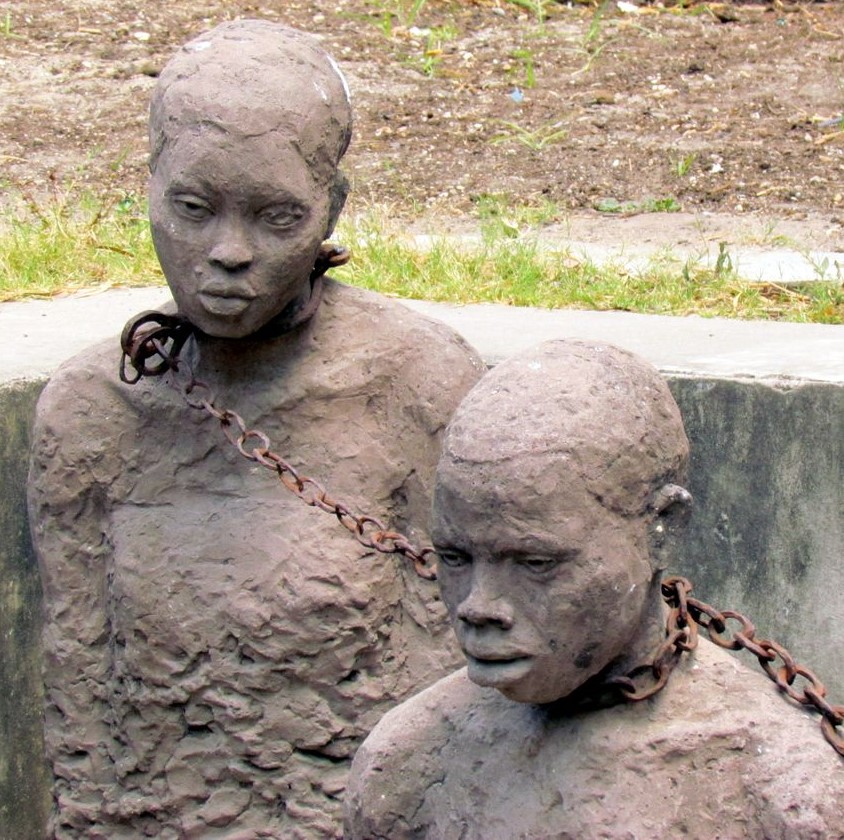
More than 18 million men, women and children suffered under the brutal system for over 400 years.
“Business was booming because when labour is free, profit margins are huge,” Mahama said.
Meanwhile, Black people – both in Africa and in the diaspora – have suffered under an oppressive racial hierarchy that endures to this day.
“While slavery itself has been abolished, its consequences endure, continuing to shape lives to this day,” UN General Assembly President Annalena Baerbock, former foreign minister of Germany, said in opening remarks at the annual plenary.
“For descendants, it is inherited, manifesting as poverty, as social discrimination, as under-representation in politics and business. For countries of origin, many of whom have representatives here today, it was the hollowing out, the loss of entire generations who would otherwise have helped to sow the seeds of prosperity,” she added.
Where western powers evoke “historical wrongs” and the “horrors of the past,” many Africans see unfinished business.
“There is a common thread between the slavery and transatlantic trade of the past and the terrorism plaguing the Sahel today, namely the enrichment of colonial and imperial powers on one side and the impoverishment and fragmentation of Africa on the other,” said Burkina Faso Permanent Representative Saïdou Zongo, who spoke for the Alliance of Sahel States (AoSS).
Russia, a security partner of the AoSS, didn’t miss a chance to recall how Moscow helped Africa remove the shackles of colonialism while Western powers often sided with the forces of apartheid.
Russia played a key role in adopting in 1960 the UN Declaration on Granting Independence to Colonial Countries and Peoples, said Deputy Permanent Representative Maria Zabolotskaya.
Also siding with Ghana was a who’s who of African-American civil rights leaders and organisations critical of the Trump administration and his campaign to roll back Diversity, Equity, and Inclusion (DEI) initiatives aimed at redressing past discrimination.
These include the Reverend Al Sharpton, civil rights attorney Benjamin Crump, the NAACP (National Association for the Advancement of Coloured People) and members of the Congressional Black Caucus.
Currently in the US, black history courses are being removed from the school curriculum. Schools are being mandated to stop teaching students about the truth of slavery, segregation, and racism in American history courses. Books about those topics are being banned in schools and public libraries.
Ghana rejected the West’s criticism that language on slavery was meant to downplay other historical suffering.
The policy of reparations is trickier.
Like countries that abstained, the US refuses to recognise a legal right to reparations for historical wrongs that were not illegal under international law at the time they occurred. Mahama had little patience for that argument.
“Just because everybody is doing something doesn’t make it right. Slavery is wrong now, and it was wrong then,” Mahama told the UN.
The resolution doesn’t go into details, merely affirming that the “fulfilment of reparations” is a “moral as well as legal imperative rooted in principles of justice, human rights and dignity.”
That was enough for the Trump administration to accuse African leaders of trying to line their pockets.
Those in support of reparations say that’s not what reparations are for. In addition to direct payments to descendants of slaves, advocates have considered everything from scholarships to business loans to help reverse the impact of centuries of anti-Black housing, transportation, and business policies. The conversation and the discussion are often distilled down to the promise of a cheque, and that’s wholly incompatible with what reparation movers are after.
The UN vote was the culmination of a two-decade campaign that didn’t start with Mahama.
Back in 2006, the UN General Assembly chose 25 March as the International Day of Remembrance of the Victims of Slavery and the Transatlantic Slave Trade. The following year, the UN made it an annual event.
In his September 2023 address to the UN General Assembly, former Ghanaian president Nana Akufo-Addo called for reparations for those who were enslaved.
Two months later, the Ghanaian government and the African Union co-hosted the Accra Reparation Conference, which called for the establishment of a Committee of Experts on Reparations and a Global Reparations Fund based in Accra.
In February 2024, the African Union, at its 37th annual summit, designated the theme of the year 2025 as Justice for Africans and People of African Descent through Reparations.
Following this week’s vote, the African Union is now set to begin working with the UN and member states to develop a framework for action on reparative justice.
“This is a victory for Africa. For our ancestors. For the millions who suffered, and for the generations who carry this forward,” the African Union Mission to the UN wrote on X.
“The Decade of Action on Reparations has begun.”