

 By
Before you vote, see what your choices could mean.
We want to help you understand not just what's on the ballot, but what could happen afterward. Colorado Tradeoffs lets you test the choices, see the budget implications, and decide how you would respond.
Give it a try below. It takes less than 10 minutes.
What unfolded on November 3rd, 2026 elections was extraordinary. You could feel it in the air: in the way people talked about the future as if it were something they could finally touch. And when the results rolled in, they confirmed what many of us sensed: America just shifted. Colorado did too.
A Blue Wave With Real Consequences
Across the country, Democrats didn’t just win, they dominated. They flipped the U.S. Senate with 54 seats and captured the House with 249 seats, gaining a historic +41 margin in the lower chamber. This wasn’t a squeaker. It was a political earthquake. Democrats flipped seats in states Republicans usually win comfortably— Texas, Kansas, Ohio, South Carolina, Iowa.
Why this happened
Voters were tired of gridlock, culture‑war politics, and leaders who seemed more interested in fighting each other than fighting for them. The electorate rewarded candidates who talked about economic stability, healthcare access, and restoring institutional trust.
How it happened
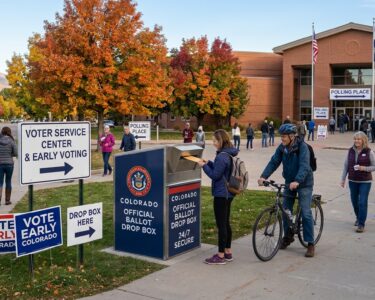
Mail ballots, early voting, and a surge of young and unaffiliated voters shaped the outcome. In Colorado’s primary, for example, 98.29% of ballots were cast by mail, a pattern that carried into the general election nationwide.
Democrats now have the opportunity to set the national agenda heading into 2028 — but opportunity is not guaranteed. Voters will expect results in lower costs, safer communities, and a political climate that feels less like a battlefield and more like a democracy.
Why Democrats Swept Colorado
Colorado didn’t just lean blue, it painted the map blue. The results weren’t just wins, they were margins. Big ones.
- Governor Phil Weiser (D) won with 60.5% of the vote.
- Senator John Hickenlooper (D) cruised to re‑election with 60.1%.
- Democrats won key House races, including CO‑8, where Manny Rutinel (D) defeated Gabe Evans (R) with 54.5%.
Colorado’s electorate has been shifting for years: younger, more diverse, more urban, more college‑educated. And in 2026, those voters showed up. Democrats won by focusing on issues that resonate deeply here; issues like reproductive rights, climate resilience, immigration fairness, and economic mobility. Colorado’s immigrant communities, including African, Latino, and Asian diasporas, played a major role.
Coloradans can expect aggressive movement on housing affordability, transportation modernization, and expanded protections for immigrant families. With unified leadership, Colorado may become a national model for progressive governance.
What This Means for Us
As a community newsroom, Afrik Digest sees elections through the eyes of the people we serve: immigrants, refugees, first‑generation families, and diaspora communities who know that policy isn’t abstract, but personal.
This election told us that voters want stability, competence, and compassion. They want leaders who understand real life: rent, childcare, healthcare, safety, opportunity. They also want a political system that works for everyone, not just the loudest voices in the room. America and Colorado have just turned a page. Now the question is will our leaders deliver?
As always, Afrik Digest will be here watching, reporting, and amplifying the voices that elections often overlook.