
 By
By 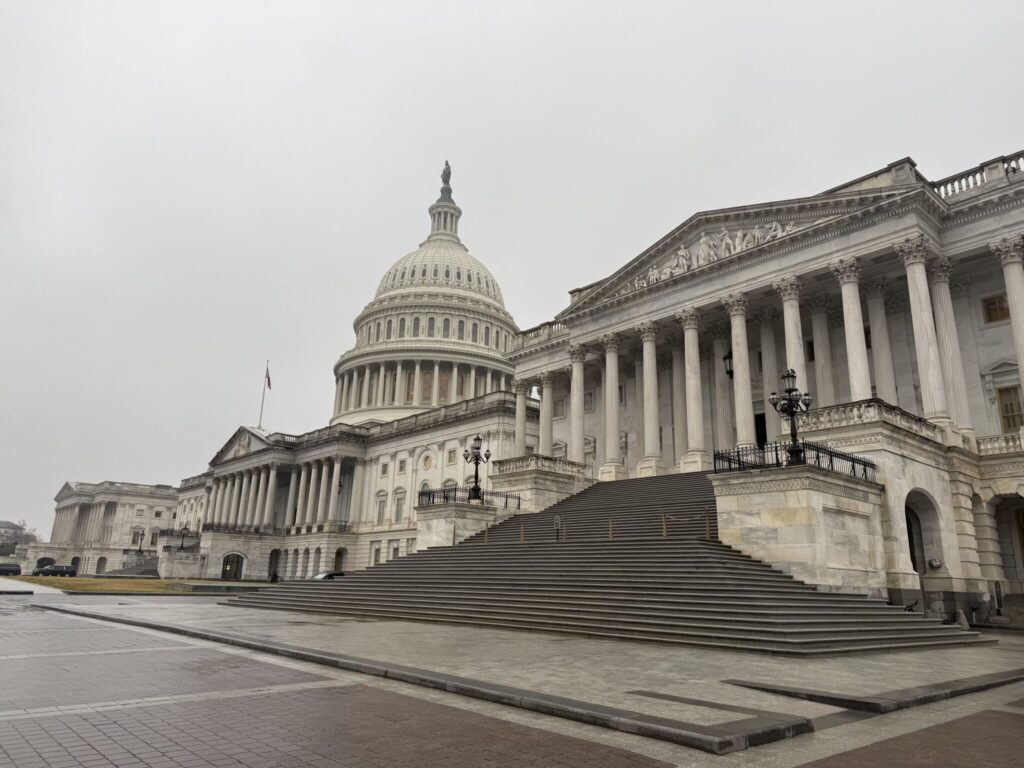
Republicans in the U.S. Senate recently pressed forward with a bill that would require proof of citizenship to register to vote and a photo ID to cast a ballot, despite long odds the legislation will ever become law amid bipartisan opposition.
The 51-48 vote to formally begin debate on the measure, which GOP lawmakers have named the Safeguard American Voter Eligibility Act, or the SAVE America Act, only starts the process. Senators are expected to vote on several amendments in the days, or possibly weeks, ahead.
But at least 60 lawmakers will be needed to end floor debate, a highly unlikely prospect with Democrats arguing the bill would disenfranchise millions of voters.
Alaska Sen. Lisa Murkowski was the only Republican to vote against starting debate. North Carolina GOP Sen. Thom Tillis didn’t vote.
Murkowski wrote in a social media post last month the November midterm elections are “fast approaching” and that implementing “new federal requirements now, when states are deep into their preparations, would negatively impact election integrity by forcing election officials to scramble to adhere to new policies likely without the necessary resources.
“Ensuring public trust in our elections is at the core of our democracy, but federal overreach is not how we achieve this.”
President Donald Trump has made enacting nationwide changes to voting his top legislative priority ahead of the midterm elections, although Republicans swept unified control of government less than two years ago.
He wrote in a social media post recently that he plans to campaign against anyone who doesn’t support the legislation, which the House passed last month.
“Only sick, demented, or deranged people in the House or Senate could vote against THE SAVE AMERICA ACT,” he wrote. “If they do, each one of these points, separately, will be used against the user in his/her political campaign for office – A guaranteed loss!”
Senate Democratic Leader Chuck Schumer, of New York, said during floor remarks the legislation would require Americans “to run through an obstacle course of red tape unlike anything we have ever seen in voter registration.”
The bill becoming law, he said, would lead to millions of Americans being kicked off voter rolls due to a requirement that states run their list of registered voters through a “deeply flawed” Department of Homeland Security database.
“If you’re kicked off the rolls, you may never be told,” he said. “There’s no requirement to let you know.”
Schumer argued the bill is less about ensuring only Americans vote in elections and more about Republican concerns they will lose at least one chamber of Congress later this year.
“It’s funny. I don’t remember MAGA Republicans screaming about stolen elections and voter fraud after the 2024 election that they won,” he said. “Well, the same rules that governed the 2024 election are going to be the ones that govern the 2026 election. The only difference is that this time MAGA Republicans know they’re in trouble politically. So now they’re suddenly saying the system is compromised and broken and it needs to be changed. It’s all lies.”
It is illegal for noncitizens to vote in federal elections and anyone found guilty could face fines and up to a year in prison. There are limited instances of people not eligible to vote actually casting a ballot, according to analysis from the Bipartisan Policy Center of data compiled by the Heritage Foundation, an especially conservative think tank.
BPC’s examination “found only 77 instances of noncitizens voting between 1999 and 2023” and that “there is no evidence that noncitizen voting has ever been significant enough to impact an election’s outcome.”
Senate Majority Leader John Thune, R-S.D., reiterated a few hours before the procedural step that “the votes aren’t there” to pass the bill via a talking filibuster, a path several of his members want him to take.
“So what we are doing is we are having a fulsome debate on the floor of the United States Senate, which is something that I think the Senate has done in the past, and probably should do a lot more of,” he said. “But we’ll have it up. Everybody will have their say. At some point, we’ll have votes. And we’ll see where the votes are.”
A talking filibuster would require Democratic senators to give a series of floor speeches in order to delay or prevent final passage. That process could tie up the Senate floor for months.
Thune said he wasn’t sure when votes on amendments would begin, but that he expects the process to last “for the foreseeable future.”
“I think at least for right now, there’ll be some flexibility to see where the road leads,” he said.