


 By
By A Facility Reborn in Secrecy
Colorado is living through a moment that feels like a political riddle: How does a state facing a freeze on childcare, food assistance, and social‑service funding suddenly find $39 million to operate a new immigration detention facility for just six months?
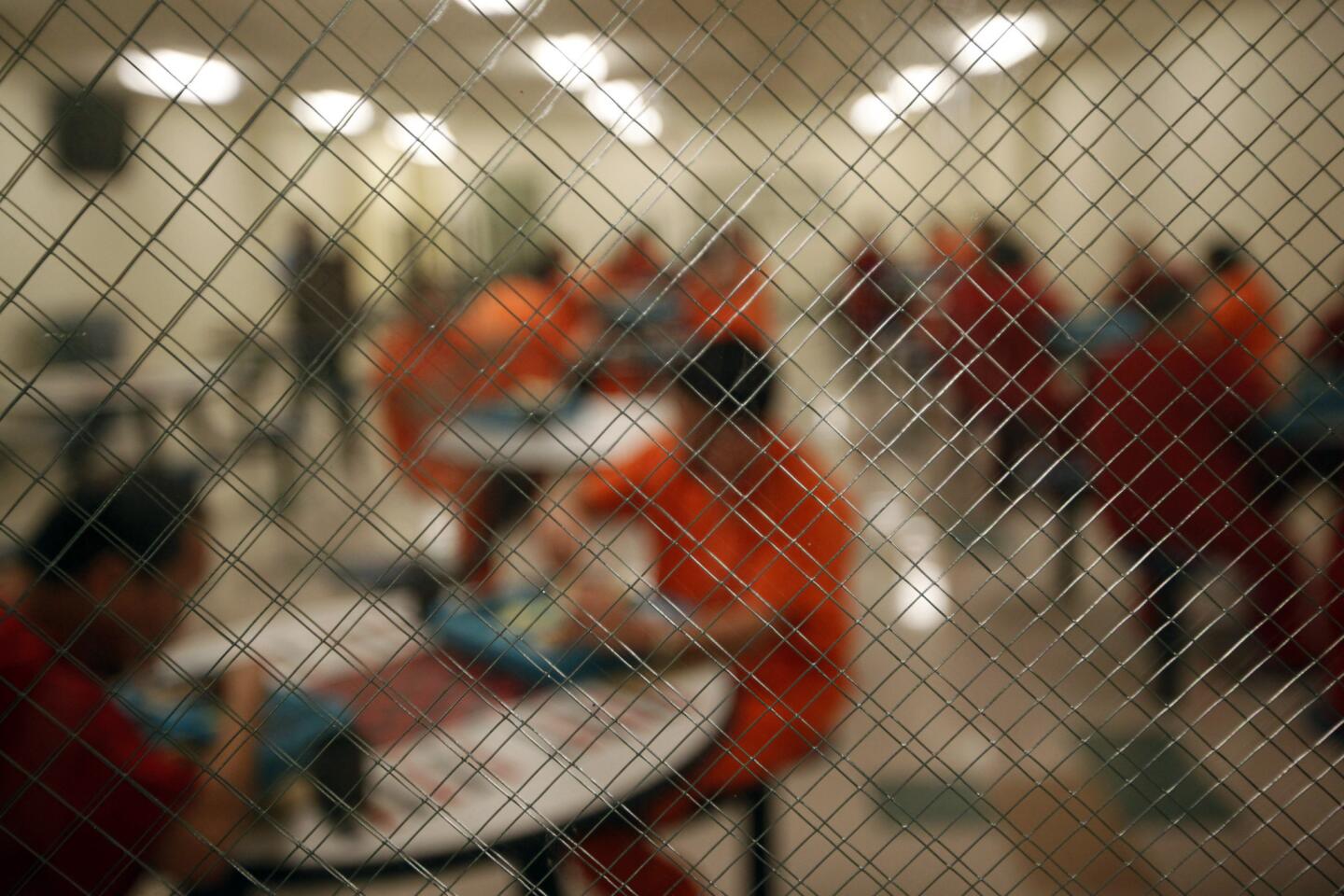
That is the question haunting advocates, families, and local officials after newly released FOIA documents revealed that Immigration and Customs Enforcement (ICE) quietly approved a $39 million sole‑source contract -no competitive bidding and no public scrutiny- with private prison giant GEO Group to operate the dormant Hudson Correctional Facility, now renamed the Big Horn Correctional Facility. GEO Group is a private prison corporation that already operates the Aurora ICE Processing Center.

As Colorado Families Lose Childcare and Food Aid
The timing could not be more jarring. The same week the Big Horn contract surfaced, the federal government halted funding for the Child Care and Development Fund, Temporary Assistance for Needy Families, and the Social Services Block Grant. These programs support tens of thousands of low‑income families across the state. Their sudden suspension has left childcare providers scrambling, parents panicking, and local officials stunned. The contradiction is so stark it feels almost surreal: a state struggling to feed and care for its children is being asked to bankroll detention beds instead.
Inside the ACLU of Colorado’s office in Denver, attorneys have been poring over the redacted documents with a mixture of frustration and disbelief. One attorney described the process as “trying to read a book where every other sentence has been blacked out.” The organization’s legal director, Tim Macdonald, has been vocal about the lack of transparency. He has emphasized that the public still has no idea when Big Horn will open, how many people it will accommodate, or what oversight, if any, will be in place. The secrecy, he argues, undermines democratic accountability at its core. But the consequences of these decisions are not confined to legal filings or policy debates. They are felt most acutely in the homes, daycares, and kitchens of ordinary Coloradans.
In Colorado Springs, a childcare provider who runs a preschool serving mostly low‑income families described the funding freeze as a “gut punch.” She explained that more than half of the children in her care rely on state childcare subsidies. Without those funds, she fears she may have to close her doors. She spoke with the weary clarity of someone who has spent weeks reassuring parents she cannot afford to reassure. The news of the $39 million detention contract left her stunned. To her, it felt like families were being punished while private prison companies were being rewarded.
In Aurora, a single mother of two said the freeze left her terrified. She works two jobs, and childcare subsidies are the only reason she can keep them. If her childcare center shuts down, she will lose her job. If she loses her job, she will lose her home. She could not understand how the government could find money for detention centers but not for children. Her confusion was not rhetorical—it was the bewilderment of someone watching the ground shift beneath her feet.
The Economics of Contradiction
Colorado is being told it cannot be trusted with childcare funds, but the federal government is handing GEO Group tens of millions of dollars with no competitive bidding and no transparency. Parents are making impossible choices. Childcare providers are preparing for closures. Food‑aid programs are bracing for increased demand as SNAP‑Ed, the nation’s largest nutrition‑education program, disappears. Meanwhile, ICE’s detention expansion continues unimpeded, with Big Horn and the Huerfano Correctional Facility in Walsenburg both listed as funded, though details about the latter remain nonexistent.
The deeper one digs, the clearer the pattern becomes. Colorado’s social safety net is being tightened around the necks of its most vulnerable residents, while the detention infrastructure is being expanded with remarkable speed and minimal oversight. The contrast is not accidental. It is political.
For years, immigration enforcement has operated on a logic of expansion: more beds, more contracts, more facilities. But in Colorado, that expansion is now colliding with a moment of profound economic strain. Families are being told there is no money for childcare, no money for food assistance, no money for community programs. And yet, somehow, there is money- tens of millions of dollars- for detention.
Our Spending Versus Our Values
As a community reporter, I have interviewed mothers who fled violence only to be met with handcuffs. I have watched budgets for detention balloon while social programs shrink. But Colorado’s situation is uniquely stark. It is not simply a budgeting issue. It is a statement of values.
When a government freezes childcare funding but expands detention funding, it is saying that children are negotiable, families can wait, and private prison contractors cannot. It is saying that the needs of low‑income residents are conditional, but the needs of GEO Group are guaranteed. It is saying that transparency is optional for detention, but mandatory for childcare providers.
The message is unmistakable.
Back in Hudson, the Big Horn facility remains quiet for now. Its gates are still closed, its halls still empty. But the money has already been allocated, the contract already signed. The machinery of detention is humming to life, even as the machinery of social support grinds to a halt. Colorado’s future is being shaped not by what it claims to value, but by what it chooses to fund. And right now, the ledger tells a troubling story—one in which families are left to fend for themselves while detention beds are prepared for occupants who have not yet arrived.
The $39 million question is not simply why Big Horn is being reopened. It is what Colorado is willing to sacrifice to make room for it.