


 By
By When women who have survived female genital mutilation/cutting (FGM/C) finally reach the exam room at Denver Health, many arrive carrying decades of unanswered questions. Some have lived most of their adult lives without understanding why intimacy has always been painful, why pleasure has been elusive, or why their bodies feel different from what they imagine others experience.
***
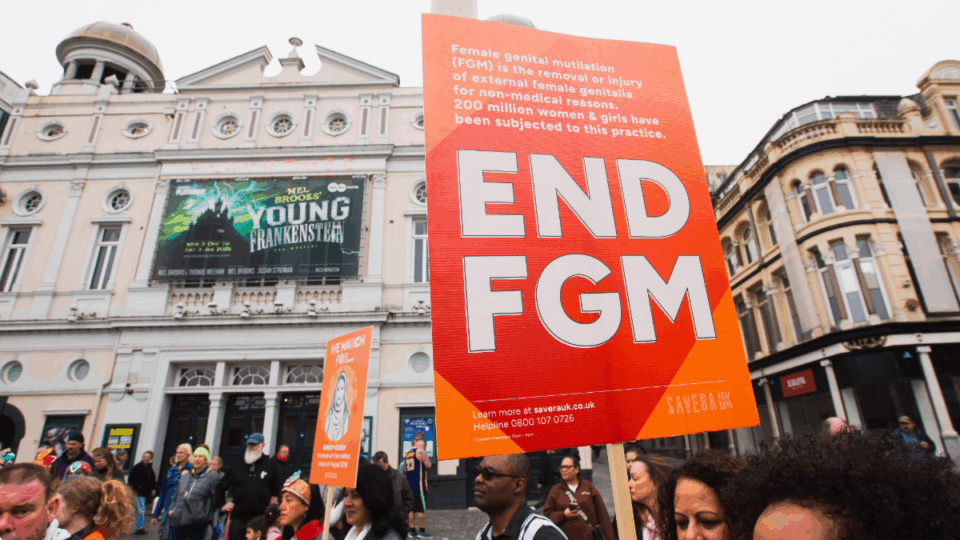
In many African communities, traditions -songs, stories, rituals that bind generations together are passed down like heirlooms. But some traditions carry wounds instead of wisdom. Female Genital Mutilation (FGM) is one of them. It is spoken of in whispers, endured in silence, and often defended as culture. Yet behind that silence are women living with pain, trauma, and lifelong consequences.
Every year on February 6, the world marks the International Day of Zero Tolerance for Female Genital Mutilation, a global reminder that this practice is not a cultural artifact to be preserved but a human rights violation to be confronted. In 2023, U.S. Secretary of State Antony J. Blinken reaffirmed the United States’ “zero tolerance” stance and emphasized the need for accelerated action to meet the 2030 elimination goal.
To understand the medical realities behind the statistics, two Denver Health physicians, Dr. Nicole Larrea and Dr. Kelly Bogaert, both OB-GYNs at Denver Health’s dedicated FGM clinic, shared their clinical experiences treating women affected by FGM. Their insights reveal the physical, emotional, and generational impact of a practice that continues to shape the lives of millions. Alongside their perspectives, two community advocates working directly with survivors in the United States offer a frontline view of the challenges and the path forward.
“The older patients that I see feel like, Oh, my whole life, I never felt pleasure with intercourse… and now I understand why,” says Dr. Nicole Larrea. “Several express sadness about the situation.”
For many, that sadness coexists with a quiet acceptance, an internalized belief that what was done to them was simply part of becoming a woman. This tension between cultural loyalty and bodily harm shapes nearly every story that unfolds in the clinic.
Where FGM Is Most Common and Who Is Affected
Globally, at least 230 million girls and women alive today have undergone FGM, according to UNICEF. The practice is concentrated in about 30 countries, primarily in Africa and parts of the Middle East. In Denver, the patterns are unmistakable.
“Most of the patients that I’m seeing are from Ethiopia, and then Eritrea, some from Egypt, Somalia, and Sudan,” says Dr. Larrea.
UNICEF estimates show striking prevalence rates:
- Somalia: 98–99%
- Sudan: 87–89%
- Ethiopia: ~65% (with wide regional variation)
Although FGM is often associated with Islam, the clinicians emphasize that it is fundamentally cultural, not religious. “A lot of the patients are from Ethiopia, and Christians,” notes Dr. Larrea. This aligns with WHO and UNICEF findings: FGM is practiced across religions, and no major faith mandates it.
What Is Done to the Body
FGM is not a single procedure. WHO classifies it into four types, ranging from partial removal of the clitoris to infibulation -the narrowing of the vaginal opening by creating a covering seal. The Denver Health team sees the full spectrum: “Sometimes the labia is removed… sometimes the larger labia is also removed. And then they sew it back together,” explains Dr. Larrea.
The consequences are profound and lifelong. “Women are expected to have intercourse,” says Dr. Kelly Bogaert. “Those that have, it’s either torn, or they are in pain, and they just make it happen.”
FGM is seldom performed in sterile conditions.
“It’s not done in any sort of procedural or professional manner,” Dr. Larrea says. “It’s done with tools that are not sterilized… on young girls who are very small, newborn to usually age 10.”
Acute infections and even death can occur, but these complications rarely appear in U.S. clinics because they happen immediately after the procedure, often in the home country.
The Lasting Physical and Emotional Damage
FGM’s impact is lifelong. WHO links it to chronic pelvic pain, urinary problems, childbirth complications, and sexual dysfunction.
“Anytime there’s trauma to the vulva area, that’s going to change the way those nerves and muscles process stimuli,” says Dr. Larrea.
Dr. Bogaert goes on to explain the central role of the clitoris. “The clitoris is where all of the nerves in that area end… When that tissue and those nerve endings are removed, some people feel nothing, and some people feel pain, because the nerves have been rewired.”
Many patients do not initially connect their symptoms to FGM. “They’ll say, ‘I don’t know what’s wrong with me… intercourse has never been pleasurable.’ And we explain, ‘Well, because you suffered from FGM,’” Dr. Bogaert says.
Shame, Silence, and Compartmentalized Trauma
Emotional responses vary widely. “I wouldn’t label it as shame,” says Dr. Bogaert. “There are so many different patients with different experiences.”
Younger women are more likely to express frustration. “They can’t talk to their family about it,” Dr. Bogaert explains. “I get more frustration from the inability to talk about it than from the fact that it happened at all.”
Many were cut so young they barely remember. “Sometimes they were cut when they were infants… they might not remember, because they compartmentalize that trauma,”
says Dr. Larrea.
Life After Cutting: Treatment and What Clinicians Can (and Cannot) Do
Denver Health’s FGM clinic represents a new phase in the global response to FGM: not only prevention, but also care and healing for survivors.
The Clinical Approach
A typical visit begins with listening. “We just start with a basic history -what symptoms they are experiencing, do they remember the event, if they have trauma, memory, or emotional trauma,” explains Dr. Bogaert. “Then we do an exam of the external genitalia to see what type of cutting they have and how that might be affecting the symptoms.”
Treatment is individualized:
If the clitoris was already cut, but the vaginal opening is otherwise normal, the recommended treatment usually includes pelvic floor physical therapy, behavioral health support, sex therapy, and education on anatomy and self-exploration. If the vaginal opening has been narrowed or sealed (infibulation), a defibulation procedure is performed to allow for intercourse, urination, and childbirth with less pain.
Education is central. “After the exam, I spend a long time explaining the exam,” says Dr. Larrea. “We’ll explain on diagrams and then very specifically what their own anatomy is.” Patients often notice unexpected changes after surgery. “They’ll say, ‘It feels too loud, too free.”
The Limits of Reconstruction
Clitoral reconstruction exists, but results vary. “We don’t have a robust program for clitoral reconstruction here,” says Dr. Larrea. “It’s not fully proven to be the best treatment for everybody.” She recalls a patient who traveled to California: “Of the six people, I think it helped two… They had more sensation, maybe not ‘back to normal,’ but more sensation in a positive way.”
To offer such surgery locally, she says, they would need a higher patient volume, specialized training, and comprehensive support services.
Where anatomy is intact but function is impaired, surgery is rarely helpful. “Surgical intervention is probably going to cause more pain rather than anything,” Dr. Bogaert explains.
Law, ‘Vacation Cutting’, and the Gap Between Prohibition and Reality
FGM is illegal in the United States and in most African countries where it remains prevalent. But laws alone have not erased the practice. “There was a physician… in Michigan,” recalls Dr. Larrea.
“They had a suit brought against them because they had done FGM for several patients from their culture, and that was illegal, and that was here.”
Colorado and other states have also acted against “vacation circumcision” -sending girls abroad to be cut. “Now that’s also illegal,” notes Dr. Bogaert.
Yet enforcement remains difficult. “It’s hard when it’s illegal, but it’s still happening… especially outside of the U.S.,” Dr. Bogaert adds.
Prevention: “The Best Thing We Can Do”
For the Denver team, prevention is the clearest path forward. “One of my biggest roles is making sure patients understand that they should do whatever they can to avoid their daughters from being cut,” says Dr. Bogaert. “Most patients already have that internal motivation.”
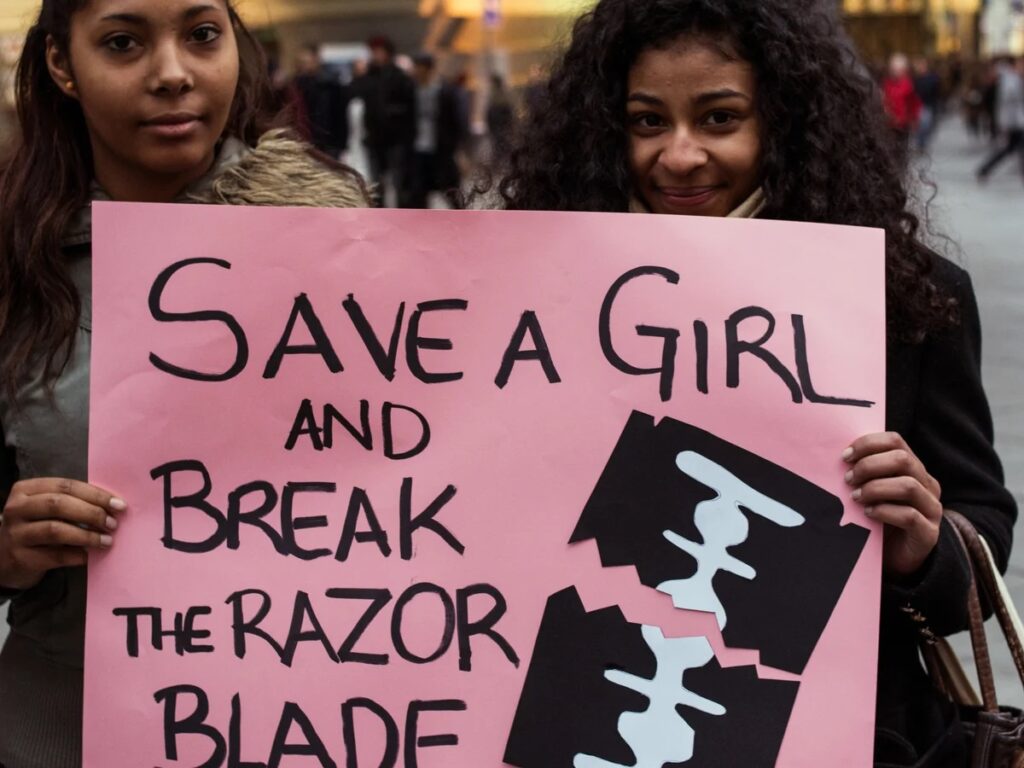
Awareness remains low in the wider public. “I would bet if you asked, nine out of 10 people wouldn’t know what FGM is,” she says. “So probably the biggest thing we can do is raise awareness.”
Women on the Frontlines: Advocates Working With Survivors in the U.S.
Beyond the exam room, community advocates encounter the same trauma -often magnified by migration, isolation, and the challenges of rebuilding life in a new country. Two women working directly with survivors in Colorado offer a deeper look at what healing and prevention require.
“Survivors arrive carrying more than scars; they carry silence.” -Amina Hassan, Somali-born advocate, refugee women’s advocate
Amina has spent 15 years supporting East African women seeking asylum. Many fled conflict or forced marriage; nearly all endured FGM as children. “Women don’t know if it’s safe to talk about what happened,” she says. “They whisper the word ‘cut.’ Some can’t say it at all.”
She sometimes accompanies women through asylum interviews where they must recount their trauma. “They cry, they shake, and then they apologize for crying,” she says. “They think they are weak. They are not.”
Amina went ahead to recommend pathways to achieving the 2030 goal:
- Expand community-led education for newly arrived families.
- Increase access to culturally competent counseling.
- Support survivor-led storytelling, which she calls “the most powerful tool for change.”
“Ending FGM requires healing the woman and educating the world.” -Mariam Keita, Malian social worker, advocating for women’s rights in Colorado
Mariam works with West African women from Mali, Guinea, and Sierra Leone. Many fear their daughters may be pressured into cutting if they visit home.
“Some women ask, ‘If I go on a visit back home, will my mother or aunties take me?’ That fear shapes everything,” she says. She often mediates between generations.
“Even grandmothers sometimes call me and say, ‘Why are you teaching our daughters these Western ideas?’ I tell them: This is not Western. This is safety.”
Mariam recommends the following pathways to achieving the 2030 goal:
- Strengthen cross-border protections to prevent girls from being taken abroad for cutting.
- Create safe spaces for intergenerational dialogue.
- Fund grassroots women’s groups, which she says are “the true engines of cultural change.”
A Shared Path Forward
The physicians and advocates, working in different spheres, describe the same reality:
- FGM has no medical benefit
- Its consequences are lifelong
- Survivors need trauma-informed care
- Prevention requires education, community dialogue, and survivor leadership
Their combined perspectives illuminate a truth that spans continents: ending FGM is not only a medical imperative, but also a community responsibility. For many survivors, the journey begins with a single revelation: Now I understand why. And from that understanding comes the possibility of healing, and the hope of change.